John Salter’s Blog
Follow my ruminations
Get new content delivered directly to your inbox.
- Review and improve the seven A.I. Prompts
These seven prompts have strong underlying intentions: strategic planning, critical thinking, synthesis, expert reasoning, iterative improvement, adaptive learning, and self-critique. Their main weakness is that they leave too much discretion to the model—especially around output structure, evidence standards, prioritisation criteria, and how to handle missing information.
Overall improvements
To make the prompts more reliable and useful in consulting, product, and decision-support work, I would add five recurring controls:
- Define the role, but also the decision context and expected level of expertise.
- Require the model to distinguish facts, assumptions, inferences, and recommendations.
- Specify a fixed output structure, ideally including tables where comparison or prioritisation matters.
- Ask for uncertainties and the information most likely to change the conclusion.
- Require practical next actions, not merely analysis.
Below are revised versions that preserve the purpose of the original prompts while making them more rigorous and reusable.^1
1. Turn an idea into an executable plan
Original strength: It starts by understanding the problem before jumping to a solution, then prioritises high-impact, low-effort actions.
Main limitation: It does not force a clear definition of success, validation of demand, constraints, sequencing, ownership, or measurable milestones.
Improved prompt
Act as a pragmatic strategy and execution adviser.
I have this idea:
[Describe the idea]
My context, constraints, and available resources are:
[Budget, time, skills, team, market, technology, existing assets, constraints]
Before recommending a solution, analyse:
- The problem this idea is intended to solve.
- The target users or customers, including their most important unmet need.
- The proposed value proposition and why users would choose it over alternatives.
- The assumptions that must be true for the idea to work.
- The main risks, dependencies, constraints, and likely failure modes.
- The simplest evidence or experiment that could validate or disprove the key assumptions.
Then create an executable plan with:
- A one-sentence definition of success.
- The smallest viable first version or pilot.
- Actions ordered by impact, effort, urgency, and dependency.
- A 30-, 60-, and 90-day roadmap.
- Suggested owners or required capabilities for each action.
- Decision gates: what evidence would justify proceeding, changing direction, or stopping.
- Metrics to track, including one leading indicator and one outcome indicator.
Present the action plan in a table with these columns:
| Priority | Action | Why it matters | Effort | Expected impact | Dependency | Evidence of progress | Timing |
Do not assume demand, technical feasibility, or commercial viability without stating the assumption. Be concise, practical, and direct.
Why this is better
It turns an idea into a testable commercial or operational proposition rather than a generic task list. The explicit decision gates are particularly useful for SaaS, consulting offers, and new digital-product concepts where the cost of building before validating is high.
2. Find what you are overlooking
Original strength: It explicitly asks the model not to agree automatically, which is valuable.
Main limitation: It does not require the model to distinguish major risks from minor observations, challenge the framing, or state confidence.
Improved prompt
Act as an independent critical consultant. Your role is to improve the quality of my thinking, not to validate my preferred answer.
Here is my situation:
[Describe the context, objective, proposed decision, current evidence, constraints, and alternatives considered]
Analyse the situation rigorously. Separate your response into:
- Problem framing: Is the question I am trying to answer the right question?
- Assumptions: What am I treating as true without sufficient evidence?
- Reasoning errors: Where may I be using weak logic, false comparisons, unsupported causation, confirmation bias, sunk-cost thinking, or overconfidence?
- Risks: What strategic, commercial, operational, financial, legal, reputational, technical, or human risks may I be underestimating?
- Opportunities: What alternatives, partnerships, market segments, capabilities, or simpler approaches might I be missing?
- Disconfirming evidence: What facts, outcomes, or stakeholder views would most seriously challenge my current position?
- Information gaps: What additional information would most improve the analysis?
For each issue, provide:
| Issue | Why it matters | Likelihood | Impact | Confidence | What would validate or disprove it |
Then identify:
- The three most consequential blind spots.
- The one assumption I should test first.
- The decision I should avoid making until further evidence is available.
- The most practical next step I should take this week.
Be candid. Do not manufacture criticism where the reasoning is sound; explain why it is sound instead.
Why this is better
This makes the prompt useful as a structured “red team” review. It also prevents the output becoming a long, unprioritised list of hypothetical concerns.
3. Turn disordered information into clarity
Original strength: It requests organisation, pattern recognition, and separation of facts, hypotheses, and conclusions.
Main limitation: It does not define how conflicting information should be treated, nor does it convert the analysis into decisions, questions, and actions.
Improved prompt
I will provide unstructured information about [topic]. It may include notes, emails, observations, data, opinions, ideas, decisions, quotations, and incomplete information.
Do not merely summarise it. Analyse and reorganise it into a decision-ready briefing.
First:
- Group related information into clear themes.
- Identify recurring patterns, relationships, contradictions, gaps, and dependencies.
- Separate statements into:
- Verified facts or evidence
- Reported claims or observations
- Assumptions
- Hypotheses
- Interpretations
- Conclusions or proposed decisions
- Open questions
- Flag statements that conflict, lack evidence, or appear ambiguous.
- Identify information that is important but missing.
Then produce the following output:
### 1. Executive overview
A concise explanation of what the information collectively indicates.
### 2. Thematic analysis
| Theme | Key evidence | What it may mean | Confidence | Issues or gaps |
### 3. Facts, hypotheses, and conclusions
| Type | Statement | Supporting evidence | Confidence | What needs verification |
### 4. Decisions and actions
| Decision or question | Why it matters | Recommended next step | Owner or stakeholder | Priority |
### 5. Five key messages
State the five most important ideas to retain, in plain language.
Do not convert uncertain claims into facts. Clearly label where you are inferring rather than relying on direct evidence.
Why this is better
This format is particularly useful for debriefs, governance reviews, workshop notes, client discovery, product research, and incident or exercise observations. It produces a usable evidence base rather than a polished but potentially misleading summary.
4. Make it think like an expert
Original strength: It asks for the variables an expert would consider before analysing the case.
Main limitation: “Senior expert” is too broad unless the prompt defines the decision being made, the standards of evidence, and the trade-offs between options.
Improved prompt
Act as a senior [profession / domain] with substantial practical experience in [specific context or industry].
I need help making this decision:
[Describe the decision, case, options, objectives, constraints, stakeholders, and available evidence]
Do not give a generic answer. Use the reasoning process an experienced practitioner would use.
First, define the expert decision framework:
- The key variables that should be assessed.
- The relevant trade-offs and constraints.
- The stakeholders affected and their likely priorities.
- The risks that would be unacceptable or difficult to reverse.
- The evidence, benchmarks, standards, or thresholds an expert would rely on.
Then apply that framework to my case.
Present your analysis in this format:
| Decision variable | What an expert would assess | My current position | Assessment | Evidence gap | Implication |
Then provide:
- Your recommended course of action.
- The strongest alternative option and when it would be preferable.
- The key assumptions underpinning your recommendation.
- The information that could materially change your conclusion.
- A confidence rating: high, medium, or low, with a brief explanation.
- The three most important next actions.
Be explicit about where expert judgement is being used versus where the conclusion is supported by evidence.
Why this is better
The prompt encourages genuine decision analysis, rather than merely requesting a more authoritative tone. It is useful where recommendations have material consequences, such as governance design, resilience investments, pricing, architecture choices, product-market positioning, or capability assessment.
5. Improve something without destroying what works
Original strength: It protects existing strengths and discourages unnecessary reinvention.
Main limitation: It does not require the model to identify the purpose, audience, performance criteria, or safeguards against creating new problems while improving the old ones.
Improved prompt
Review and improve the following [text / project / product / code / strategy / process]:
[Paste or describe the material]
Its intended audience, purpose, and success criteria are:
[Audience, objective, constraints, current performance, non-negotiables]
Do not redesign it from scratch unless the underlying approach is fundamentally unworkable. Preserve what is effective and improve only where the evidence supports change.
Analyse it in this order:
- What works: Identify the strongest elements, why they work, and what should be preserved.
- What limits performance: Identify weaknesses, friction points, inconsistencies, risks, missed opportunities, and likely causes.
- What should not change: List the essential qualities, decisions, or constraints that improvements must respect.
- Improvement options: Recommend specific changes, each linked to the problem it solves.
- Prioritisation: Rank improvements by expected impact, effort, confidence, cost, and risk of unintended consequences.
Use this table:
| Area | What currently works | Limitation | Recommended change | Expected benefit | Effort | Risk | Priority |
Then provide:
- A “minimum-change” version: the smallest set of improvements likely to create meaningful benefit.
- An “ambitious” version: a more substantial improvement path.
- A before-and-after example for the highest-priority change, where relevant.
- A short validation plan explaining how to test whether the improvements actually worked.
Avoid vague advice such as “make it clearer” or “improve engagement.” State exactly what should change and why.
Why this is better
This prompt is especially strong for refining product copy, website pages, assessment frameworks, reports, user flows, pricing pages, and technical specifications—where preserving a coherent existing structure is often more valuable than starting again.
6. Learn anything in a personalised way
Original strength: It uses assessment, progressive learning, exercises, common mistakes, and mastery checks.
Main limitation: It asks five questions but does not specify whether the learner’s goals, available time, learning preferences, or practical application should shape the course.
Improved prompt
Act as an adaptive tutor and curriculum designer for [topic].
I want to learn it from my current level to this practical outcome:
[Describe the goal—for example, “build and launch a simple subscription app,” “interpret financial statements,” or “hold basic conversations while travelling”]
Before teaching, ask me no more than five diagnostic questions to assess:
- My current knowledge and experience.
- My practical goal and intended application.
- The time I can commit each week.
- Relevant tools, resources, or constraints.
- My preferred learning style, if it matters.
After I answer, create a personalised learning roadmap divided into progressive modules.
For each module, provide:
| Module | Outcome | Core concepts | Practical example | Exercise | Common mistakes | Mastery test | Estimated time |
Teaching rules:
- Start with the smallest set of concepts that creates useful practical capability.
- Use examples relevant to my stated goal.
- Give me an exercise that requires active use, not passive reading.
- Check my understanding before moving to the next module.
- If I make an error, explain the misconception and give a targeted corrective exercise.
- Periodically revisit earlier concepts using spaced review.
- At the end, give me a practical capstone task and assess it against clear criteria.
Do not proceed to the next module until I demonstrate sufficient understanding of the current one. Adapt the pace and difficulty based on my responses.
Why this is better
It preserves the original mastery-learning approach, while ensuring the learning plan is anchored to a real-world goal and adjusts as the learner progresses.
7. Make it question its own response
Original strength: It encourages self-critique rather than presenting an answer with unjustified certainty.
Main limitation: A vague self-review can produce generic caveats. It needs to target factual, logical, contextual, and practical weaknesses—and distinguish minor uncertainty from conclusion-changing uncertainty.
Improved prompt
After producing your main response, conduct a rigorous self-review as an independent subject-matter expert and critical editor.
Do not repeat the answer. Instead, assess it against the following checks:
- Factual reliability: Which claims need verification, current sources, data, or domain-specific evidence?
- Assumptions: What assumptions did you make about my objectives, context, constraints, users, or available resources?
- Reasoning quality: Where could the logic be incomplete, overly simplified, biased, or based on a weak inference?
- Alternatives: What credible alternative interpretations, options, or recommendations did you not fully consider?
- Practicality: Which recommendations may be difficult to implement, and what dependencies or trade-offs may have been overlooked?
- Risk: What could go wrong if I act on this advice?
- Conclusion sensitivity: What new information would most likely change the recommendation?
Present the self-review in this format:
| Review area | Potential weakness or uncertainty | Severity | What should be verified or clarified | Effect on the recommendation |
Then state:
- The one part of the response you are least confident about.
- The one assumption most worth testing.
- Whether the main recommendation still stands after review: yes, yes with caveats, or no.
- A revised recommendation if the review materially changes it.
Be specific. Do not add generic disclaimers merely to sound cautious.
Why this is better
This version turns “question your own response” into a compact quality-assurance stage. It is particularly useful when using AI to support decisions, client-facing material, research synthesis, technical specifications, or high-stakes recommendations.
Recommended combined instruction
For the strongest results, append this short instruction to any of the seven prompts:
Use clear headings and concise tables where useful. Distinguish verified facts, assumptions, interpretations, and recommendations. State uncertainty plainly. Do not invent evidence, sources, market facts, technical details, or stakeholder views. If essential information is missing, identify it and explain how it affects the conclusion. Prioritise practical next actions over generic commentary.
Best use in your work
For your consulting and digital-product work, prompts 1, 2, 3, 4, and 7 are likely to be the highest-value set:
- Use Prompt 1 to turn an assessment, debrief insight, or product concept into a pilot and rollout plan.
- Use Prompt 2 before committing to a pricing model, architecture, service offer, partnership, or strategic recommendation.
- Use Prompt 3 to turn interviews, workshop notes, survey comments, exercise observations, or incident-review evidence into structured findings.
- Use Prompt 4 to obtain a disciplined domain-specific decision analysis, such as from the perspective of a resilience practitioner, governance adviser, SaaS product manager, or security architect.
- Use Prompt 7 as a required final check before relying on AI-generated analysis in an executive report, methodology, proposal, or client deliverable.^1
- When the Horn Is in the Picture: A Fable About Capability and Blind Spots
Every organisation sees itself through a lens. The question is whether it can recognise what that lens leaves out – and across which domains.
A rhinoceros stood every evening on the edge of the savanna with an easel, a palette and a great sense of purpose.
He loved to paint the landscape: the gold of the grass, the distant hills, the flat-topped acacias, the red sun sinking into the horizon. When he had finished, he invited the other animals to admire his work.
“Magnificent,” said the zebra.
“Very true to life,” said the wildebeest.
“Such a clear picture of the savanna,” said the warthog.
The rhinoceros beamed.
Yet every painting contained the same curious feature: a large, pale triangle stood in the middle of the scene. It rose from the foreground, cutting through trees, grasslands, rivers and sunsets alike.

One day, an elephant studied the latest canvas for a long time.
“Rhino,” she said gently, “that is not a hill.”
“Of course it is,” replied the rhino. “I see it every time I paint.”
“It is your horn,” said the elephant.
The rhinoceros laughed. From where he stood, his horn was always there: large, familiar and impossible to ignore. Because it had always been in his line of sight, he had stopped seeing it as an obstruction. He had begun to mistake it for part of the landscape.
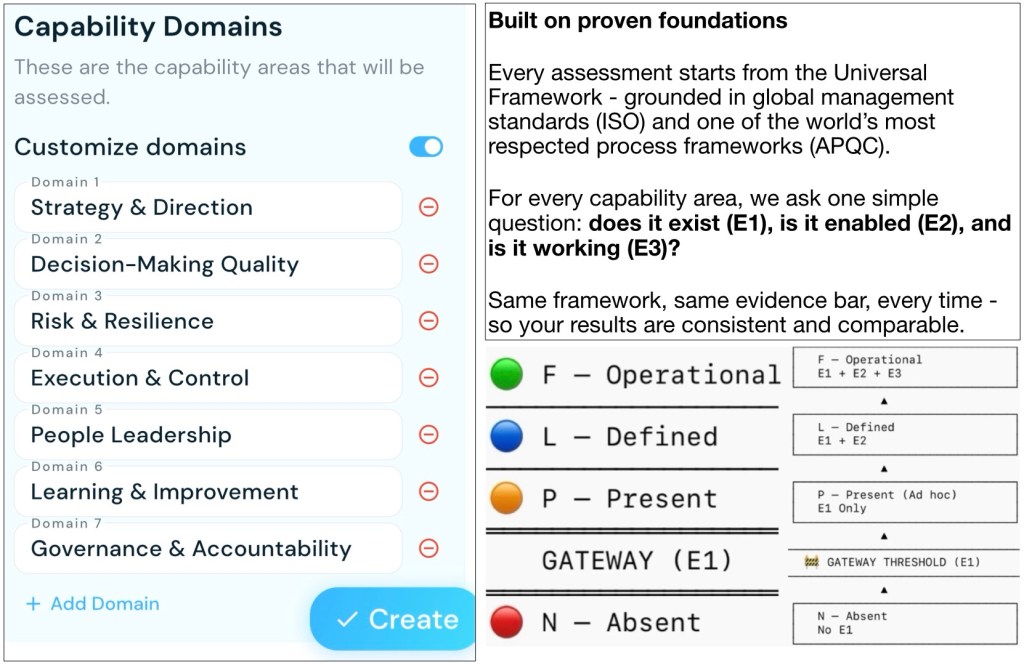
One Painting, Seven Missing Views
The heron, who had been circling above, landed beside the easel.
“You keep painting the same triangle,” she said, “because you only ever look from one place, in one direction. What if you painted seven views of the savanna instead of one?”
The rhino was doubtful, but he listened as the animals described what each of them could see that he could not.
The elephant described the strategy of the herd – where the migration was heading, and why. The zebra described the quality of decisions made at the water’s edge, when predators were near and there was no time to deliberate. The heron, from above, described risk and resilience – the flood plains that looked safe from the ground but flooded every wet season. The warthog described execution and control – the burrows and root systems that either held firm or gave way underfoot. The lion described leadership of the pride – who actually got followed when danger came, regardless of who held the title. The tortoise, who had outlived them all, described learning and improvement – the patterns that repeated because no one had written them down. And the old baobab, rooted at the centre of the plain for a hundred years, represented governance and accountability – the one who could say, with evidence, whether all the other six views actually held together.
Seven views. One triangle had never shown any of them.
Painting With Evidence, Not Just Confidence
The rhino wanted to argue that his single painting had already captured the savanna. But the animals asked him a harder question, one domain at a time:
- Does this actually exist – is there a real path, a real plan, a real arrangement? (E1)
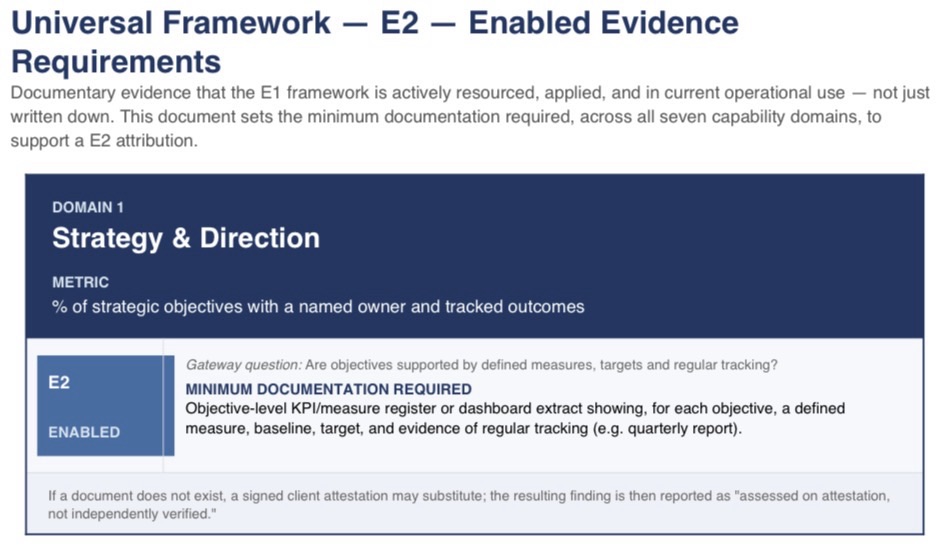
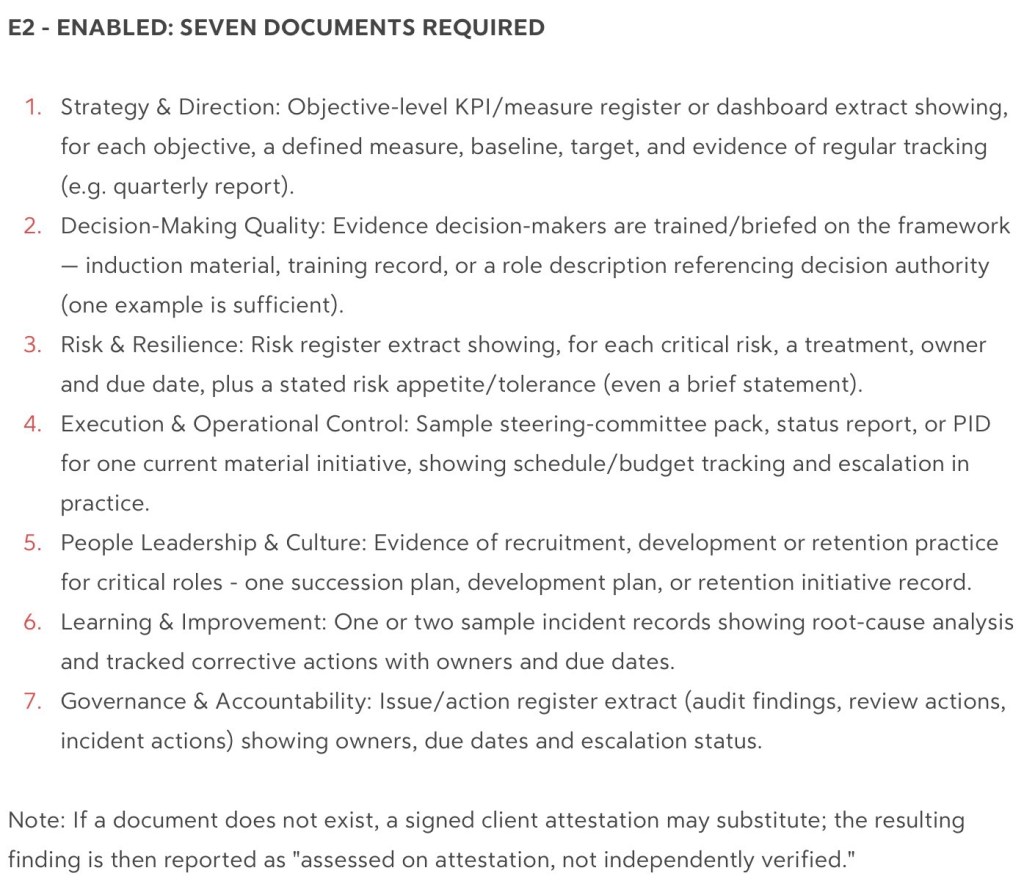
- Is it enabled – does it have what it needs to function: resources, authority, information, people who know their role? (E2)
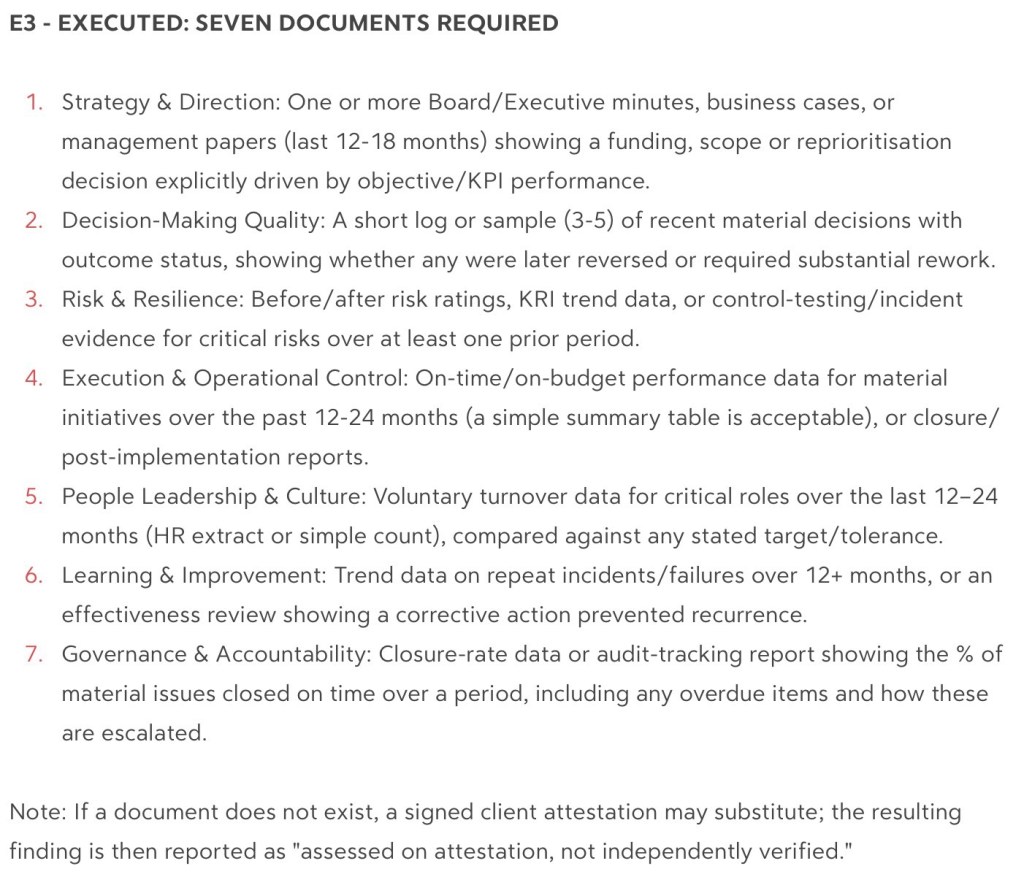
- Is it executed – has it actually worked, been tested, been used under real pressure, not just described on paper? (E3)
The rhino realised his triangle had never been tested against any of these three questions. It was simply what he saw, repeated with confidence.
So the animals gathered evidence, domain by domain, and rated what they found: None, Partial, Limited, or Full. Some domains – like the warthog’s execution and control – turned out to be strong: well tested, reliably repeated. Others – like the baobab’s governance – existed on paper but had barely been exercised. The picture that emerged was not one triangle but seven honest panels, each showing where the herd genuinely stood.
The Moral
We all see the world through subjective lenses: our roles, incentives, habits and past successes. These lenses are not inherently bad – the rhino’s horn protected him and helped him survive. But a single, familiar vantage point can never show all seven domains that determine whether a herd, or an organisation, is truly capable.
“Not seeing something is not the same as it not being there.”
Confidence is easy to paint. Capability – demonstrated with evidence, across every domain that matters – is harder, and far more valuable.
See Your Own Seven Domains Clearly
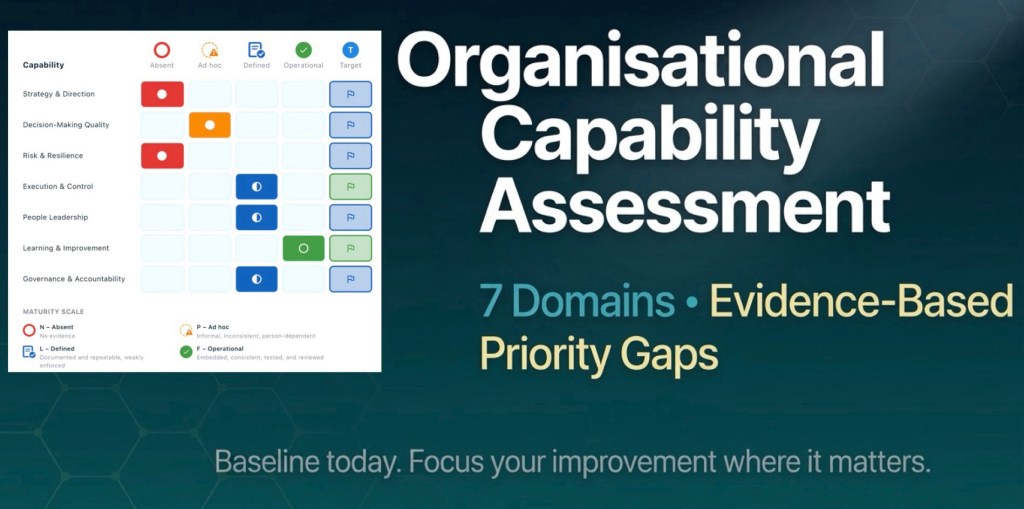
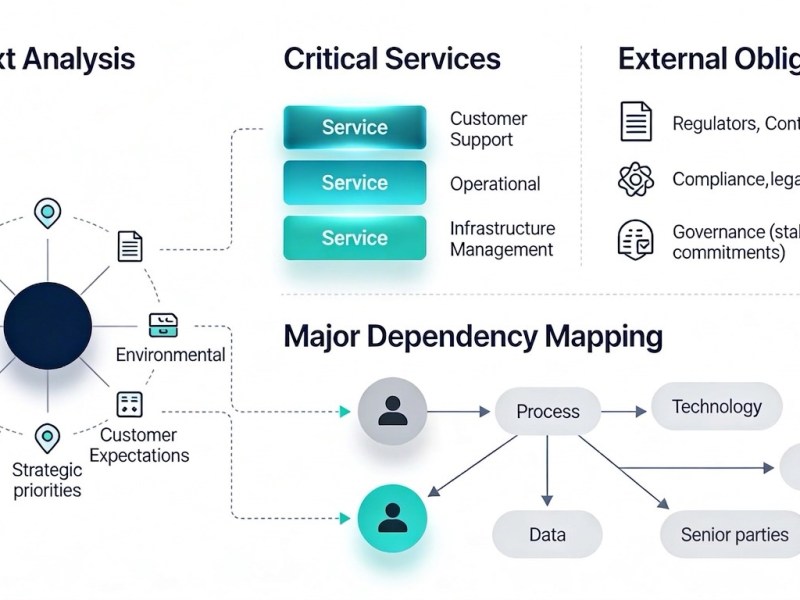
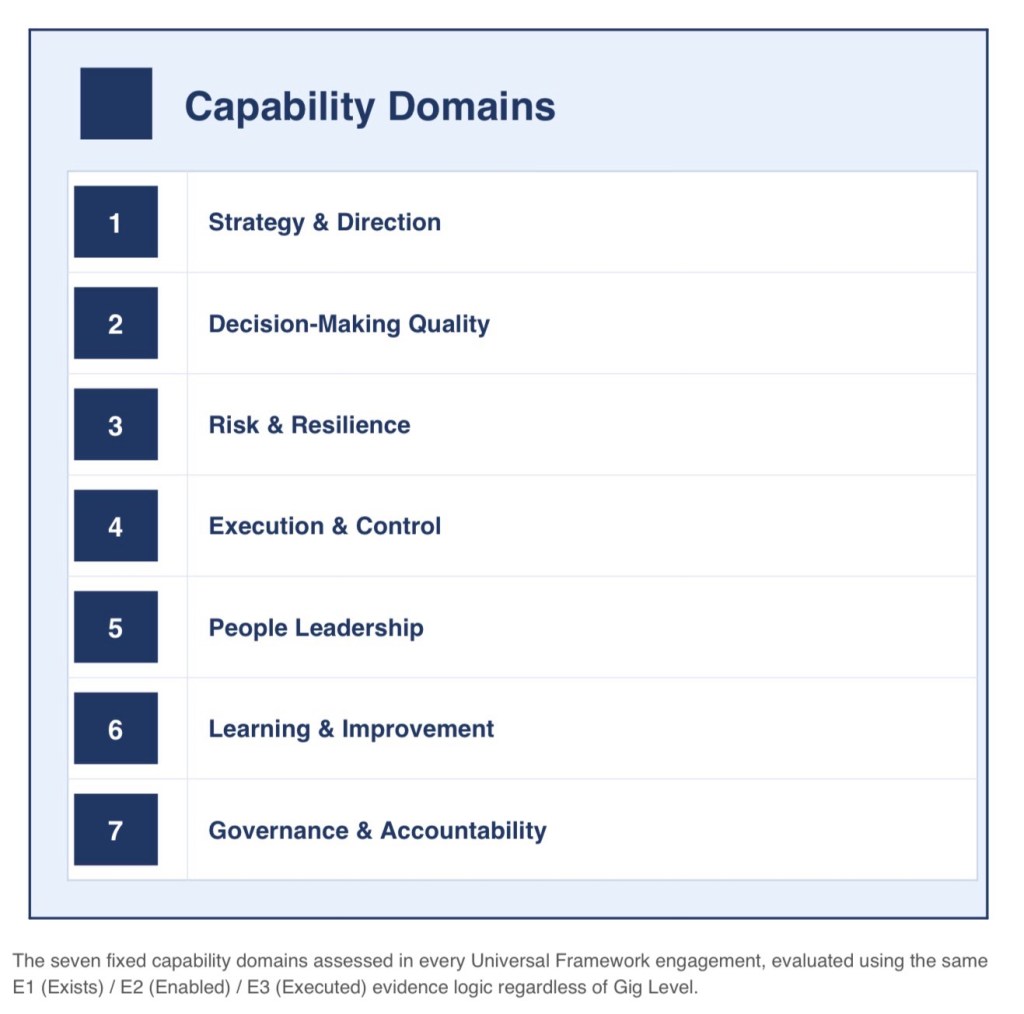
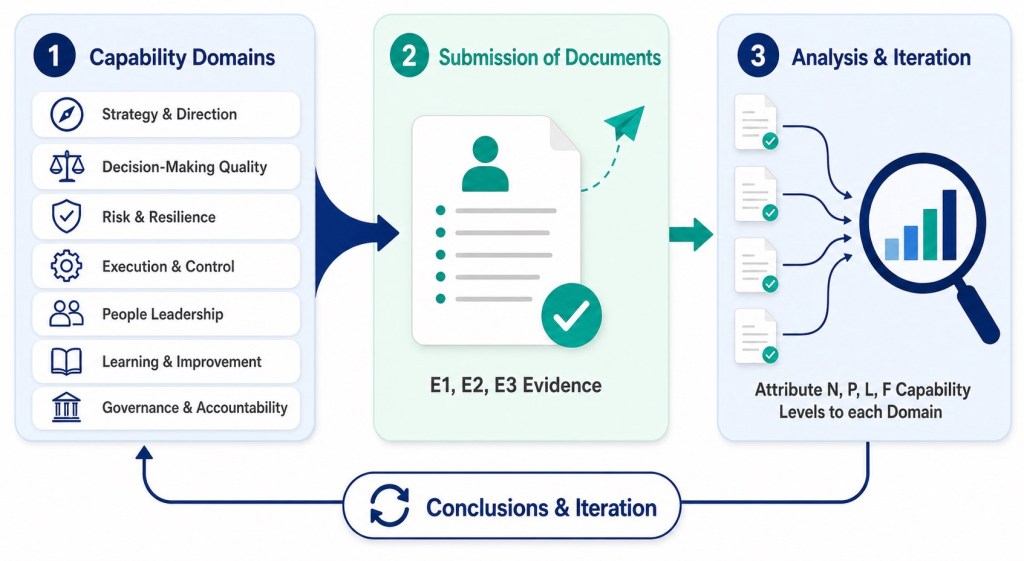
If your organisation’s picture of itself has been painted from one vantage point for too long, the Universal Framework offers a structured way to look again – across the same seven domains the animals uncovered together: Strategy \& Direction, Decision-Making Quality, Risk \& Resilience, Execution \& Control, People Leadership, Learning \& Improvement, and Governance \& Accountability. Every engagement, regardless of scope, is assessed against the same E1 (Exists) / E2 (Enabled) / E3 (Executed) evidence logic – so the result reflects what can be demonstrated, not just what is believed.
Three ways to start:
The rhino didn’t become wiser because he stopped having a horn. He became wiser because he finally saw all seven views – and could show what was true, not just what he assumed.
How capable are you, really – across all seven domains?
- How capable are you?
Is your organization currently capable of performing, governing, and learning at the right level?
Know how well your organisation is going?
Confident of your view?
What evidence do you rely on?
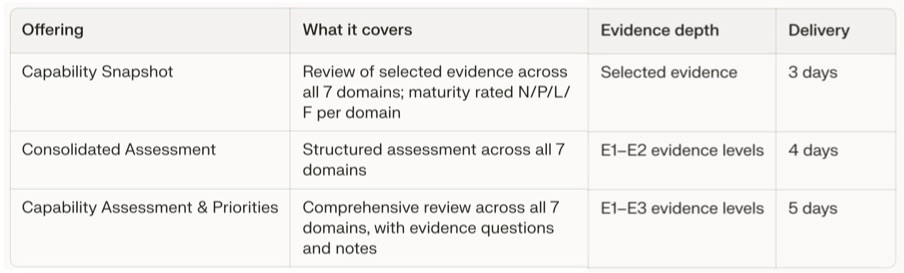
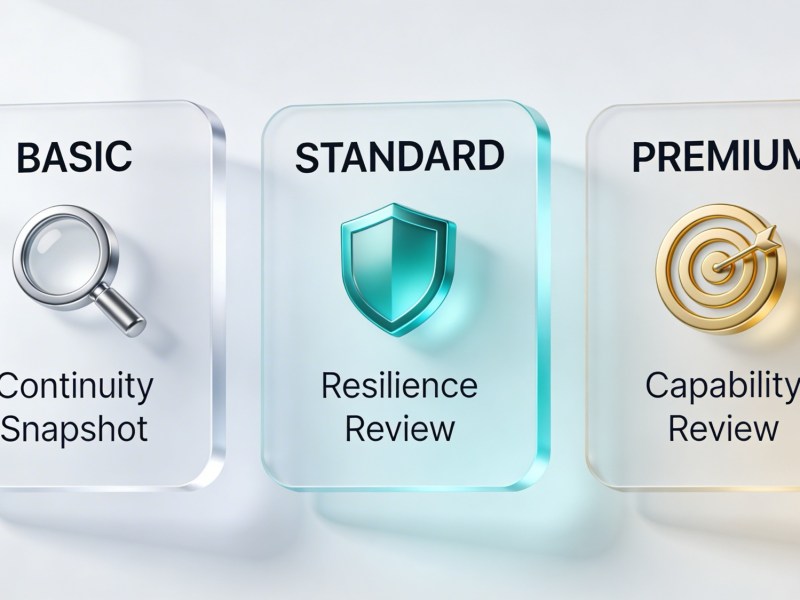
If you need assurance or you’re looking to identify improvement opportunities, check which of our three service levels best suits you.
Capability Assessment Methodology
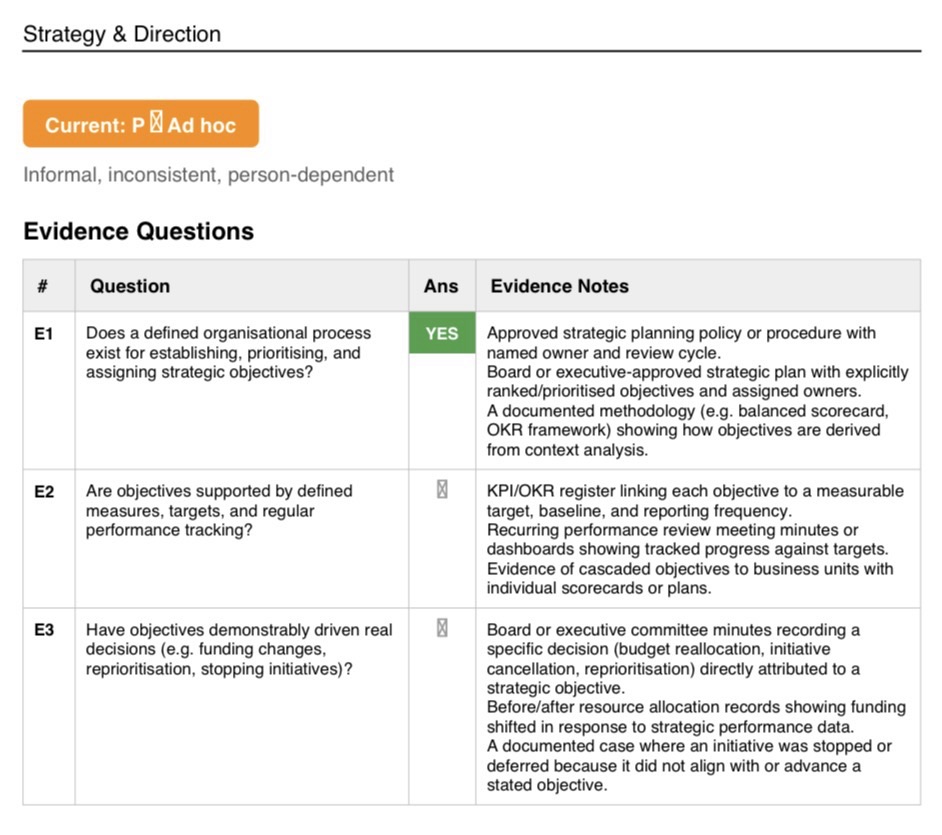
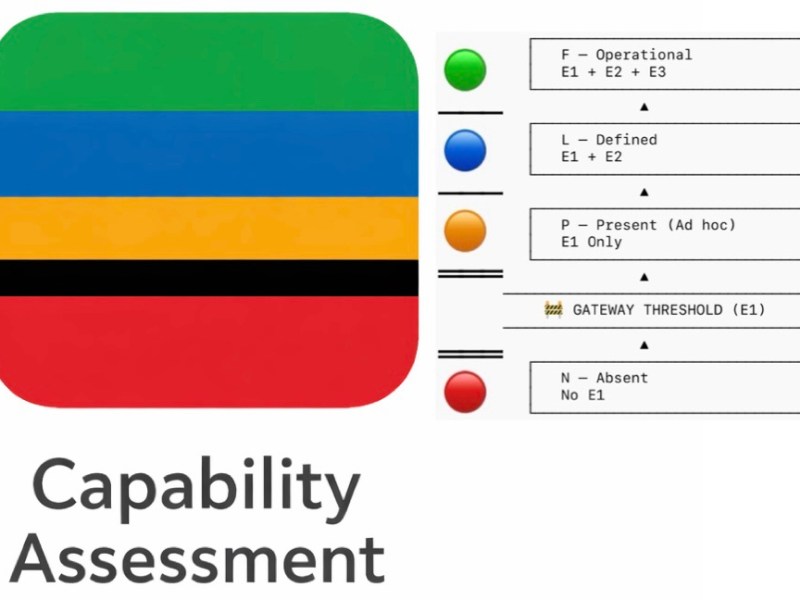
Three evidence tests (E1–E3)
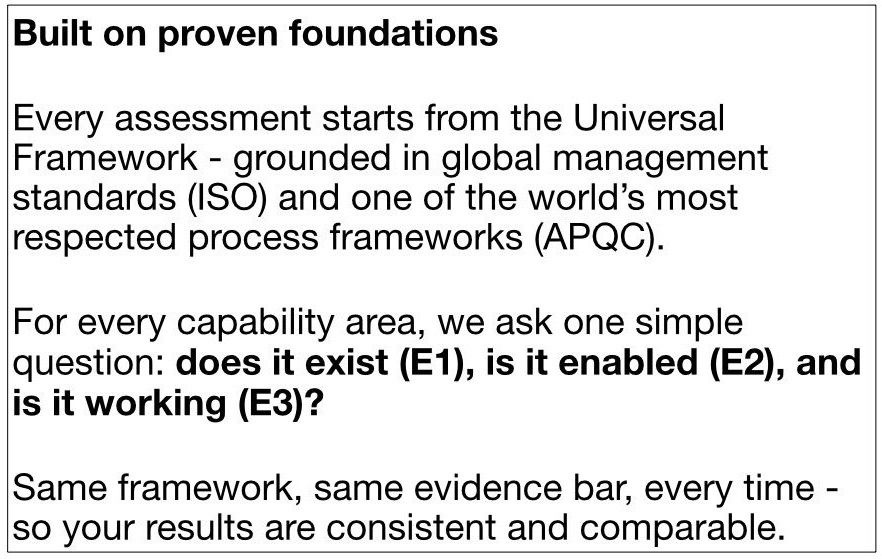
For each domain we look for three levels of evidence:
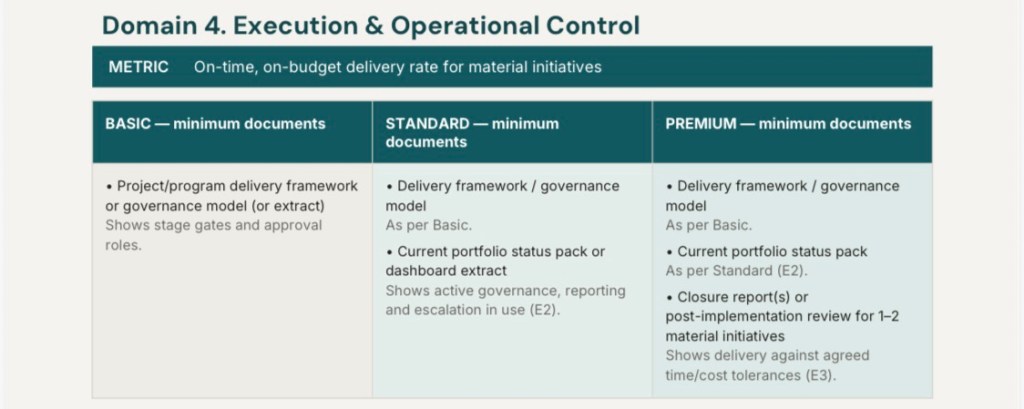
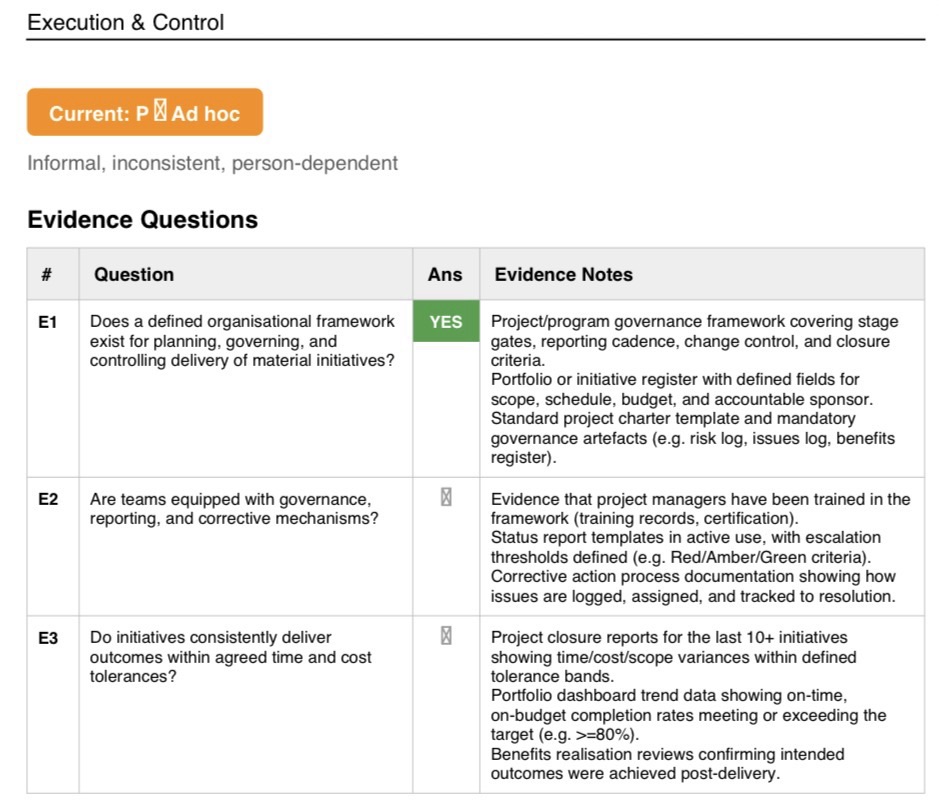
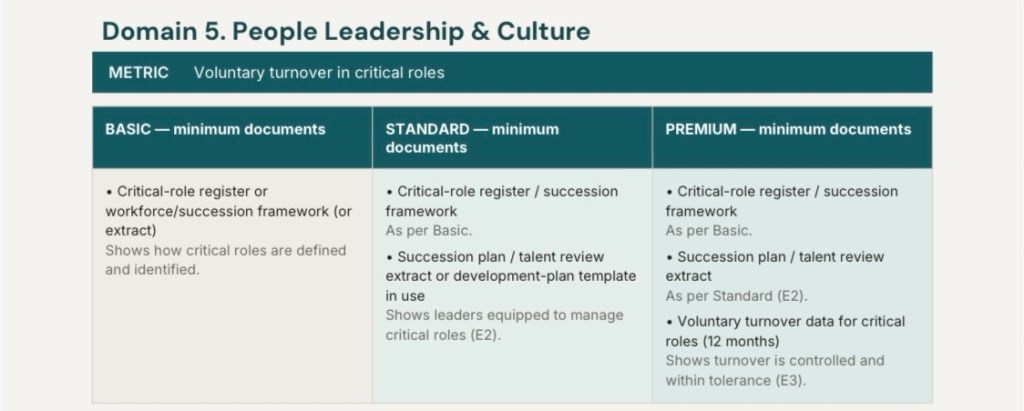
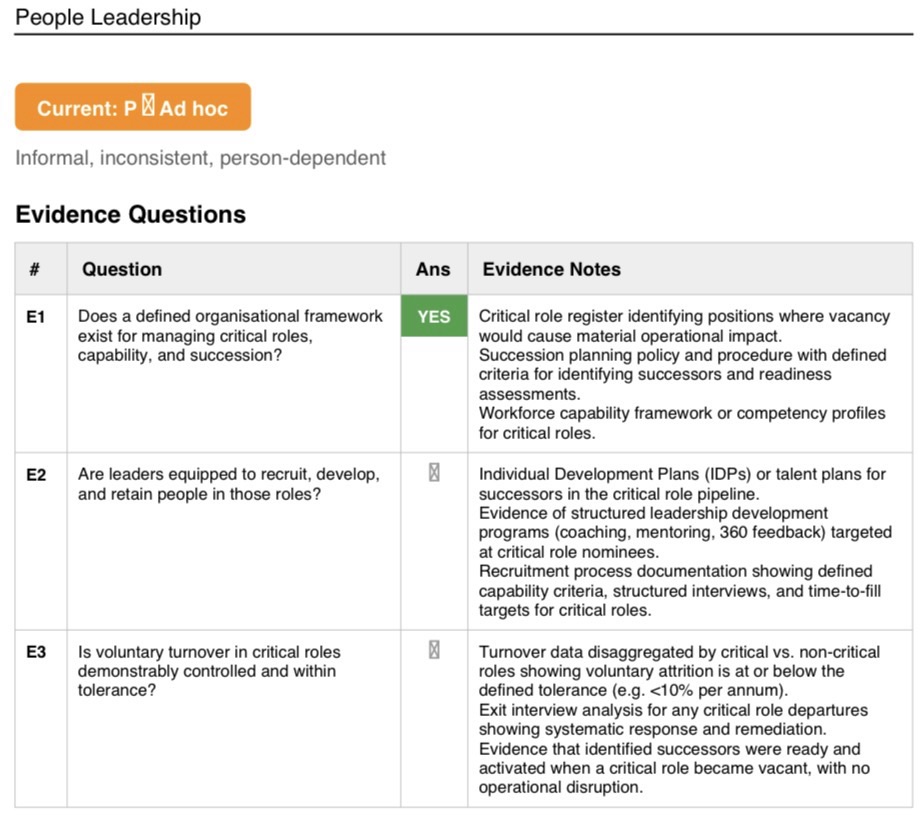
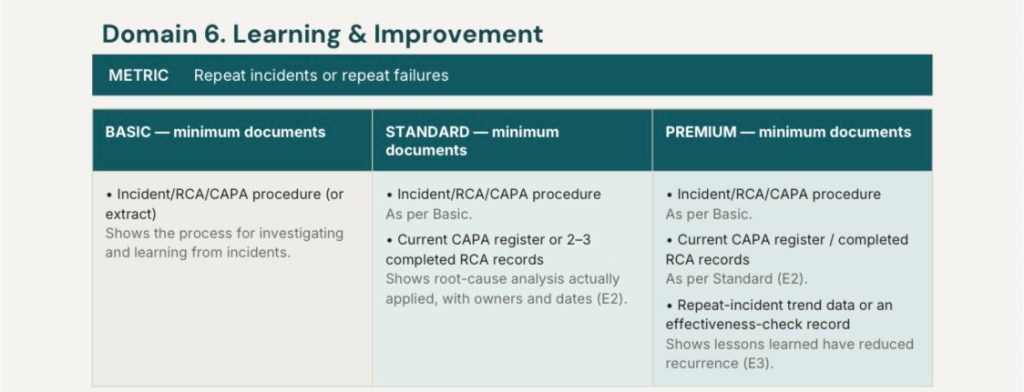
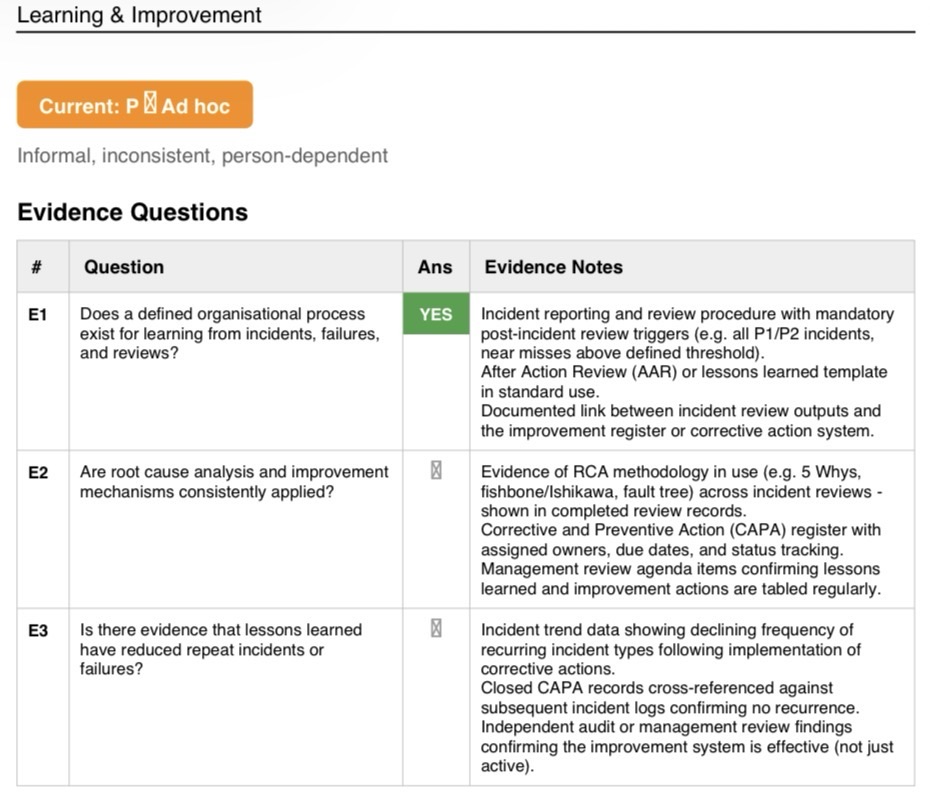
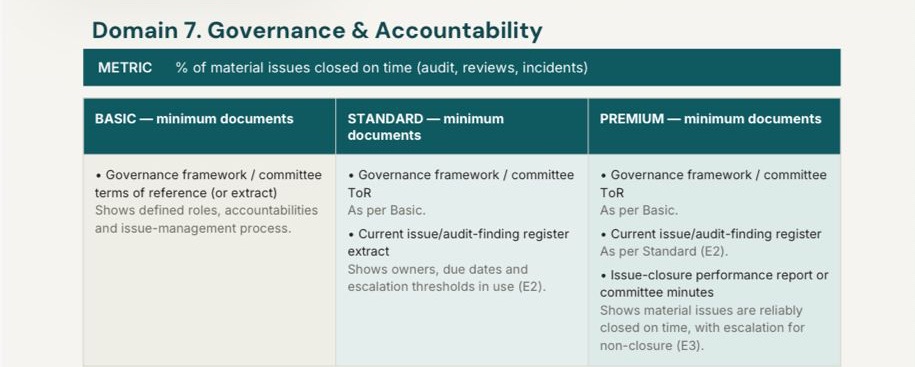
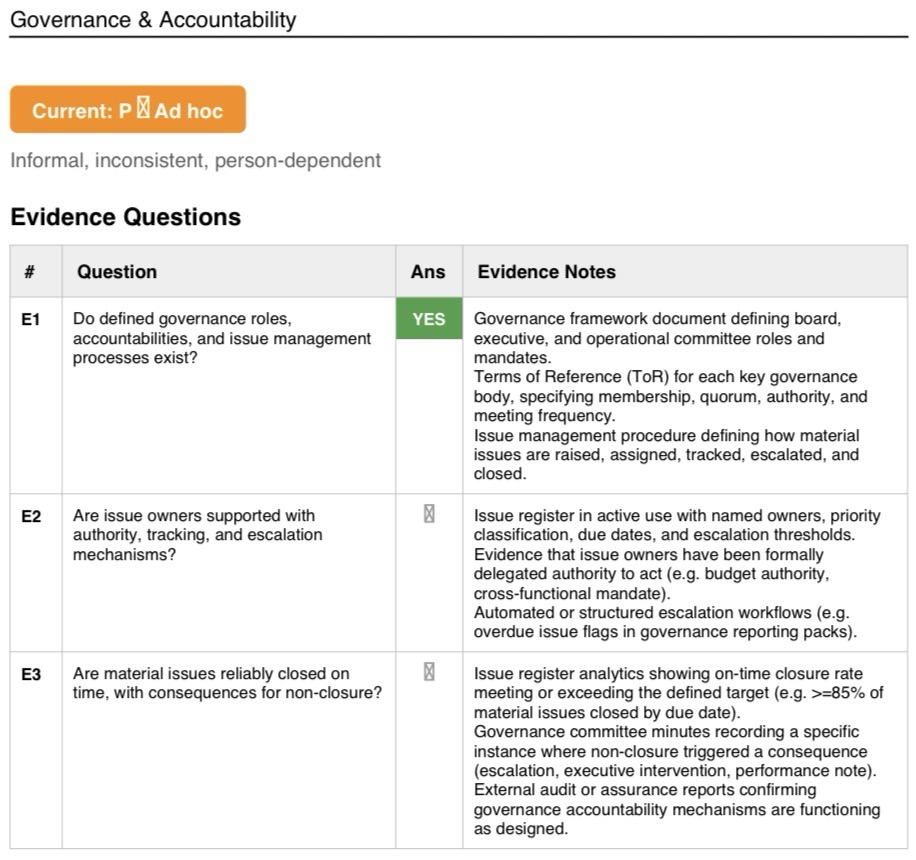
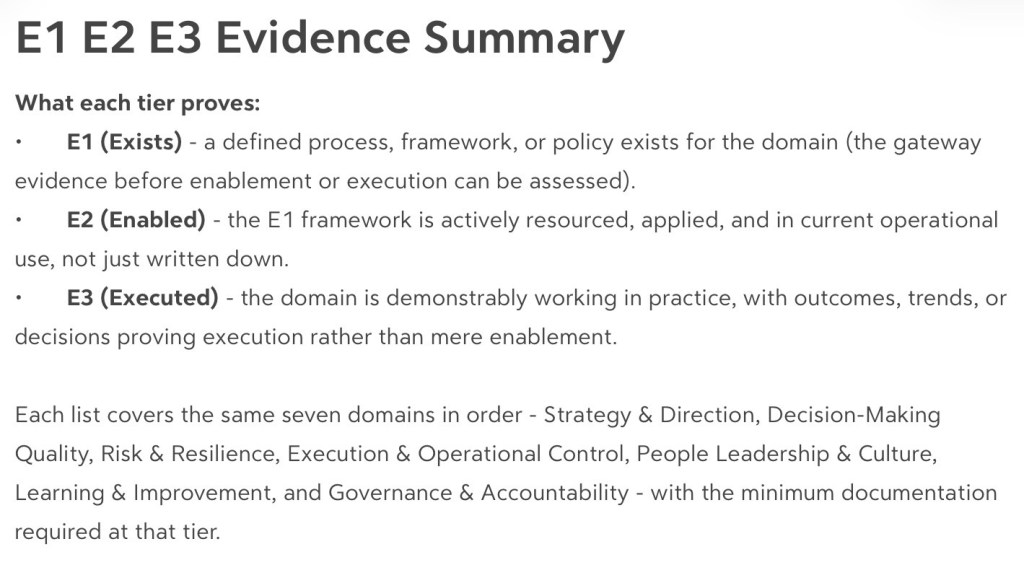
- E1 – Exists
Do the core structures and processes exist?
(Policies, frameworks, processes, roles, plans, registers, documented approaches.) - E2 – Enabled
Are they supported and usable?
(Clear owners, resources, training, tools, data, and regular review cycles.) - E3 – Executed
Are they actually used and making a difference?
(Real examples where they shape decisions, behaviours, investments, and outcomes.)
In practical terms, E1/E2 tell you “have we built the system?” and E3 asks “does the system change what happens?”
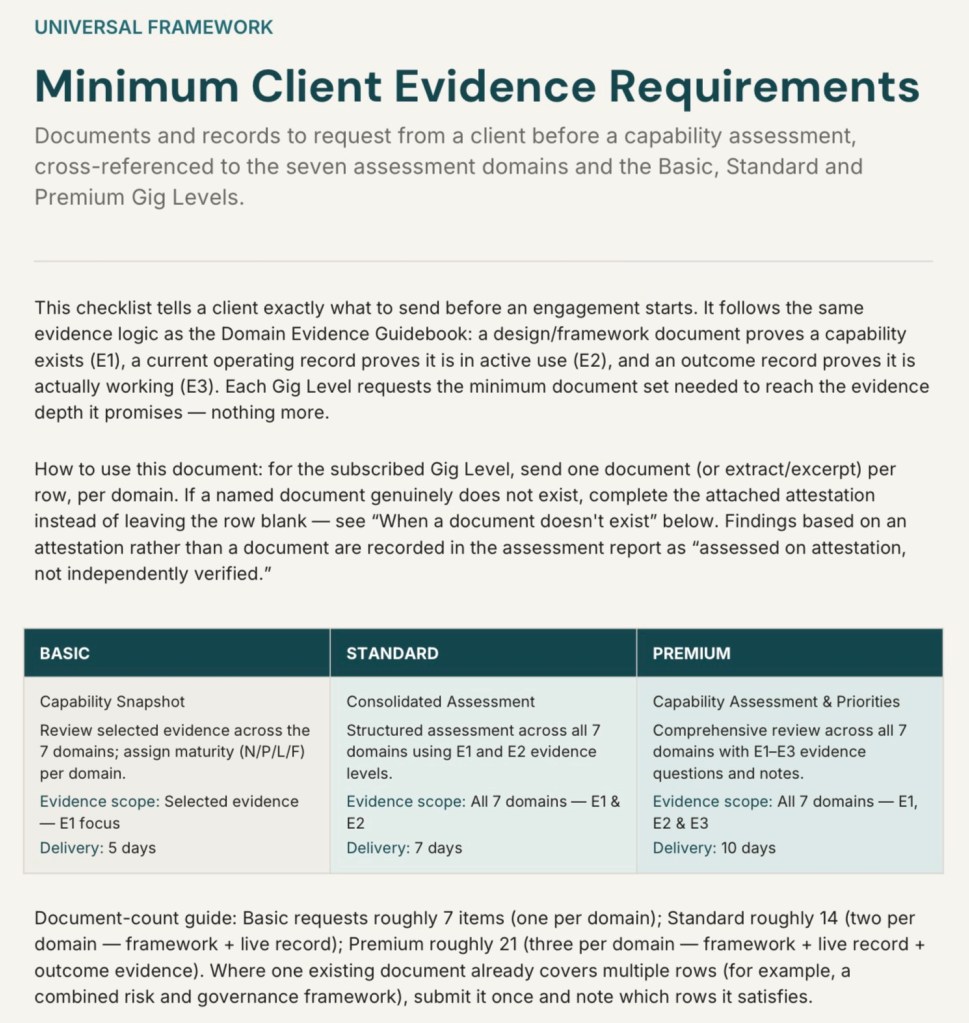
Maturity scale (N–P–L–F)
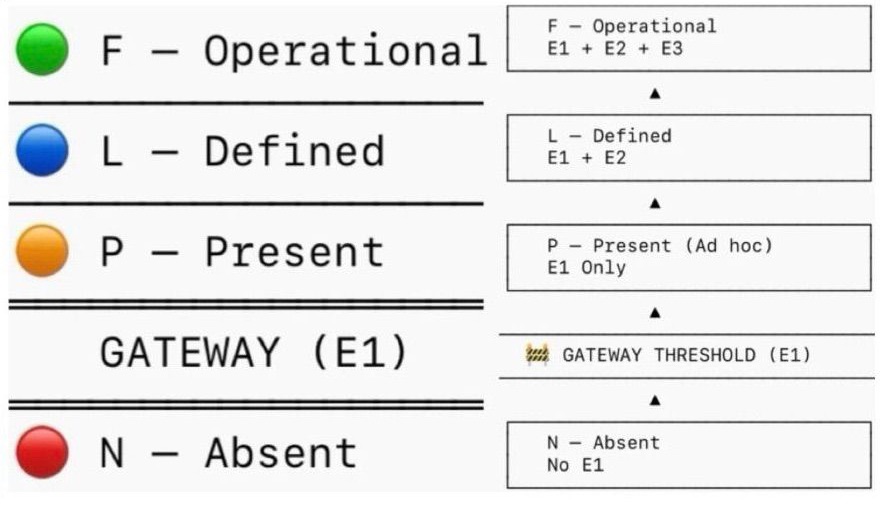
Evidence across E1–E3 is then converted into a four‑step maturity rating for each domain:
- N – Absent
No meaningful evidence; capability does not meet current needs. - P – Ad hoc
Informal, person‑dependent, inconsistent; pockets of good practice but not reliable.
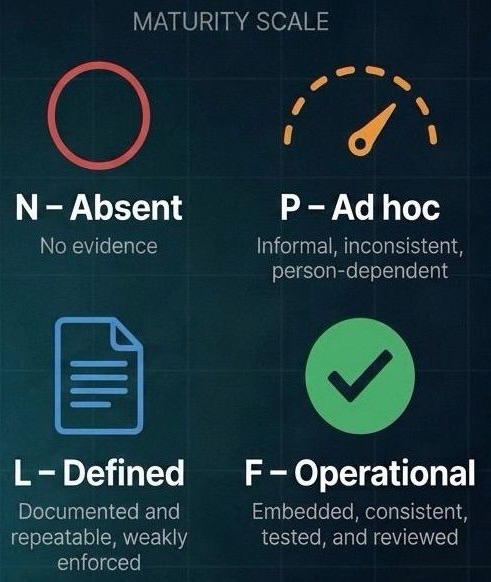
- L – Defined
Documented and repeatable, but weakly enforced; often strong on design, weaker on routine use. - F – Operational
Embedded, consistent, tested, and reviewed; good evidence that it works in practice.
You decide on the Assessment Level you need to test
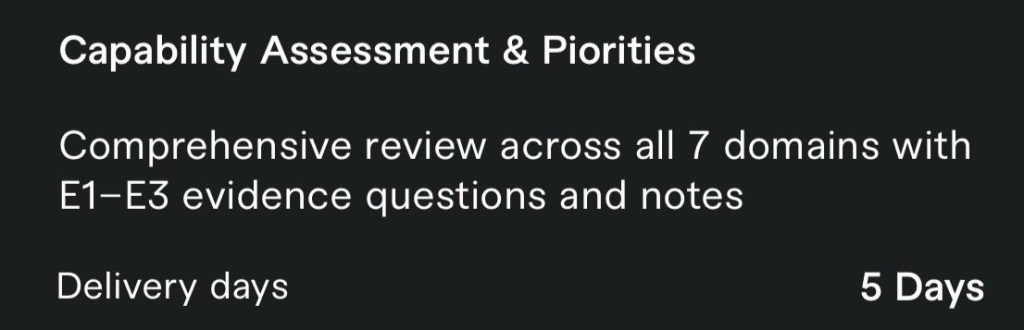
Capability Assessment & Priorities
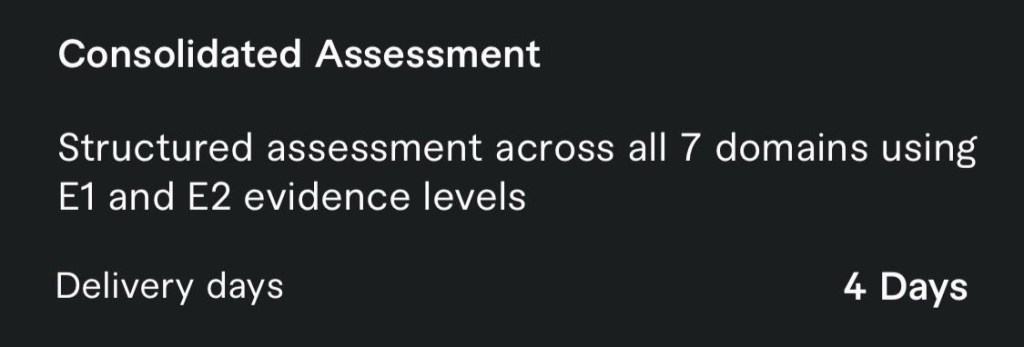
Consolidated Assessment
Capability Snapshot
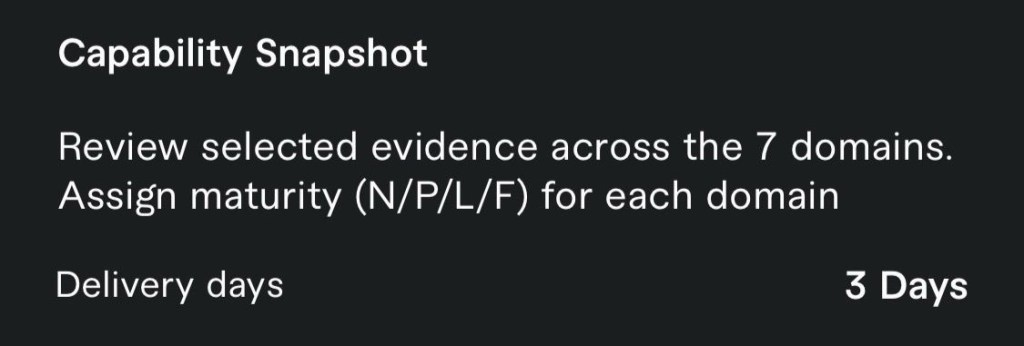
US$100 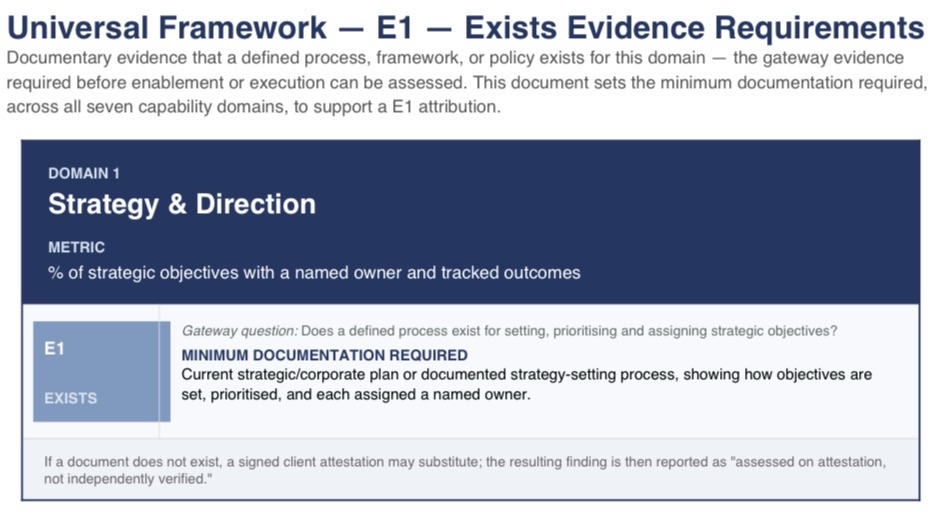
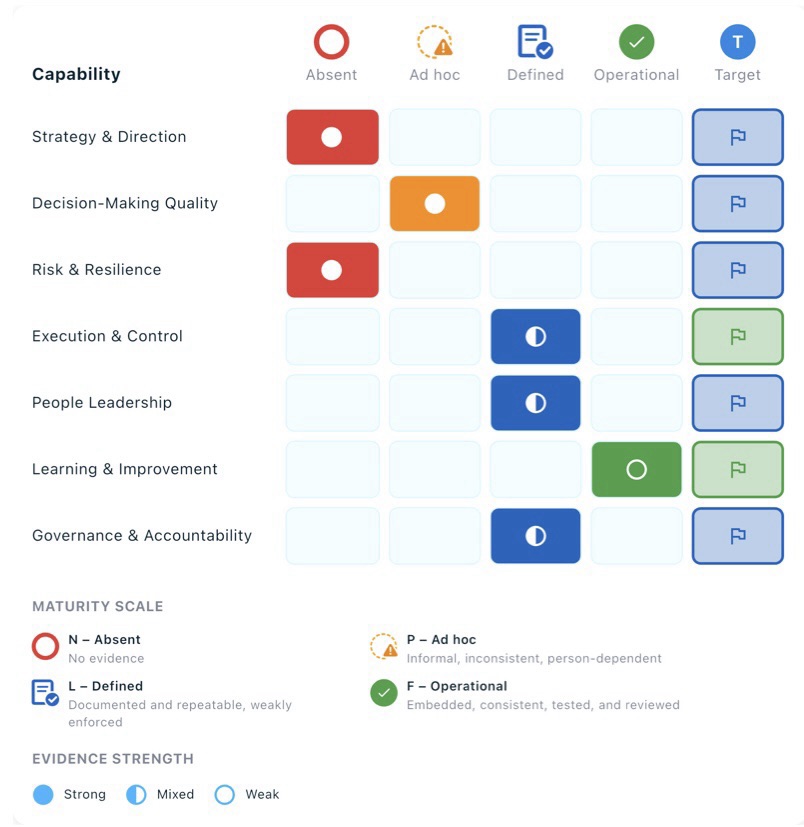
Heat map is included in each report
Start with a short conversation
We will discuss your current situation, and what “good” would look like over the next 12 months.
From there, we can decide the right place to begin.

Or email John directly johnsalter@me.com
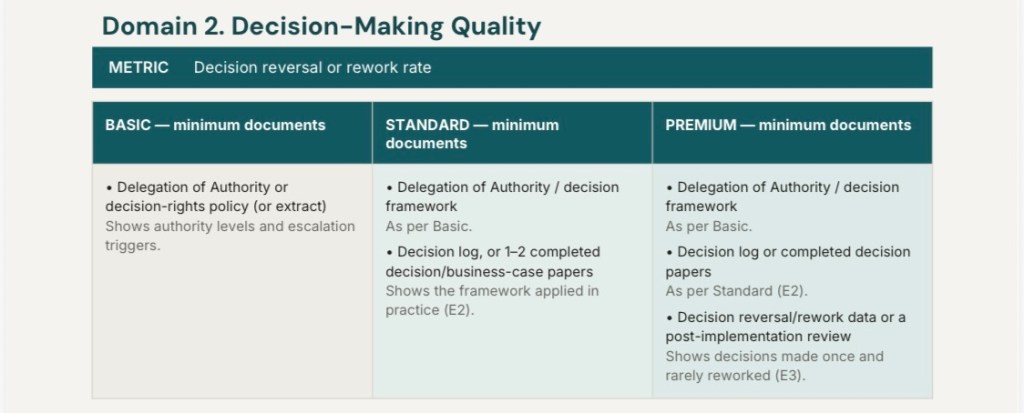
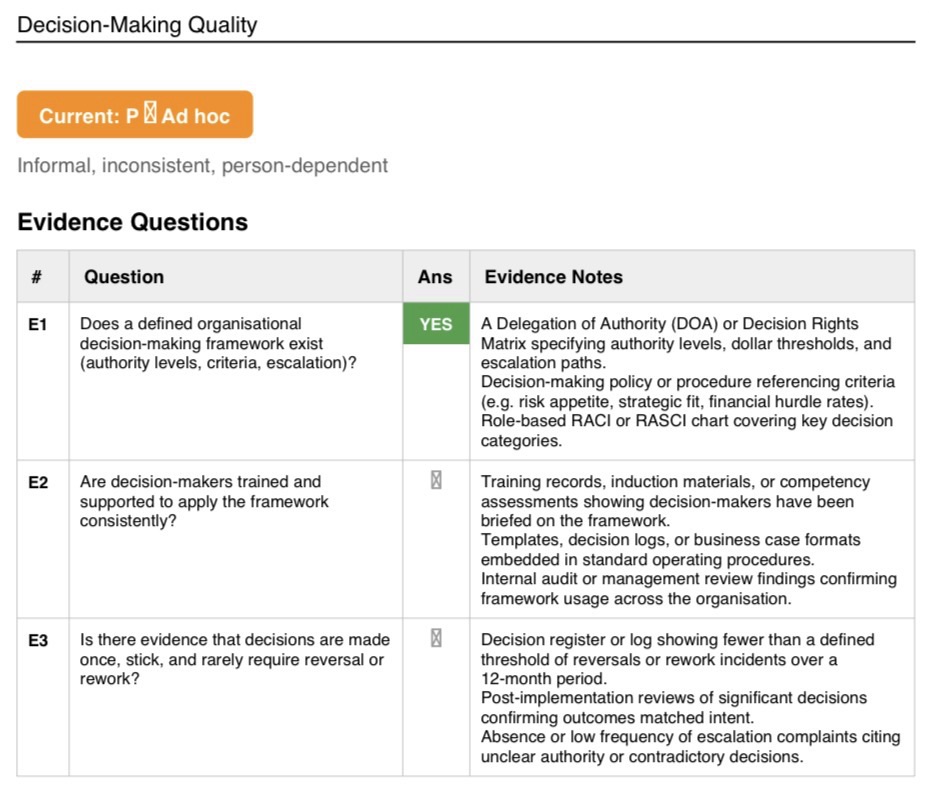
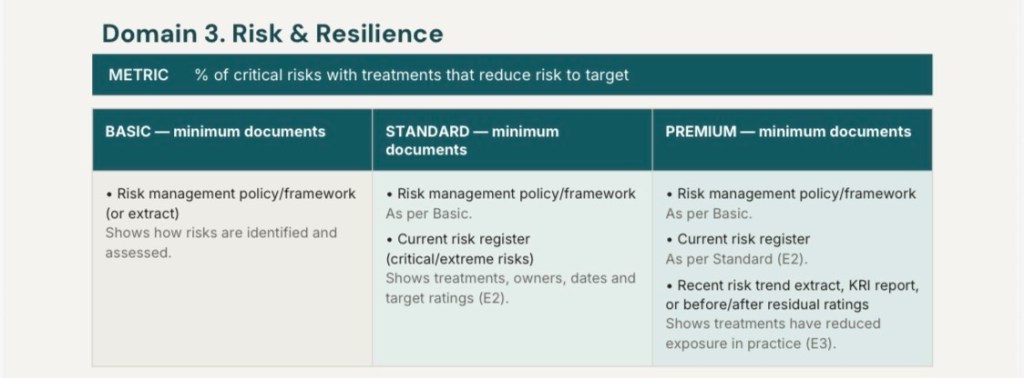
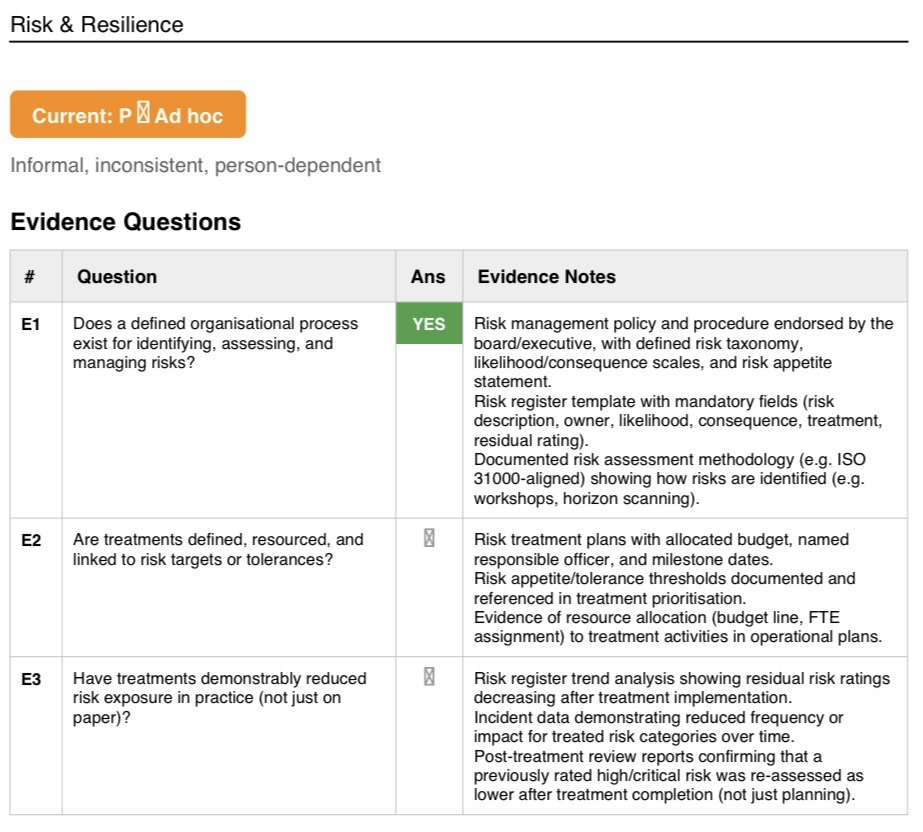
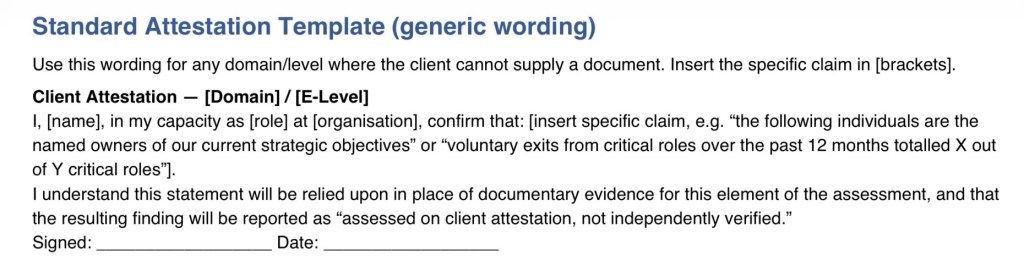
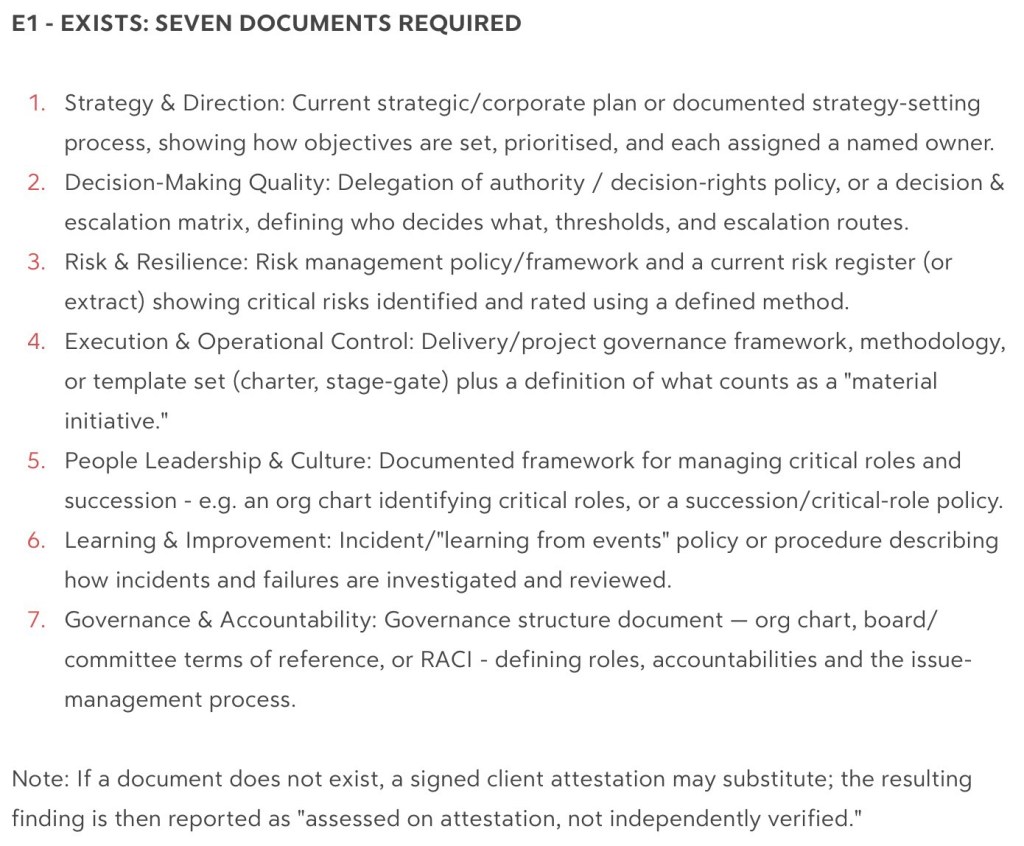
- E1 – Exists
- The Cartographer’s Lantern
In a valley often swallowed by fog, the village of Bellmere chose a new warden each year to keep its people safe from flood, fire, and storm.
One autumn, a clever merchant arrived with a polished brass lantern.
“This lantern,” he announced, “measures the village’s readiness. Hold it near your granaries, bridges, wells, and watchtowers. If it shines green, you are prepared. If it shines amber, you need improvement. If it shines red, you are in danger.”
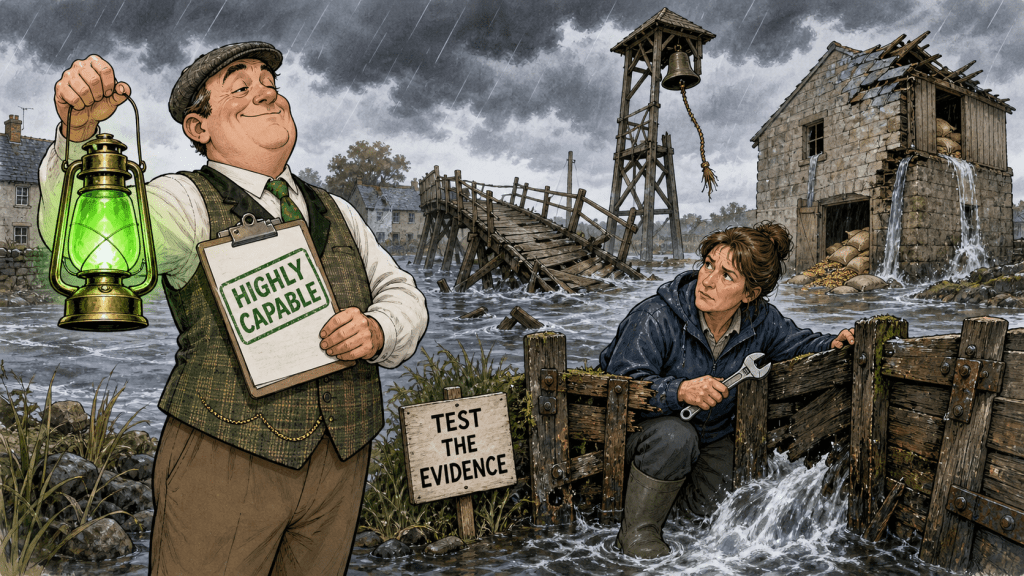
The council was delighted. The lantern was quick, tidy, and far less troublesome than inspecting muddy riverbanks, climbing old towers, testing the fire pumps, or asking weary villagers whether they knew what to do.
For three days, the council walked through Bellmere holding up the lantern.
At the granary, it glowed green.
At the bridge, green.
At the watchtower, green.
At the well, green.
The council prepared a handsome report. It declared Bellmere “Highly Capable in Emergency Readiness.” They hung it in the town hall beside a painting of the founder.
Only Mara, the old keeper of the river gate, frowned.
“Did anyone test whether the gate still closes?” she asked.
“The lantern shone green,” replied the mayor.
“Did anyone open the granary stores and see whether the grain is dry?”
“Green.”
“Did anyone climb the watchtower at night and see whether the bell rope reaches the bell?”
“Green, green, green,” said the council, growing impatient. “Must we doubt every good result?”
That winter, rain fell in the hills for six straight days.
When the river rose, Mara ran to the gate. The wooden mechanism had rotted behind its iron fittings. The gate would not move.
The watchman pulled the bell rope. It came loose in his hands.
Villagers rushed to the granary, only to find that a crack in the roof had spoiled much of the grain months before.
The bridge, certified green by the lantern, had a weakened foundation. It collapsed beneath the first wagon sent to carry children to higher ground.
Bellmere survived, but only because neighbours from the next valley saw the flood coming and arrived with ropes, boats, and food.
When the water receded, the council found the merchant’s lantern floating in the mud. Its brass was still bright. Its green light still shone.
The mayor took it to Mara.
“Why did it tell us we were ready?” he asked.
Mara turned the lantern over and opened its base. Inside was a small painted wheel with only one colour.
“It did not tell you that you were ready,” she said. “It told you what it had been made to show.”
From then on, Bellmere still used lanterns, lists, and reports. But before declaring anything green, the council demanded to see the river gate close, the bell ring, the grain inspected, the bridge tested, and the villagers practise their roles.
And each report began with a new question:
“What evidence would prove us wrong?”
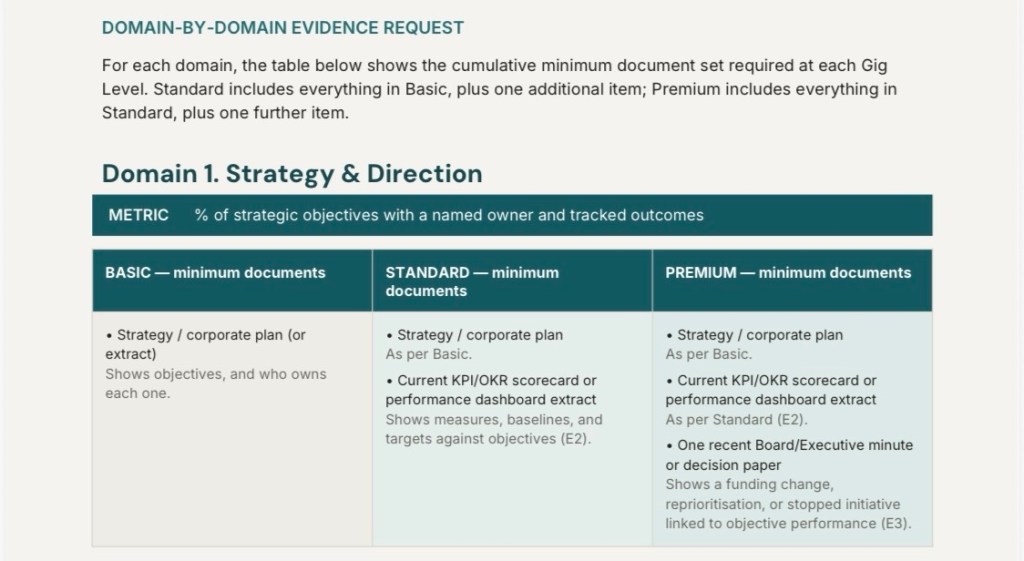
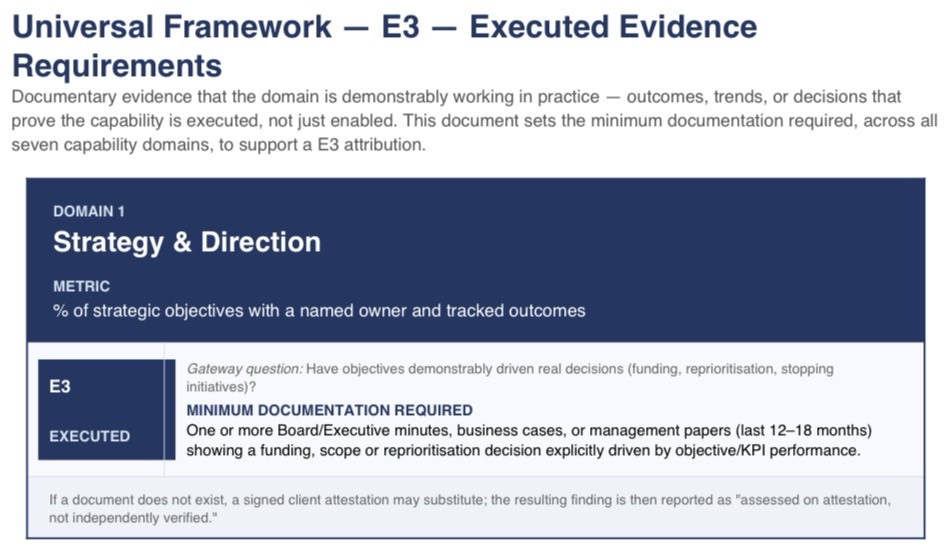
- Minimum Client Evidence Requirements
- The road ahead for the Sydney Swans
The comparison below treats Ms Ley’s quoted line “accountability must be extended to anyone who was aware of what was happening and had the power to act” as given and compares it against the well-documented legal/coronial “ought to have known” standard.
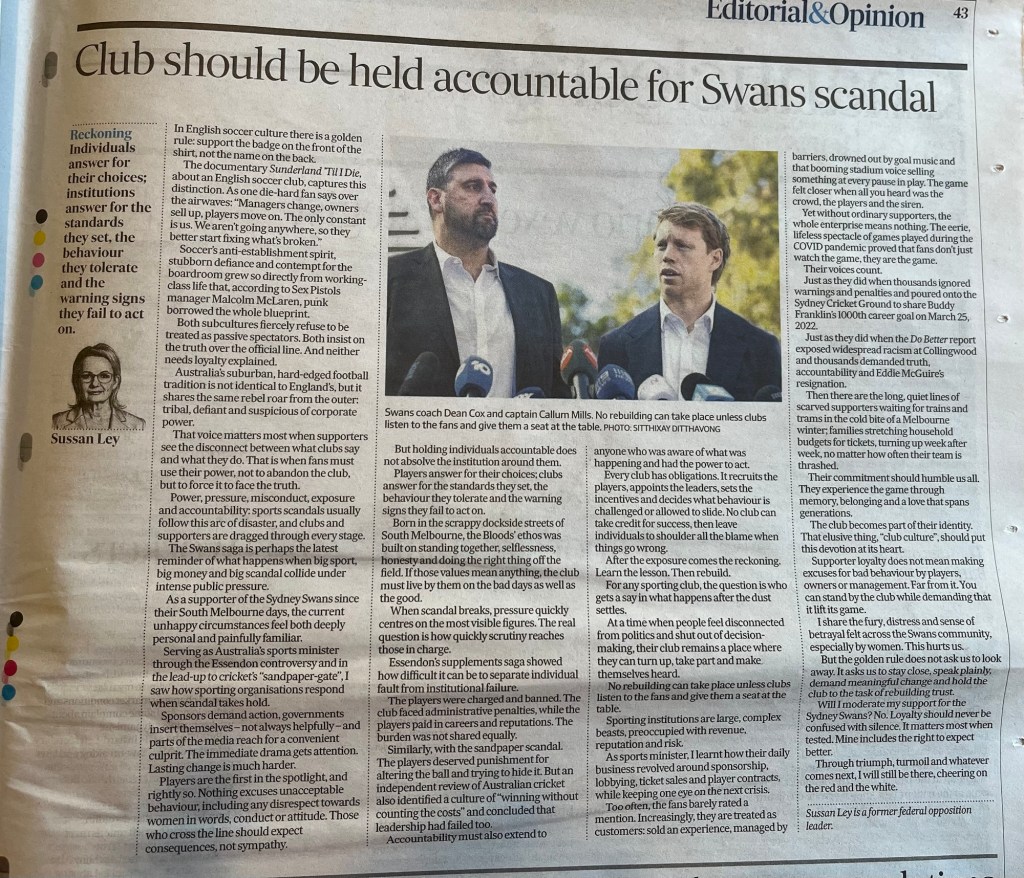
AFRWEEKEND 29-30 August 2026, p.43 The Core Overlap
Both formulations reject a purely formal test of accountability – “were you the person who did the act?” – in favour of a broader test based on knowledge and capacity to intervene. Ley’s standard (“aware of what was happening and had the power to act”) and the coronial test (“what ought you have known and done about the risk and its management”) share the same two-part logic:
- A knowledge element – actual or constructive awareness of the problem.
- A power/capacity element – the ability to have done something about it.
Under Australian negligence law, this is essentially the codified breach-of-duty test: a person is not liable unless the risk “was foreseeable (that is, a risk of which the person knew or ought reasonably to have known)” and a reasonable person in their position would have taken precautions. Coroners apply an analogous logic when examining whether an organisation or individual identified a risk, or should have, and whether the response was adequate given what was known or knowable at the time.[1][2]
Where the Two Diverge
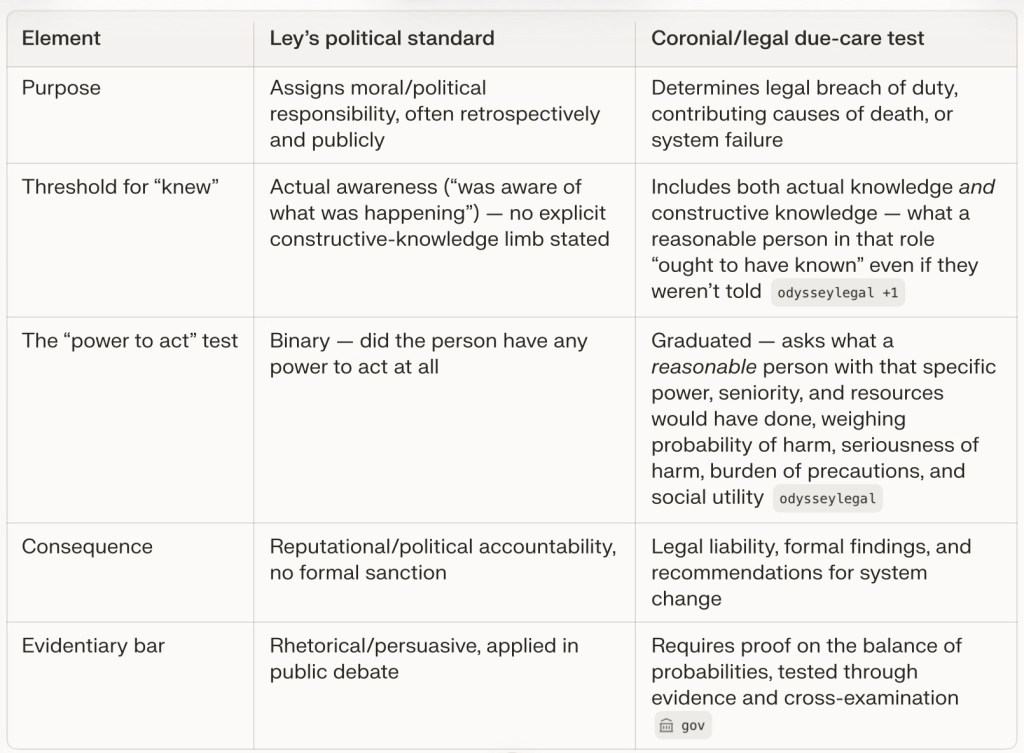
The Key Legal Nuance Ley’s Line Skips
The negligence/coronial standard explicitly includes constructive knowledge – you don’t escape accountability just because nobody told you. The test is whether a reasonable person in your position, given your role, seniority, and access to information, ought to have known, regardless of actual awareness. The Australian civil liability framework specifically instructs courts to weigh the probability of harm, its likely seriousness, the burden of taking precautions, and the social utility of the activity, when deciding whether a “reasonable person” would have acted.[1][3]
Ley’s phrasing — “anyone who was aware” — reads as a narrower, actual-knowledge standard on its face. If someone plausibly claims they didn’t know, her framing arguably lets them escape scrutiny, whereas the coronial test would still ask whether they should have known given their position and the information reasonably available to them. This is precisely the gap that recurs in institutional failure findings: senior figures often argue ignorance, and the coronial/negligence standard is specifically constructed to prevent that defence from being conclusive on its own.
Practical Read the Universal Framework
This maps neatly onto the E1/E2/E3 logic in the Universal Framework.
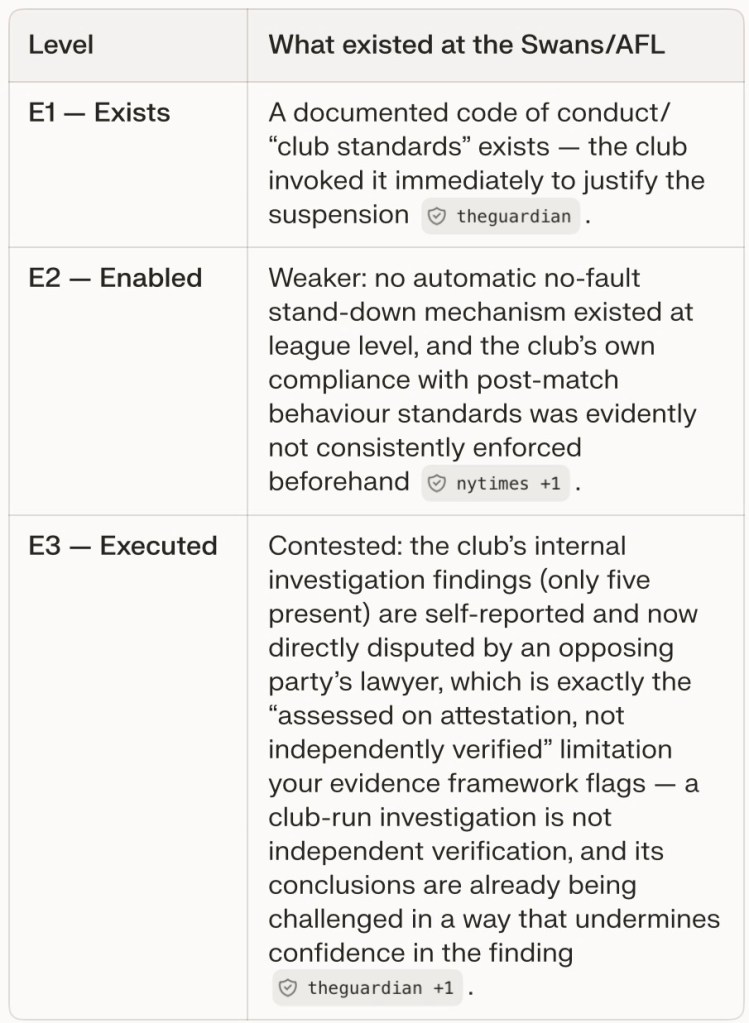
A “knew or ought to have known” standard is really an E1/E2 test – did an information/escalation process exist, and was the person enabled (through position, access, or reporting lines) to receive that information – regardless of whether they personally chose to look.
Ley’s narrower “was aware” framing risks collapsing accountability down to E3 only (did they demonstrably know and fail to act), which is a materially easier bar for an accountable person to clear than the coronial standard most governance and audit findings are actually built on.
Sources
[1] Understanding the Elements of Negligence https://www.odysseylegal.com.au/understanding-the-elements-of-negligence/
[2] Negligence https://content.nfplaw.org.au/wp-content/uploads/2024/09/Negligence.pdf
[3] LAWS1061 Revision Notes https://s3.studentvip.com.au/notes/15859-sample.pdf
[4] Review of the Law of Negligence Final Report https://treasury.gov.au/sites/default/files/2019-03/R2002-001_Law_Neg_Final.pdf
[5] principle in the duty of care in negligence https://www.unsw.edu.au/content/dam/pdfs/law/unsw-law-journal/2000-2009/Vol-No-23-2-11.pdf
[6] 7. Foreseeability, Standard of Care, Causation and Remoteness of … https://treasury.gov.au/sites/default/files/2019-03/R2002-001_Foreseeability.pdf
[7] file https://judicialcollege.vic.edu.au/media/886/file
[8] MEDICAL NEGLIGENCE: THE CONTOURS OF … https://law.nus.edu.sg/sjls/wp-content/uploads/sites/14/2024/07/1584-1997-sjls-jul-86.pdf
[9] Chapter summary – ch 3 – introduction to torts (negligence) https://store.thomsonreuters.com.au/product/AU/files/720506676/chapter_summary_21e___ch_3.pdf
[10] Secretary of State for Justice, R (on the application of) v HM Deputy … https://www.casemine.com/judgement/uk/5a8ff7b960d03e7f57eb18c5
[11] 1 https://s3.studentvip.com.au/notes/17847-sample.pdf
[12] Determining Breach of Duty of Care in Negligence Cases https://www.studocu.com/en-au/document/university-of-melbourne/torts/breach/61954198
[13] 2A. Breach of Duty of Care (Different Attempt) Flashcards https://www.brainscape.com/flashcards/2a-breach-of-duty-of-care-different-atte-6319539/packs/9395429
[14] Table of Contents https://s3.studentvip.com.au/notes/6260-sample.pdf
[15] Deprivation of liberty, death and Article 2 https://www.ukinquestlawblog.co.uk/dols-death-and-art2/
[16] Transcript 40682 https://pmtranscripts.pmc.gov.au/release/transcript-40682
[17] How the Liberals’ first female leader found herself here https://www.abc.net.au/news/2026-02-13/sussan-ley-liberals-leadership-spill/106325896
[18] Australian minister Sussan Ley resigns over expenses scandal https://www.bbc.com/news/world-australia-38592391
[19] Sussan Ley https://en.wikipedia.org/wiki/Sussan_Ley
[20] Sussan Ley praised for ‘standing up for democracy’ as Labor’s freedom of information crackdown looks set to fail https://www.theguardian.com/australia-news/2025/oct/13/sussan-ley-praised-for-standing-up-for-democracy-as-labors-freedom-of-information-crackdown-looks-set-to-fail
[21] Sussan Ley: Does Liberal Party drama show Australian politics still has a problem with women? https://www.bbc.com/news/articles/c4g5pjn3p50o
[22] 7.30: What Sussan Ley did to recover after 25 years in … https://iview.abc.net.au/show/7-30/series/0/video/SEGS2026107025616
[23] Sussan Ley: From punk pilot to a scandal-triggered resignation https://www.abc.net.au/news/2017-01-13/sussan-leys-time-in-the-office/8180824
[24] Tim Wilson gives second first speech https://www.theguardian.com/australia-news/live/2025/jul/29/australia-politics-live-albanese-tariff-trade-trump-us-question-time-sussan-ley-net-zero-parliament-gaza-palestine-ntwnfb
[25] How the Liberals will justify Sussan Ley’s ousting https://www.abc.net.au/news/2026-02-08/sussan-ley-liberals-coalition-leadership-spill-angus-taylor/106295860
[26] As Liberals’ New Leader, Sussan Ley Makes History https://thediplomat.com/2025/05/as-liberals-new-leader-sussan-ley-makes-history-but-faces-unprecedented-difficulties/
[27] Paddy Gourley https://johnmenadue.com/authors/paddygourley/
[28] Coalition Calls for Commonwealth Royal Commission into … https://www.liberal.org.au/2025/12/22/coalition-calls-for-commonwealth-royal-commission-into-the-bondi-attack-and-antisemitism
[29] Statement – The Coalition – The Hon. Sussan Ley MP https://sussanley.com/statement-the-coalition/
[30] Andrew Hastie’s resignation is a grenade in the lap of Sussan Ley. With the Liberal leader’s weakness now out in the open, the Opposition need to act fast to avoid an all-out mutiny: PETER VAN ONSELEN https://www.dailymail.co.uk/news/article-15159381/Andrew-Hasties-resignation-sussan-ley-PVO.html - How to avoid the normalization of deviance in organizations
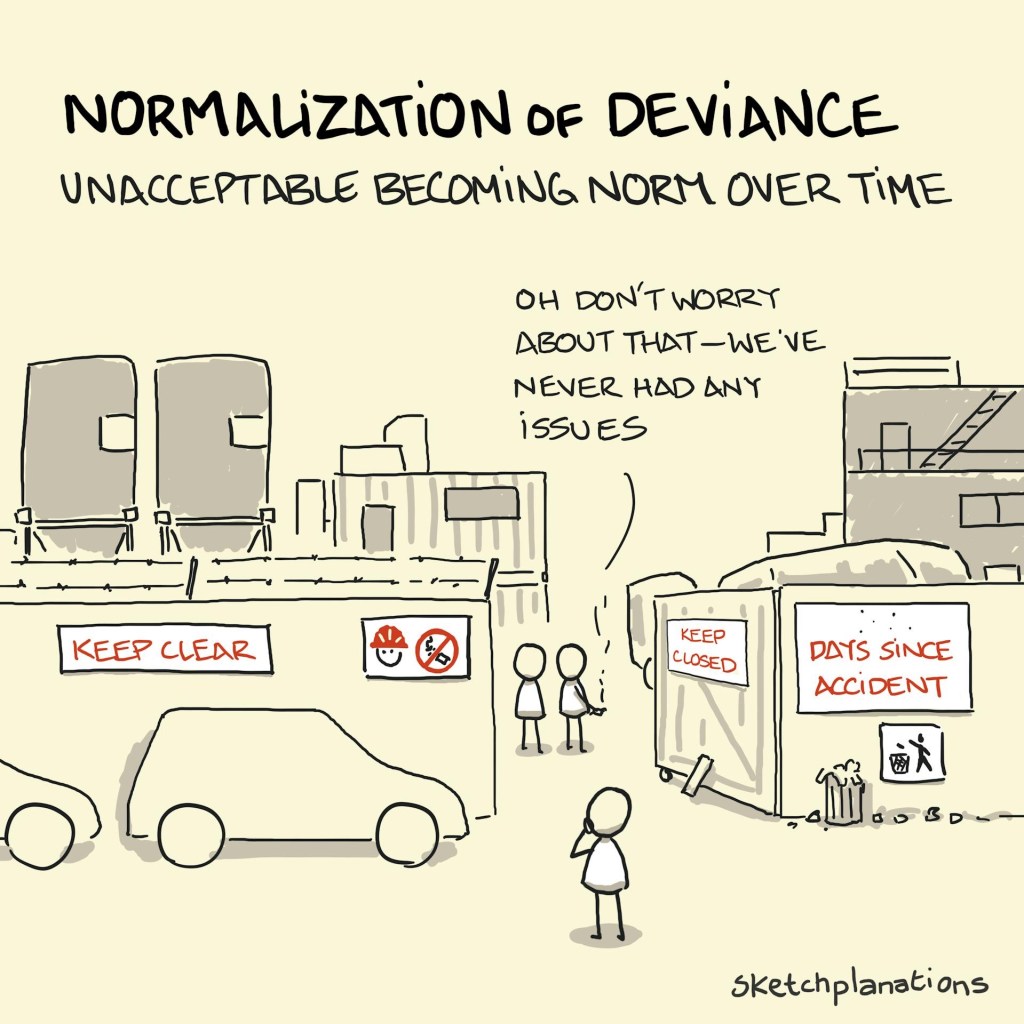
Avoiding normalization of deviance means treating every recurring workaround, unexplained anomaly, or missed control as evidence to investigate—not proof that the underlying risk is acceptable. The core discipline is simple: past success must not redefine the standard. NASA’s safety guidance expressly warns against using prior successful outcomes to redefine acceptable performance and calls for evidence-based assessment of probability and severity.^1
What it is
Normalization of deviance is the gradual process through which people depart from an agreed standard, experience no immediate disaster, and begin to regard the departure as normal practice. Over time, the workaround stops feeling like a deviation at all.^2
It rarely starts with recklessness. It often begins with a rational local response:
- “The approval takes too long; we will obtain it afterwards.”
- “The alarm always triggers; it is probably a false positive.”
- “We cannot fill that role this month; the team will cover it.”
- “The project is late, so we will skip the readiness review.”
- “The risk has been open for ages, but nothing has happened.”
The danger is the inference: nothing bad happened last time, therefore the risk is tolerable. That conclusion confuses luck, low frequency, or incomplete observation with demonstrated control effectiveness.
Design the countermeasures
Avoiding normalization of deviance means treating every recurring workaround, unexplained anomaly, or missed control as evidence to investigate—not proof that the underlying risk is acceptable. The core discipline is simple: past success must not redefine the standard. NASA’s safety guidance expressly warns against using prior successful outcomes to redefine acceptable performance and calls for evidence-based assessment of probability and severity.[1]
What it is
Normalization of deviance is the gradual process through which people depart from an agreed standard, experience no immediate disaster, and begin to regard the departure as normal practice. Over time, the workaround stops feeling like a deviation at all.[2][3]
It rarely starts with recklessness. It often begins with a rational local response:
- “The approval takes too long; we will obtain it afterwards.”
- “The alarm always triggers; it is probably a false positive.”
- “We cannot fill that role this month; the team will cover it.”
- “The project is late, so we will skip the readiness review.”
- “The risk has been open for ages, but nothing has happened.”
The danger is the inference: nothing bad happened last time, therefore the risk is tolerable. That conclusion confuses luck, low frequency, or incomplete observation with demonstrated control effectiveness.
Design the countermeasures
The strongest defences combine clear standards, visible operational evidence, independent challenge, and consequences for unresolved deviation.
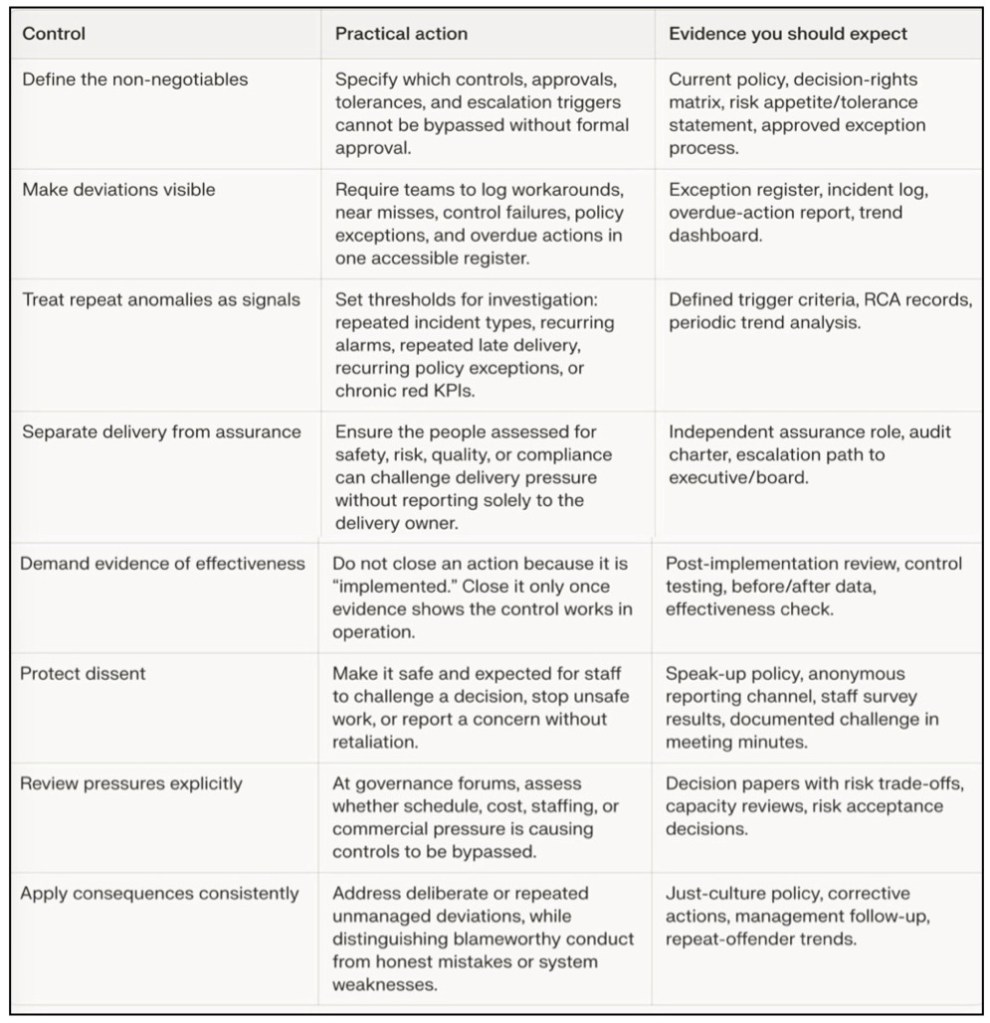
NASA’s own guidance is especially useful as a concise design test: require the system to be proven safe and effective to an acceptable risk level, rather than requiring someone to prove it is unsafe; deliberately prevent groupthink; keep safety assurance independent; and balance schedule and operational tempo against a comprehensive risk assessment. The Columbia Accident Investigation Board similarly identified organisational barriers to critical-safety communication, suppressed professional disagreement, fragmented management, and informal decision routes that operated outside formal rules.[1][4]
Make it operational
A practical way to turn the principle into routine management is to create a Deviation Review Loop.
1. Detect: Capture every material deviation from a standard, control, tolerance, approval route, or expected result—including near misses and “successful” workarounds.
2. Classify: Separate one-off human error, necessary emergency action, authorised exception, recurring workaround, and systemic control failure. The distinction matters because recurring workarounds are often the earliest warning.
3. Assess: Ask four questions:
- What standard or control was bypassed?
- Why did normal work require the bypass?
- What could plausibly happen under worse conditions?
- What evidence shows the risk is, or is not, controlled?
4. Decide formally: Either restore compliance, redesign the process/control, resource the required fix, or formally accept the residual risk at the right authority level. Do not leave the workaround unofficial.
5. Verify: Test whether the action changed behaviour and outcomes. For example, if a change was intended to prevent a repeat incident, look for a sustained fall in recurrence rather than merely a closed action item.
6. Escalate recurrence: A second or third instance should automatically attract more senior review. Repetition is not reassurance; it is evidence that the system may be adapting around a weakness.
Leadership behaviours
Leaders determine whether deviations are surfaced or buried. The most valuable behaviours are:
- Ask, “What are we doing outside the stated process to get the work done?”
- Ask for the uncomfortable data: overdue high-risk actions, repeated exceptions, near misses, control-test failures, unresolved audit findings, and red performance trends.
- Separate the question “Did we meet the deadline?” from “Did we meet the operating standard safely and reliably?”
- Thank people who expose problems early, especially when doing so delays a decision or delivery milestone.
- Do not reward heroic recovery from chronic under-resourcing while ignoring the conditions that made the heroics necessary.
- Personally test whether dissent reached the final decision-maker—not merely whether a meeting occurred.
A just culture is important here: people need confidence that reporting an error, near miss, or unsafe shortcut will trigger learning and improvement rather than automatic punishment. That does not mean no accountability; it means distinguishing deliberate disregard from a reasonable response to a poorly designed, poorly resourced, or contradictory system. Open communication, prompt treatment of deviations, continuous learning, and leaders willing to challenge unsafe practices even when it delays production are all highlighted as key prevention measures.[5][6]
Use the E1–E3 model
The Universal Framework is well suited to diagnosing this risk because it prevents an organisation from mistaking a written policy for a working capability. The useful test is:
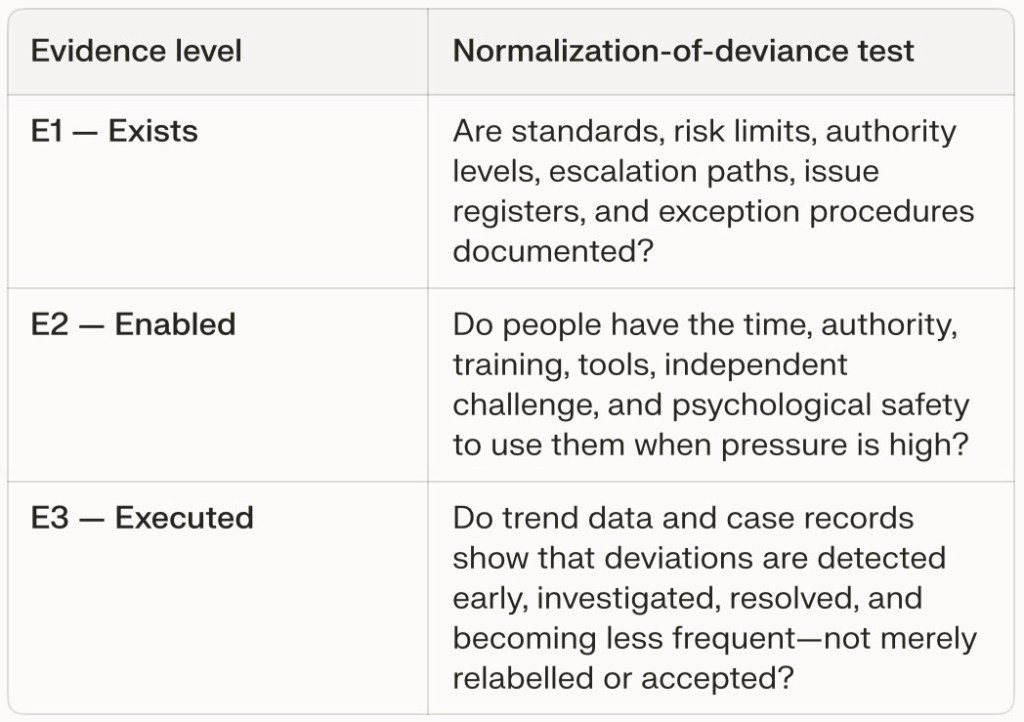
For example, a project may have a formal stage-gate procedure at E1. It reaches E2 only when governance forums receive meaningful schedule, cost, risk, and readiness information and can intervene. It reaches E3 only when records show gates actually stop, redirect, rescope, or defer unready initiatives—and delivery outcomes improve as a result.
That is the broader lesson: a process that exists but is routinely bypassed is not a mature control; it is evidence of a capability gap.
Sources
[1] The Cost of Silence: Normalization of Deviance and Groupthink https://sma.nasa.gov/docs/default-source/safety-messages/safetymessage-normalizationofdeviance-2014-11-03b.pdf?sfvrsn=4
[2] Normalization of Deviance Is Contrary to the Principles … https://pubmed.ncbi.nlm.nih.gov/36971528/
[3] A Qualitative Systematic Review on the Application of the … https://safetyinsights.org/2022/02/17/a-qualitative-systematic-review-on-the-application-of-the-normalisation-of-deviance-phenomenon-within-high-risk-industries/
[4] Columbia Accident Investigation Board Report Executive … https://www.nasa.gov/wp-content/uploads/2024/03/sept4-caib-report-executive-summary.pdf?emrc=f4843a
[5] When Cutting Corners Becomes the Norm: How Normalizing Deviance … https://www.army.mil/article/286745/when_cutting_corners_becomes_the_norm_how_normalizing_deviance_can_lead_to_disaster
[6] The normalization of deviance in healthcare delivery – PMC https://pmc.ncbi.nlm.nih.gov/articles/PMC2821100/
[7] NASA’s Understanding of Risk in Apollo and Shuttle https://ntrs.nasa.gov/api/citations/20190002249/downloads/20190002249.pdf
[8] [PDF] Lessons Learned from the Aerospace Industry https://ehss.energy.gov/deprep/archive/documents/PM031023_CAIB.pdf
[9] Safety Culture Threat: Normalization of Deviance https://www.cer-rec.gc.ca/en/safety-environment/safety-culture/safety-culture-learning-portal/safety-culture-threat-normalization-deviance.pdf
[10] SEDLAR, N., IRWIN, A., MARTIN, D. and ROBERTS, R. 2023. A qualitative systematic review on the application of the https://rgu-repository.worktribe.com/preview/1822740/SEDLAR%202022%20A%20qualitative%20systematic%20review%20(AAM).pdf
[11] Marie Yolande Djedje https://researchportal.lsbu.ac.uk/ws/portalfiles/portal/11522043/Exploring_Normalization_of_Deviance_and_Examining_Factors_that_Predict_Negative_Patient_Safety_Outcomes_the_Case_of_the_Ivory_Coast_1_.pdf
[12] A qualitative systematic review on the application of … https://rgu-repository.worktribe.com/OutputFile/1822740
[13] ASHRM Patient Safety Tip Sheet: Normalization of Deviance in …www.ashrm.org › system › files › media › file › 2021/02 › Normalization-… https://www.ashrm.org/system/files/media/file/2021/02/Normalization-of-Deviance-in-Healthcare.pdf
[14] [PDF] Columbia and Challenger: organizational failure at NASA https://josephhall.org/papers/nasa.pdf - How could a Capability Assessment have helped the Sydney Swans
Given this is a live, real, and highly sensitive situation – an active police investigation into alleged sexual assault, real named individuals, and potential legal action, I’ll reflect on the organisational-capability question responsibly: focusing on the governance/culture/risk lessons in the abstract, grounded in what’s publicly reported, without speculating on guilt, criminal outcomes, or unverified claims.
Governance & Accountability – The core failure pattern here isn’t the absence of a code of conduct; the Swans have “Bloods culture” standards. It’s the gap between E1 (a defined standard exists) and E3 (the standard is executed and enforced before a crisis, not after). Reports describe the club discovering the incident, investigating, and sanctioning within about 48 hours – reactive, not preventative. A capability assessment would have surfaced, well before this week, whether the club’s behavioural standards had E2 evidence: active monitoring, a lived escalation pathway, and consequences applied consistently to star players, not just written policy.[4]
Risk & Resilience – Elite sporting clubs carry a foreseeable risk category: high-profile young athletes, alcohol, travel, hotel stays, media exposure. A mature risk domain would have this specific risk on the register with defined treatments (curfews, chaperoning protocols, post-match travel conduct rules) rather than relying on general conduct policy. The AFR’s read on this as “a cultural lesson for CEOs” is exactly this point – foreseeable risks that weren’t proactively treated.[18]
People Leadership & Culture – This is the domain most clearly exposed. Former co-captain Kieren Jack described the club’s “Bloods culture” as feeling “broken,” and reporting describes “strong resentment” within the playing group over how the situation was handled. A capability assessment doesn’t just check whether a values statement exists – the E2/E3 evidence would test whether leaders are equipped and are actually intervening on lower-level warning signs (out-of-hours conduct, past incidents, dressing-room dynamics) long before conduct escalates to something requiring police involvement.[5]
Decision-Making Quality – The club’s own chair and CEO have had to repeatedly clarify, across multiple statements, exactly what the sanctions do and don’t relate to. That kind of public re-explanation under pressure is often a symptom of decision rights and crisis-communication authority not being clearly pre-defined – precisely the E1 evidence (a defined decision framework with escalation paths) this domain tests for.[8]
Learning & Improvement – Chairman Andrew Pridham has now announced “a comprehensive review of the club’s culture” — which is the right instinct, but it’s happening after sponsors have paused partnerships, players have lost individual endorsements, and the club’s on-field season is compromised. A functioning Learning & Improvement capability would have been running this kind of review continuously (drawing on prior incidents across the AFL more broadly – this isn’t the code’s first such episode) rather than initiating it only once the story became a national one.[23]
The honest caveat
A capability assessment is a governance and organisational-design tool – it can surface whether the right structures, ownership, and enforcement patterns exist before a crisis, and it can prompt a club to close E1→E3 gaps ahead of time. It cannot predict or prevent individual criminal conduct, and it’s not a substitute for the active police investigation, which is still ongoing with no charges laid. The value here would have been entirely upstream: reducing the odds that gaps in enforcement, risk treatment, and culture accountability were allowed to sit at “Ad hoc” for as long as they evidently did.
Sources
[1] Swans players apologise after being banned for rest of … https://www.abc.net.au/news/2026-08-19/we-are-deeply-sorry-swans-players-break-silence-alleged-incident/107055864
[2] Fresh details emerge as Swans squad feels ‘strong resentment’ in wake of player bans https://www.news.com.au/sport/afl/moved-on-afl-legends-speak-out-as-sydney-swans-bloods-culture-in-tatters/news-story/b494d629599862eb75ebb0d88423b4f6
[3] Victoria Police issue warning to media over alleged sexual … https://www.theguardian.com/sport/2026/aug/20/sydney-swans-incident-coach-shock-anger-players-ban-ntwnfb
[4] Sydney Swans scandal is cultural lesson for CEOs https://www.afr.com/work-and-careers/workplace/swans-scandal-is-cultural-lesson-for-business-from-the-ceo-down-20260820-p60pym
[5] Sydney Swans face fresh assault allegations amid culture review https://www.youtube.com/watch?v=ux7gF9IzOkg
[6] AFL Players Association labels Swans allegations ‘very serious’ https://www.abc.net.au/news/2026-08-20/afl-players-association-labels-swans-allegations-serious/107055982
[7] Sydney Swans say players ‘in serious breach’ of club … https://www.abc.net.au/news/2026-08-18/sydney-swans-players-in-serious-breach-of-club-standards/107051708
[8] Advocates welcome official responses to Sydney Swans … https://www.abc.net.au/news/2026-08-19/sydney-swans-questions-afl-policy-sexual-assault-allegations/107051552
[9] Sexual assault allegation involving Sydney Swans a sign … https://www.abc.net.au/news/2026-08-21/sydney-swans-allegations-reflects-misogyny-in-afl-culture/107056180
[10] ‘Awful mess’: Swans’ standing ‘out the window’… and trade scenario they ‘won’t shy away from’ https://www.foxsports.com.au/afl/teams/sydney-swans/afl-news-2026-sydney-swans-player-incident-five-starts-stood-down-bloods-culture-crisis-isaac-heeney-nick-blakey-chad-warner-trade-contract-status/news-story/1b62eb1dea14961e6407c7a44a364909
[11] Anger and hurt across AFLW after Sydney Swans allegations https://www.abc.net.au/news/2026-08-20/aflw-put-under-uncomfortable-spotlight-after-mens-players-saga/107054688
[12] Sydney Swans sponsors suspend partnerships with … https://www.abc.net.au/news/2026-08-20/sydney-swans-sponsors-suspend-partnerships/107058932
[13] Sydney Swans scandal deepens as women raise safety fears https://www.nation.com.pk/20-Aug-2026/sydney-swans-scandal-deepens-women-raise-safety-fears
[14] Sydney Swans coach ‘extremely disappointed’ as club faces call on … https://www.theguardian.com/sport/2026/aug/18/sydney-swans-coach-extremely-disappointed-as-club-faces-call-on-standing-down-players-over-alleged-sexual-assault-ntwnfb
[15] Sydney Swans involved in ‘alleged incident’ as police … https://www.abc.net.au/news/2026-08-17/sydney-swans-afl-footballers-involved-in-incident-in-melbourne/107046058
[16] Sydney Swans scandal deepens with new allegations | 7NEWS https://www.youtube.com/watch?v=nGtV5e_ZU9A
[17] Sydney Swans AFLW Captain opens up about a club in crisis https://www.sbs.com.au/news/podcast-episode/sydney-swans-aflw-captain-opens-up-about-a-club-in-crisis-evening-news-bulletin-21-august-2026/xquk5kc5f
[18] Sydney Swans under investigation over alleged sexual … https://www.youtube.com/watch?v=Ktov0YQjrgc
[19] The Swans abandoned the old-school script. What happens next will shape the club’s future https://www.theage.com.au/sport/afl/the-swans-abandoned-the-old-school-script-what-happens-next-will-shape-the-club-s-future-20260819-p60pks.html
[20] Sydney Swans will sanction players for ‘serious breach’ over … https://www.theguardian.com/australia-news/2026/aug/18/afl-chief-breaks-silence-over-deeply-concerning-sydney-swans-sexual-assault-allegations-ntwnfb
[21] Sydney Swans fans grapple with scandal ahead of double- … https://www.abc.net.au/news/2026-08-23/swans-fans-grapple-with-scandal-ahead-of-double-header/107066804
[22] Sydney Swans suspend five players for rest of season | 7NEWS https://www.youtube.com/watch?v=9GzFQv3DzaI
[23] Suspended Sydney Swans players issue apology for their behaviour | 7.30 https://www.youtube.com/watch?v=eXTWRmjhzyA
[24] Swans CEO ‘shocked’ by allegations https://www.theage.com.au/sport/afl/swans-ceo-shocked-by-allegations-20260817-p60p33.html
[25] AFL referred to antisemitism royal commission after opening round speech controversy https://www.abc.net.au/news/2026-03-16/afl-antisemitism-royal-commission-sydney-swans/106460880
[26] Swans private ownership: the soaring highs but inevitable lows https://www.espn.com/afl/story/_/id/45833015/afl-sydney-swans-40-years-vfl-private-ownership-geoffrey-edelsten-part-2
[27] “Culture is fluid, it’s not a tattoo” is the biggest lesson for Bob … https://www.facebook.com/abcsport.au/videos/culture-is-fluid-its-not-a-tattoo-is-the-biggest-lesson-for-bob-murphy-out-of-th/2281712042368710/
[28] New Twist In Sydney Swans Hotel Saga As Two Women Try Sue For Their ‘Suffering’ | 10 News https://www.youtube.com/watch?v=Cxl0aKXBgns
[29] WATCH: AFL CEO questioned about Sydney Swans Scandal … https://www.youtube.com/watch?v=Sm4XnMrrFgY
[30] ‘Embarrassed & Ashamed’ 🗣️ Swans bosses front media as ‘culture problem’ questioned | Fox Footy https://www.youtube.com/watch?v=OL6deqU9cNo - How could Candid Cycle have helped the Sydney Swans?
“If this needs explaining tomorrow, it needs challenging tonight.”
Candid Cycles could not guarantee that the Sydney Swans avoided an alleged incident, nor should it replace police processes. But it could help a club make its behavioural standards real in high-risk settings—especially away trips, alcohol, group dynamics and team hotels—through reflection, peer challenge, early intervention and accountable follow-through.
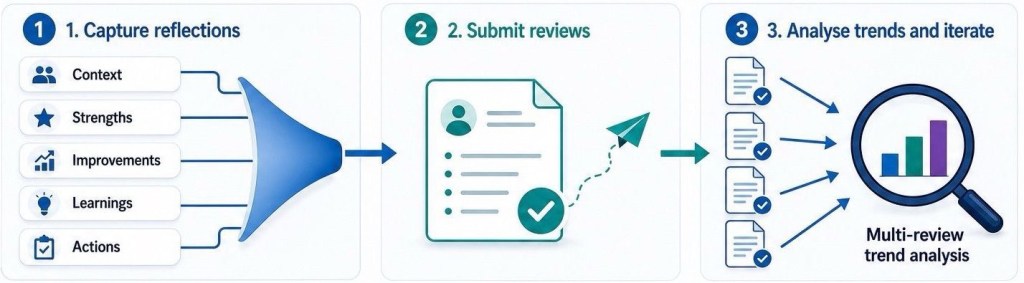
Candid Cycle Shift from rules to practice
Most clubs already have codes of conduct, alcohol rules and education programs. The weakness is often the gap between knowing a rule and applying judgement in a live social situation.
The aim is not paternalism. It is to make personal responsibility and peer intervention concrete before judgement is impaired or group norms take over.
Strengthen group accountability
Where several players are involved in an off-field episode, the core control is not merely individual compliance—it is collective responsibility. A Candid Cycle-based process could equip leaders, senior players and teammates to interrupt emerging risk rather than treat it as someone else’s private matter.
Practical controls might include:
- A designated player leadership pair and welfare contact for each away trip.
- Explicit expectations that players intervene or report where another person may be unsafe, impaired or unable to consent.
- A confidential, no-delay pathway for players, staff, hotel personnel or guests to raise concerns.
- A protected post-event debrief that separates welfare and safeguarding facts from rumour, media management and disciplinary decision-making.
- A recurring thematic review of alcohol-related incidents, near misses, complaints and policy exceptions.
The key distinction is between an incident and a near miss. A player who intervenes, leaves a situation, calls for help or reports concern should be reinforcing the culture—not “dobbing.”
Improve crisis learning
After an event, Candid Cycle could provide a defensible learning system without prejudging an ongoing investigation. It would document:
- What standards, travel controls and support arrangements were in place.
- What warning signs, decisions and interventions occurred before and during the event.
- What the club knew, when it knew it, and which escalation paths were activated.
- Which actions are appropriate immediately—such as welfare support, evidence preservation, stand-down decisions and safeguarding changes.
- What longer-term corrective actions need board-level ownership and assurance.
That is particularly important because advocates have welcomed firm responses while also raising questions about timing and AFL policy settings. The club’s current sanctions are substantial, but sanctions are retrospective. A disciplined capability cycle is designed to create prevention, early interruption and organisational learning.^3
Candid Cycle proposition
For the Swans—or any elite sporting organisation—the proposition would be:
Turn values, consent and behavioural standards into a repeatable team practice: anticipate risk, challenge early, act safely, learn without defensiveness, and verify that safeguards work.
This would complement, not substitute for, independent safeguarding, employment processes, police investigation and legal advice. It also preserves the crucial principle that no conclusion should be drawn about alleged criminal conduct before the relevant investigation is complete.
- How Could Candid Cycle have helped KPMG?
Candid Cycle could not guarantee that misconduct never occurred, but it could have made it harder to normalise, conceal, and mishandle. Its greatest value would be as a structured, evidenced learning-and-escalation system around sensitive engagements, bid decisions, and whistleblower concerns.

KPMG Australia’s crisis reportedly centres on alleged misuse of confidential client material to pursue other audit work, alongside serious criticism of how a whistleblower’s concerns were handled. The fallout has included leadership departures, client distrust, parliamentary scrutiny and regulatory investigation.[1][2][3]
Where the control system failed
The apparent issue was not merely an individual breach of confidentiality. It was a breakdown across several organisational capabilities: Capability Apparent failure Consequence Information stewardship Confidential client information was allegedly accessed or used outside an authorised purpose Fundamental loss of client trust Ethical decision-making Commercial incentives may have overpowered professional obligations Conduct perceived as “revenue growth at all costs” Speak-up culture The whistleblower was reportedly pressured and subject to a covert computer search Deterrence of future reporting Escalation and assurance Concerns were not independently and transparently resolved early A manageable internal issue became a public institutional crisis Organisational learning Similar warning signals were not converted into systemic corrective action Repetition, delay and reputational contagion
Clients including Lendlease, Westpac, Optus, Dexus and Macquarie subsequently expressed or signalled doubts about KPMG’s trustworthiness; Lendlease moved away from the firm after the breach.[3][4]
How Candid Cycle could help
1. Turn sensitive work into a deliberate reflection point
For each high-risk audit, tender, client transition or cross-account pursuit, Candid Cycle could require a short structured debrief:
- What confidential information did we encounter?
- What was the authorised purpose, access basis and retention rule?
- Did anyone suggest using insights, documents or relationships beyond that purpose?
- What conflicts or incentives affected judgement?
- What action is required before the next bid, client interaction or decision?
This changes “ethical conduct” from a policy people attest to annually into a recurring operational practice. It also provides early visibility where teams are rationalising boundary-crossing behaviour.

2. Make the conflict visible before a bid
A useful Candid Cycle workflow would link the learning cycle to a formal confidentiality-and-independence challenge before a tender is approved:
- Experience: Identify relevant existing client knowledge, systems access, documents and personnel involvement.
- Reflection: Ask whether any of that knowledge creates actual or perceived misuse risk.
- Sense-making: Compare the situation with professional standards, client commitments and internal policy.
- Action: Record a decision—ring-fence, remove people, seek client consent, decline the opportunity, or escalate for independent review.
- Review: Assess whether the controls worked after the bid or engagement.
The critical point is that the record should preserve not only the conclusion, but the reasoning, dissenting views, mitigation owners and review date.
Whistleblowing is the sharper use case
The most consequential Candid Cycle application may have been after the first concern was raised. A properly governed issue-learning cycle would distinguish a concern about misconduct from a people-management problem.
It could establish:
- A protected, independently administered channel for issue capture and follow-up.
- A prohibition on investigating the reporter except where narrowly necessary, independently authorised and legally justified.
- A transparent case pathway: allegation, containment, evidence preservation, conflict check, independent investigator, findings, remediation, assurance review.
- Anonymous or confidential thematic reporting to a board-level ethics, audit or risk body.
- A tracked “lessons-to-controls” register so that findings produce changes to access controls, tender governance, training, incentives and quality assurance.
That matters because public reporting indicates the whistleblower’s treatment became a major part of the trust damage—not simply the original allegations.[3][5]
Design principles for Candid Cycle
For an organisation such as KPMG, Candid Cycle should not be positioned as a generic retrospective tool or culture survey. It should operate as a capability-assurance layer with clear safeguards:
- Independence: High-severity cases route outside the implicated business line.
- Evidence integrity: Time-stamped records, defined permissions, auditable amendments and retention controls.
- Psychological safety: Confidential reporting, explicit non-retaliation protections and monitored retaliation indicators.
- Decision accountability: Named decision owners, due dates and escalation thresholds.
- Thematic intelligence: Detect recurring patterns across service lines, offices and clients without exposing unnecessary case detail.
- Board-ready reporting: Aggregate indicators on confidentiality, conflicts, speak-up health, overdue actions and control effectiveness.
For example, a dashboard might show that five separate bid debriefs flagged “informal use of client intelligence” as a concern. That is not a training issue to file away; it is a leading indicator demanding immediate intervention.
The strategic proposition
Candid Cycle’s pitch in this setting is not “help people be more candid.” It is:
Help organisations convert uncomfortable signals into protected escalation, defensible decisions, verified corrective action and demonstrable learning—before those signals become a crisis.
KPMG’s case illustrates that trust is lost through a sequence: boundary crossing, rationalisation, weak challenge, poor response to dissent, opacity, and then external exposure. A disciplined cycle of reflection, escalation, action and independent verification could interrupt several of those links—even if it cannot eliminate every instance of misconduct.
Sources
[1] Breakingviews – KPMG’s self-destruction puts Big Four on notice https://www.reuters.com/commentary/breakingviews/kpmgs-self-destruction-puts-big-four-notice-2026-06-26/
[2] Australia regulator reviews audit conduct complaints at Big Four … https://www.reuters.com/sustainability/australia-watchdog-reviews-big-four-audit-complaints-after-kpmg-allegations-2026-07-08/
[3] KPMG Australia under fire as parliamentary committee … https://www.abc.net.au/news/2026-06-19/kpmg-inquiry-scandal-accounting-industry-parliamentary-hearing/106817096
[4] Macquarie, Westpac, Dexus, Optus cast doubt over ‘ … https://www.abc.net.au/news/2026-08-14/macquarie-westpac-dexus-optus-grilled-kpmg-audit-leaks-inquiry/107034656
[5] Leaks, lawyers and a whistleblower: how did KPMG’s failings emerge – and could more have been done? https://www.theguardian.com/australia-news/2026/jun/28/kpmg-failings-leaks-lawyers-whistleblowers-partners-consultancy-firm
[6] Navigating an erosion in trust https://kpmg.com/us/en/articles/2026/february-2026-economic-compass.html
[7] ‘Fundamental breach of trust’ by KPMG: Lendlease chairman https://www.afr.com/companies/professional-services/fundamental-breach-of-trust-by-kpmg-lendlease-chairman-20260619-p608bi
[8] KPMG lost its clients’ trust, yet kept winning government contracts. Here’s what needs to change https://theconversation.com/kpmg-lost-its-clients-trust-yet-kept-winning-government-contracts-heres-what-needs-to-change-284733
[9] KPMG the latest example of accountants being … https://www.abc.net.au/news/2026-06-18/kpmg-scandals-in-accounting/106810630
[10] KPMG partners scramble for exits as whistleblower fallout escalates https://www.afr.com/companies/professional-services/kpmg-partners-scramble-for-exits-as-whistleblower-fallout-escalates-20260604-p603u3
[11] KPMG faces first major client loss from whistleblower scandal https://www.smh.com.au/business/companies/kpmg-faces-first-major-client-loss-from-whistleblower-scandal-20260601-p602rf.html
[12] AI hallucinations spark a trust crisis for consulting firms https://www.emarketer.com/content/ai-hallucinations-spark-trust-crisis-consulting-firms
[13] Inquiry: KPMG has lost public confidence https://greens.org.au/news/media-release/inquiry-kpmg-has-lost-public-confidence
[14] Trust breaks down in a predictable order: Big challenge for … https://www.crikey.com.au/2026/07/10/big-four-kpmg-ey-deloitte-pwc-trust-accountability/
[15] Weekend Reading: KPMG — Trust as a Service … https://www.linkedin.com/pulse/weekend-reading-kpmg-trust-service-accountability-threat-bt7hc