
Is your organization currently capable of performing, governing, and learning at the right level?
Know how well your organisation is going?
Confident of your view?
What evidence do you rely on?
If you need assurance or you’re looking to identify improvement opportunities, check which of our three service levels best suits you.
Capability Assessment Methodology
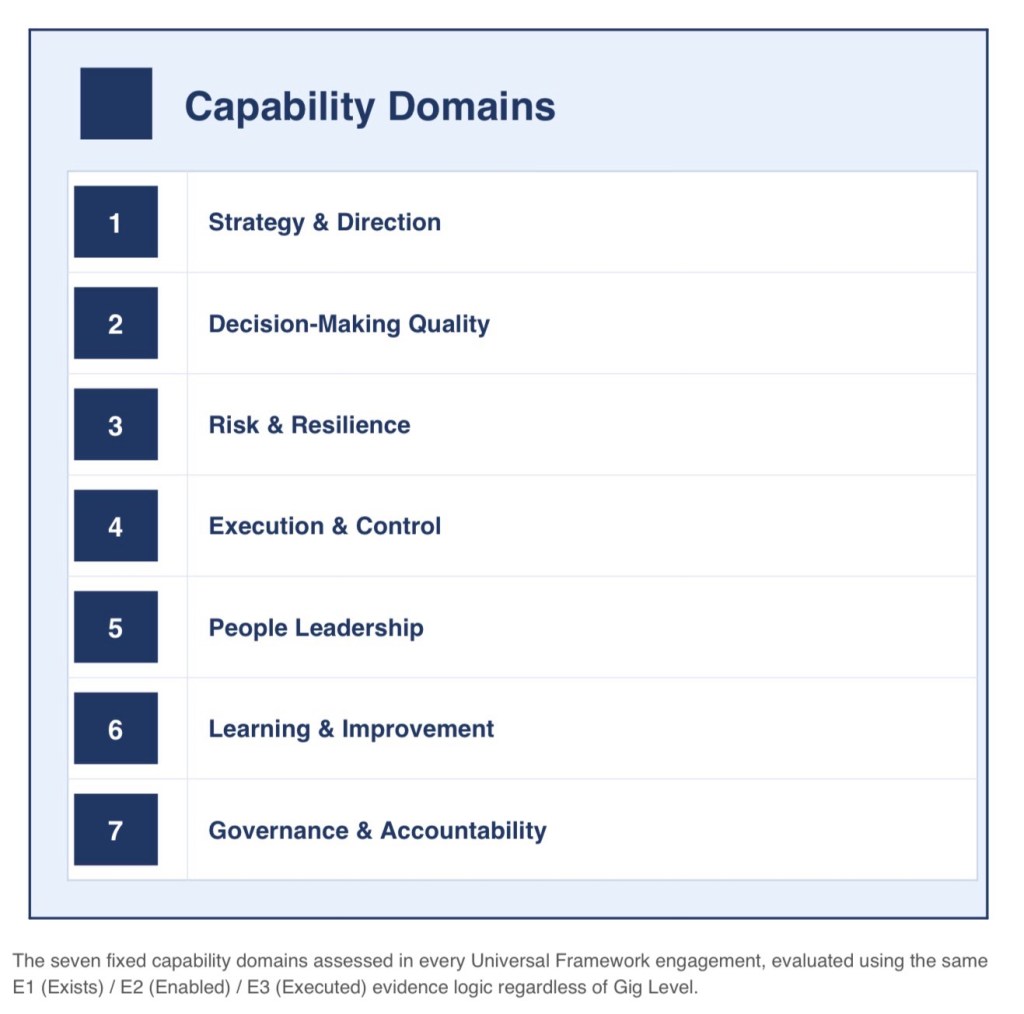
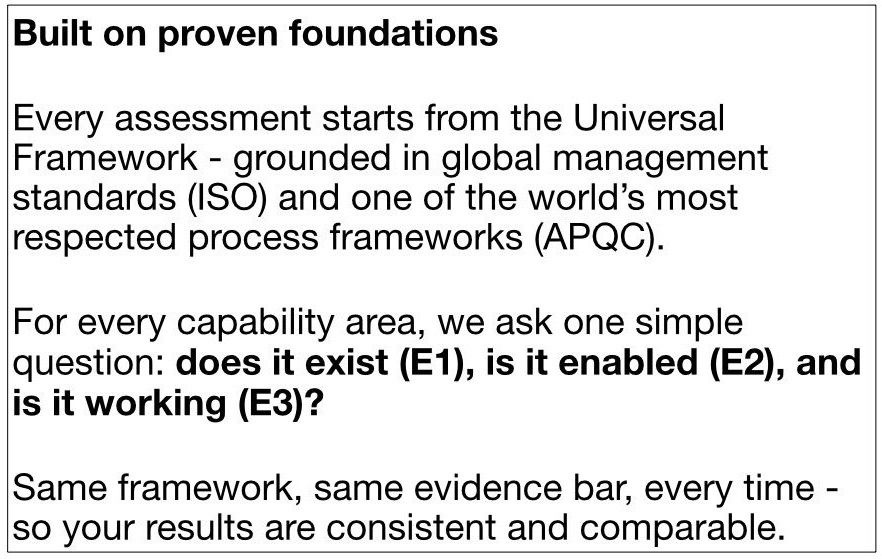
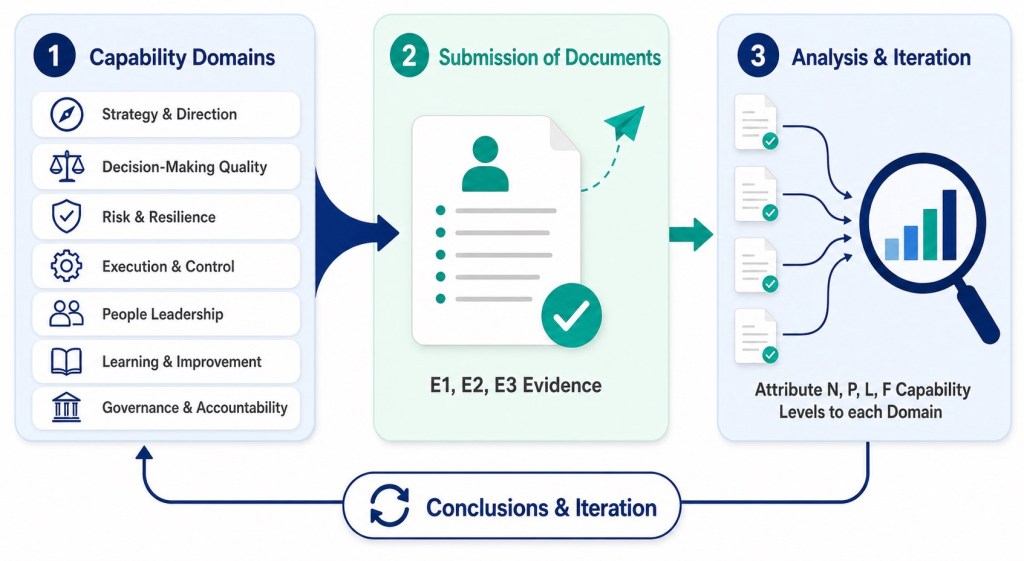
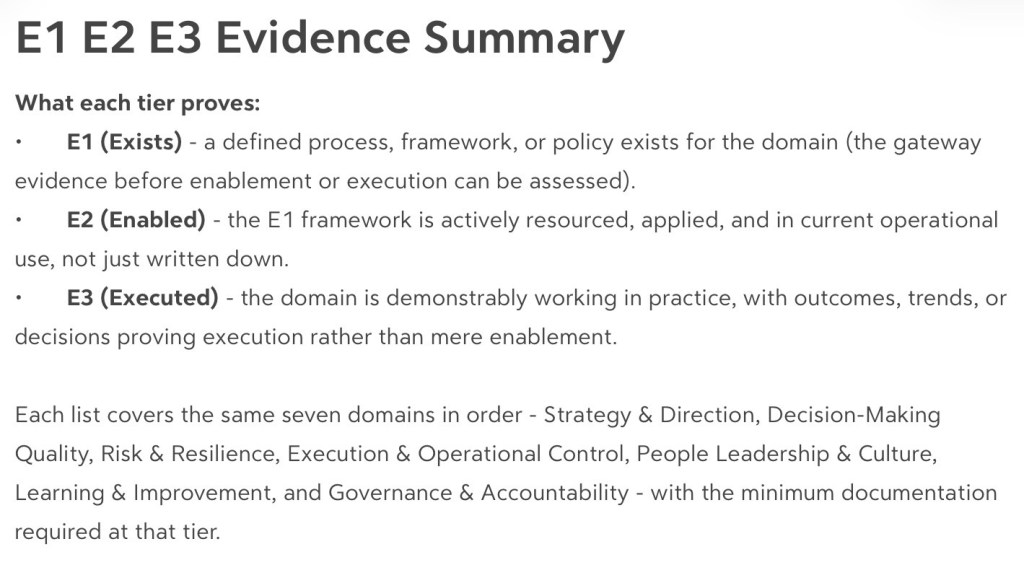
Three evidence tests (E1–E3)
For each domain we look for three levels of evidence:
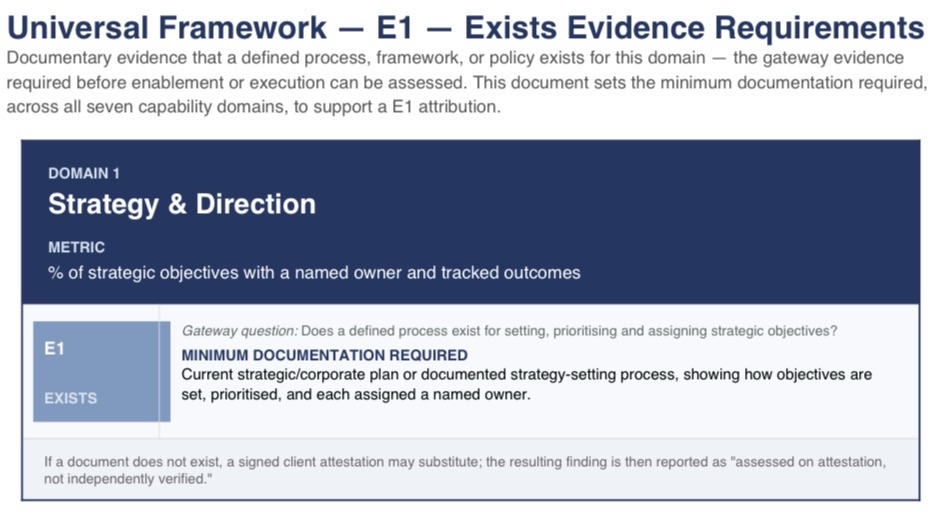
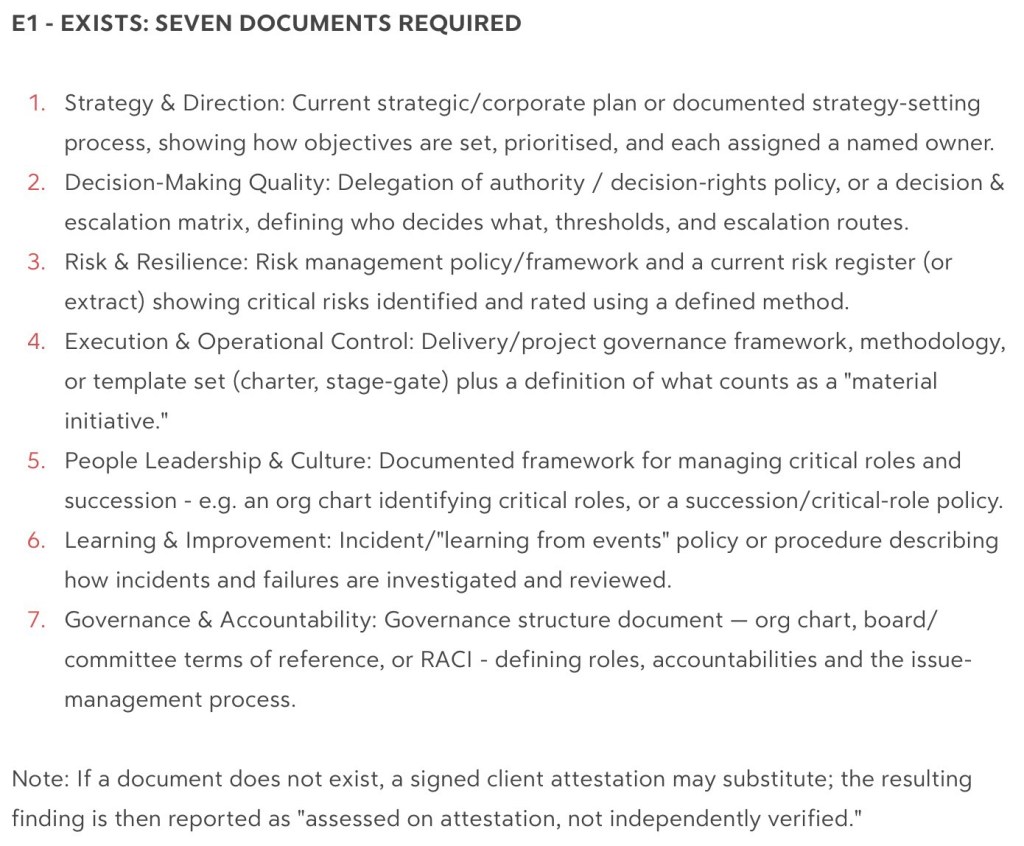
- E1 – Exists
Do the core structures and processes exist?
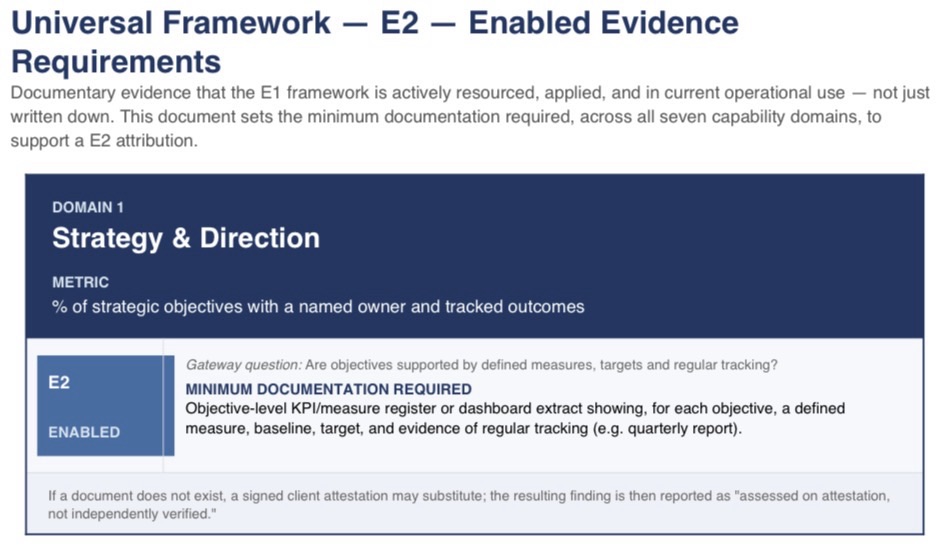
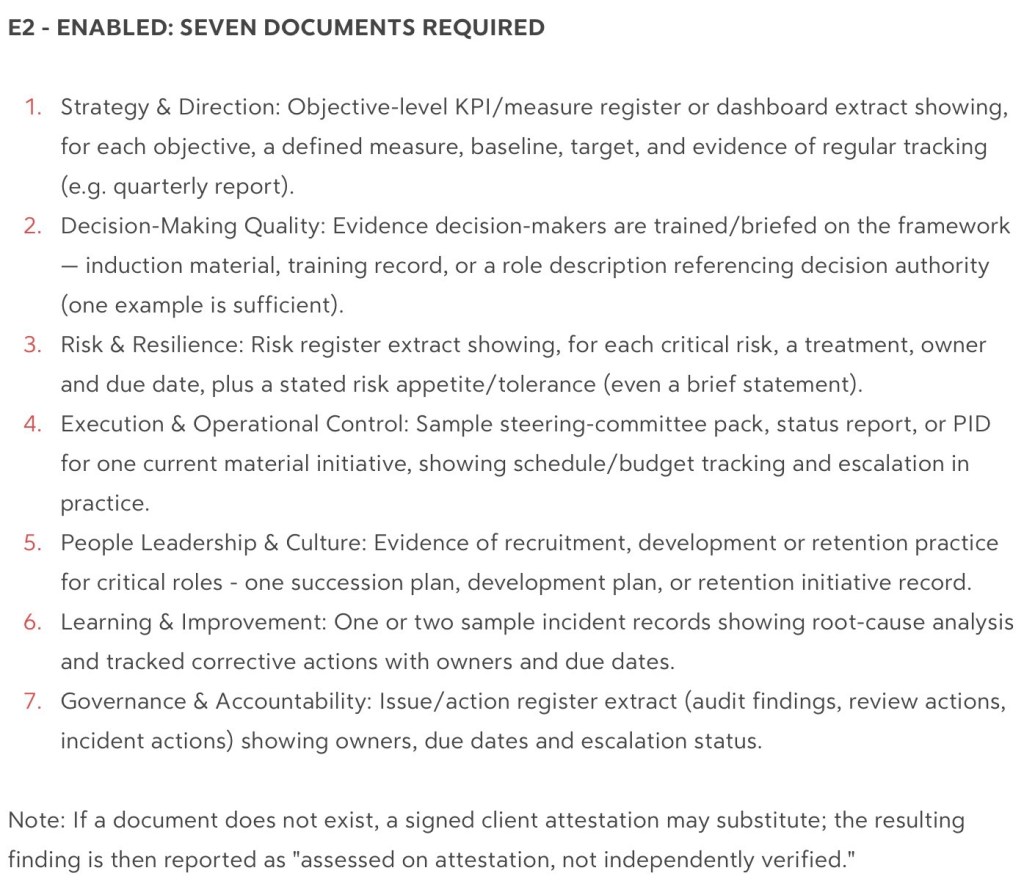
(Policies, frameworks, processes, roles, plans, registers, documented approaches.) - E2 – Enabled
Are they supported and usable?
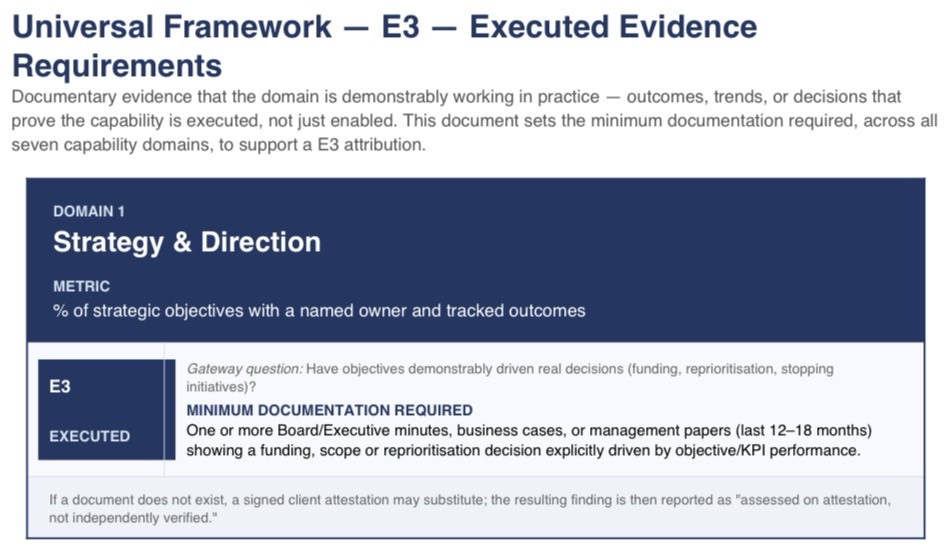
(Clear owners, resources, training, tools, data, and regular review cycles.) - E3 – Executed
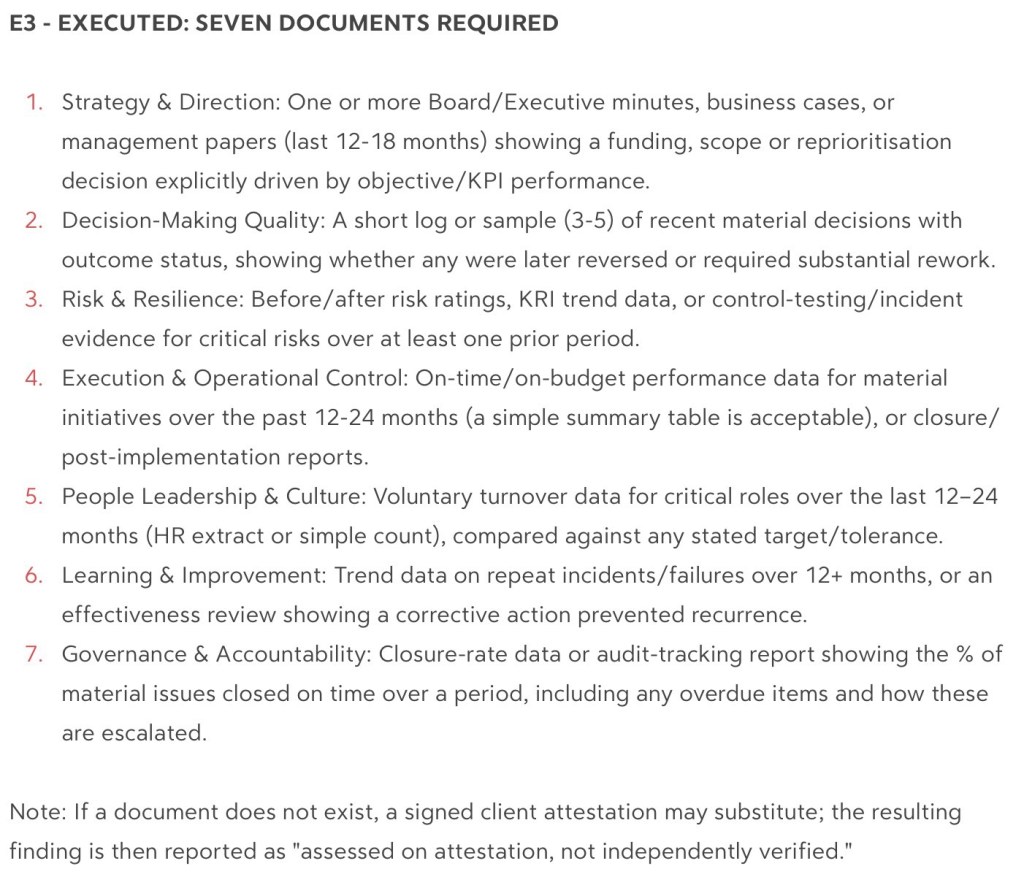
Are they actually used and making a difference?
(Real examples where they shape decisions, behaviours, investments, and outcomes.)
In practical terms, E1/E2 tell you “have we built the system?” and E3 asks “does the system change what happens?”
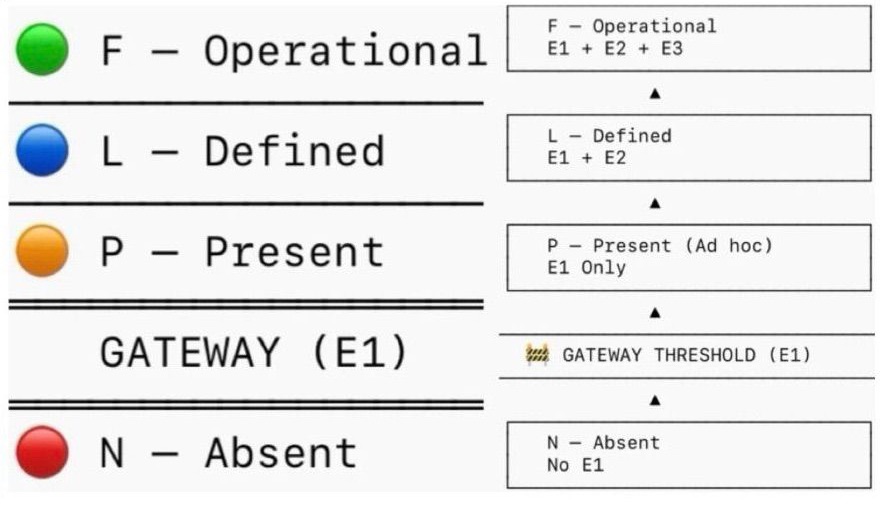
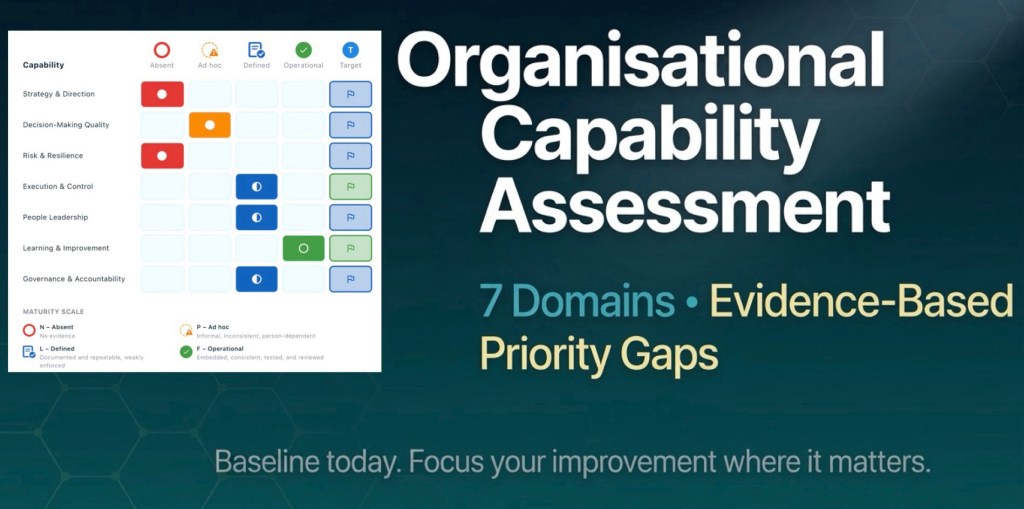
Maturity scale (N–P–L–F)
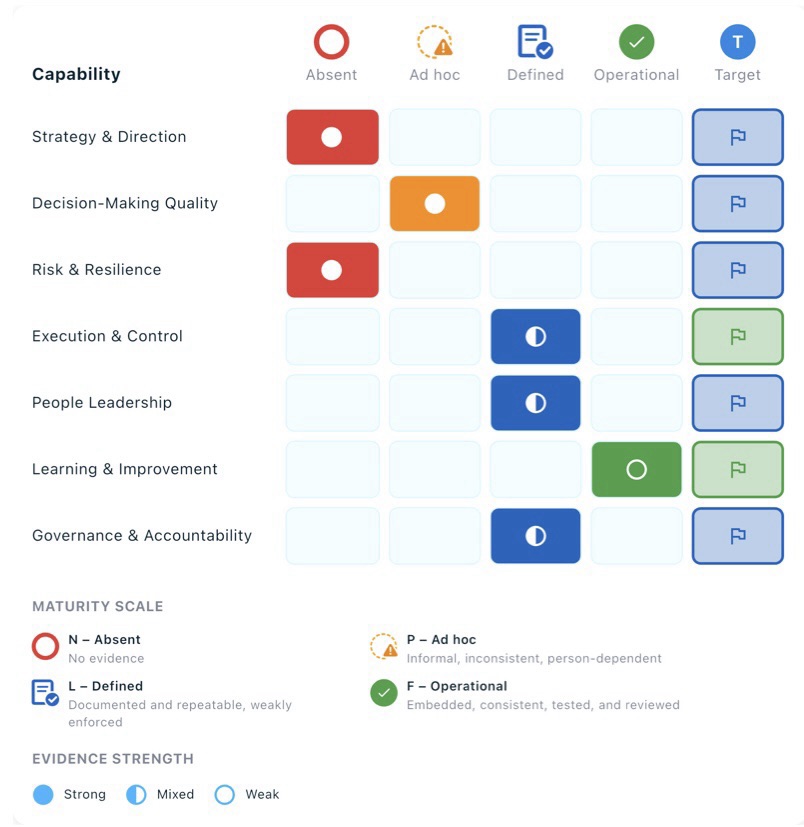
Evidence across E1–E3 is then converted into a four‑step maturity rating for each domain:
- N – Absent
No meaningful evidence; capability does not meet current needs. - P – Ad hoc
Informal, person‑dependent, inconsistent; pockets of good practice but not reliable.
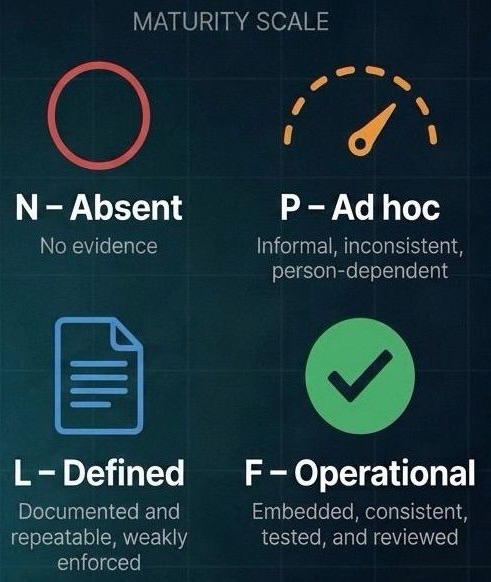
- L – Defined
Documented and repeatable, but weakly enforced; often strong on design, weaker on routine use. - F – Operational
Embedded, consistent, tested, and reviewed; good evidence that it works in practice.
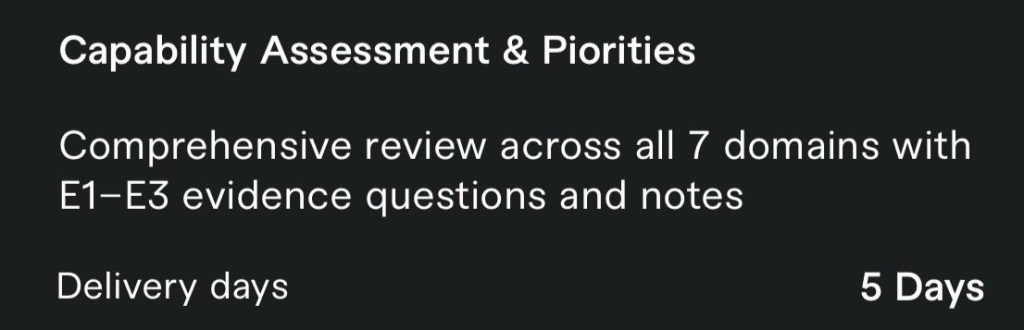
Capability Assessment & Priorities
Consolidated Assessment
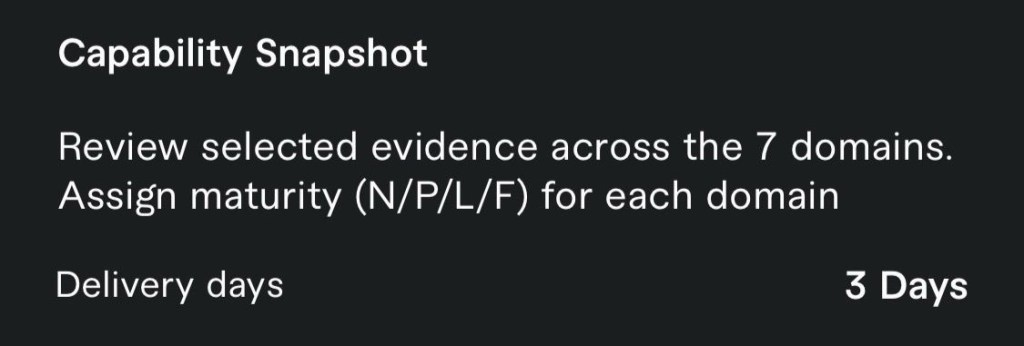
Capability Snapshot
Start with a short conversation
We will discuss your current situation, and what “good” would look like over the next 12 months.
From there, we can decide the right place to begin.

Or email John directly johnsalter@me.com


