Debriefing is a key element of building a culture of learning/unlearning across organizations.

Debriefing is used extensively in sports – as reflected in the note below by Cameron Schwab.
“We use the last game to draw as much learning as possible from an individual and team perspective before the next game. As games are played, the knowledge accumulates, soon embedded as wisdom. There are always three contexts:
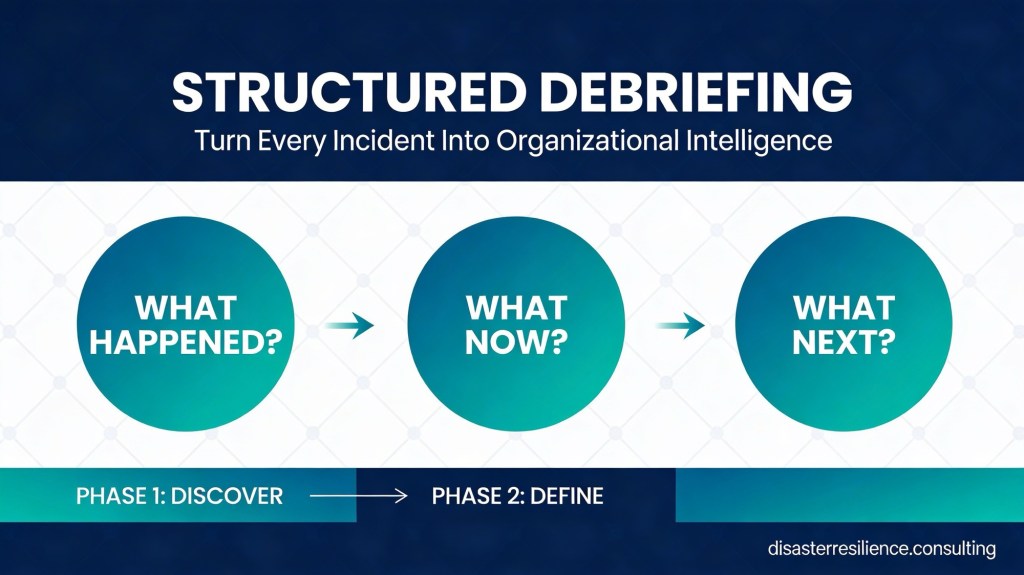
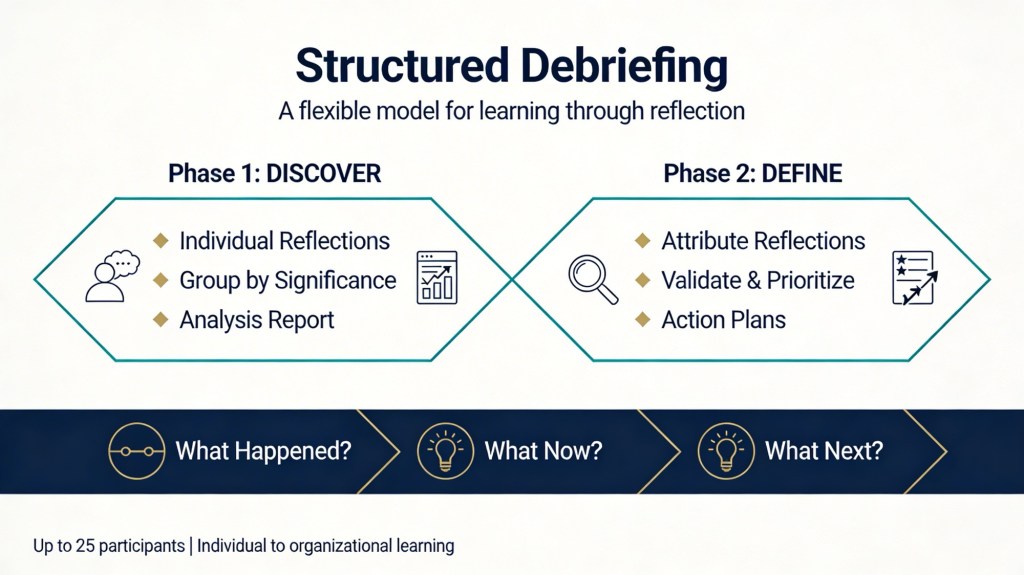
1. What Happened? – What did we learn and how do we share these learnings with our teammates?
2. What Now? – What are we going to do about it, and what aren’t we going to do? We cannot do everything and ‘strategically quitting’ is often as important as what we are still focused on.
3. What Next? – What have we consciously put off to the future and where are we heading?
Building a culture of learning/unlearning might just be the most important leadership objective there is.”
It is important to not let a framework stifle or direct your considerations too narrowly. Such devices (heuristics) need to support discovery – not stifle it.
The importance of using a “Double-Diamond” approach
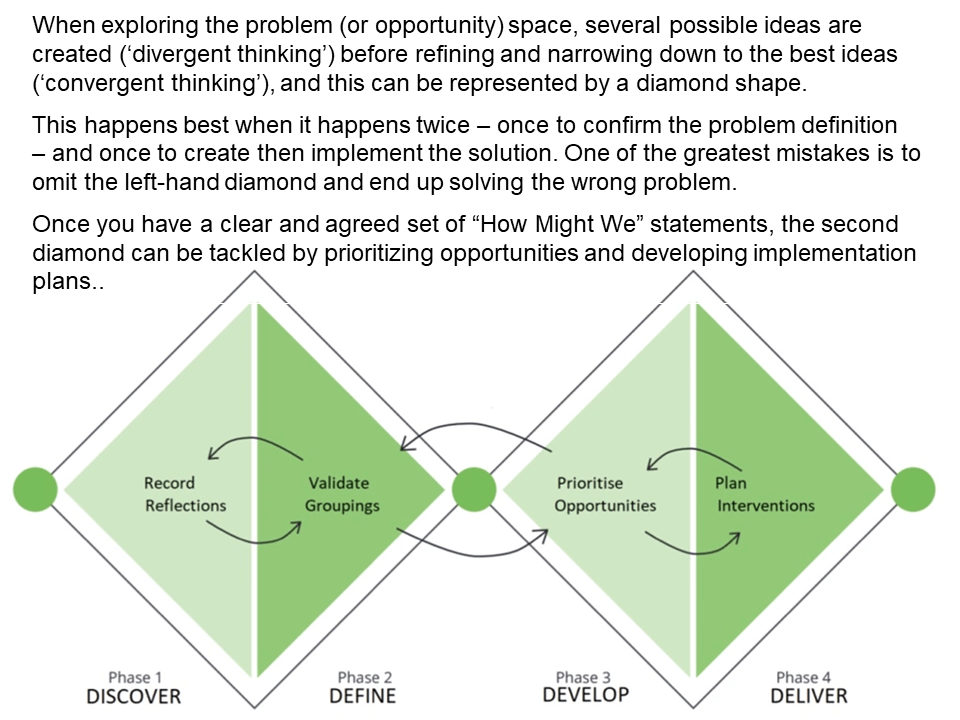
Phase 1 DISCOVER
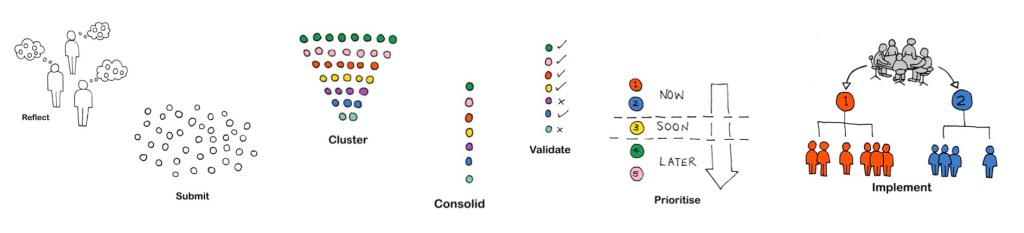
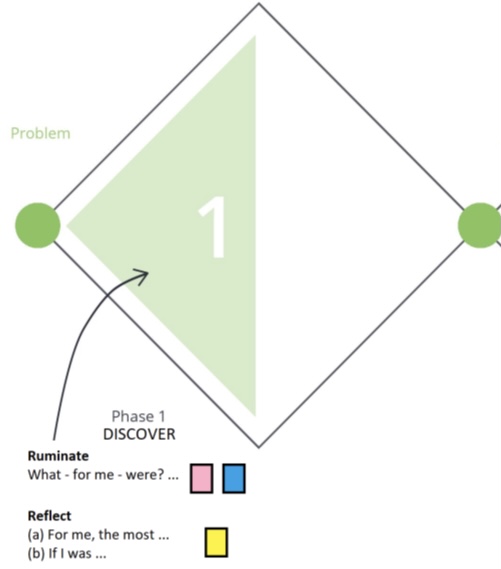
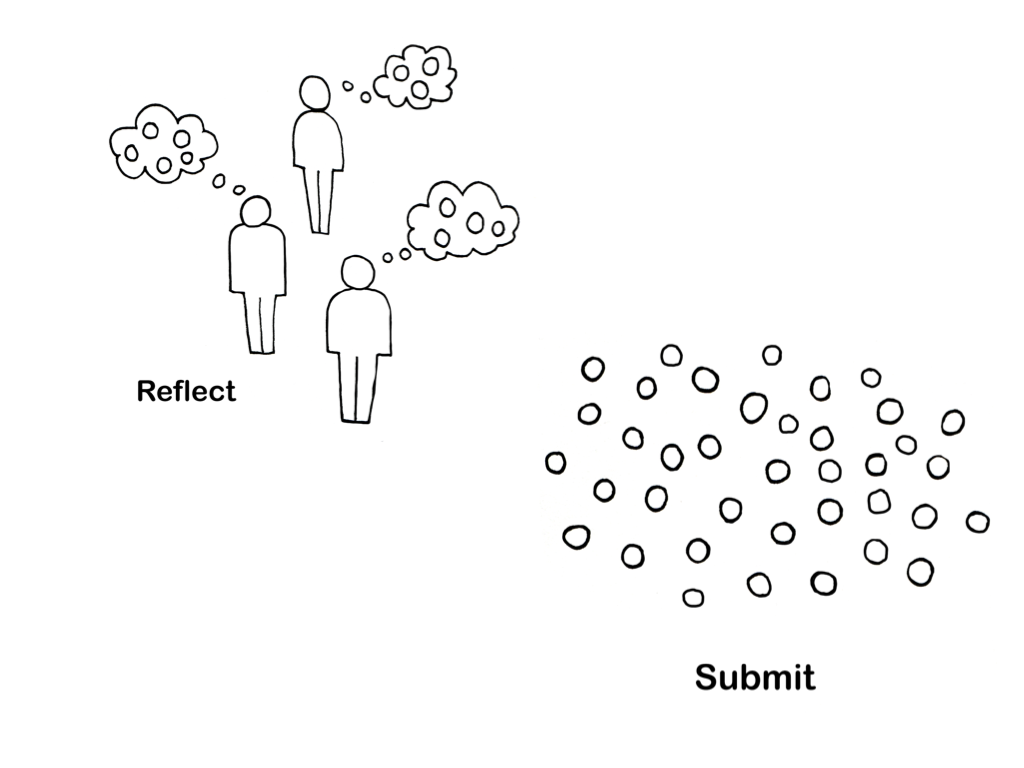
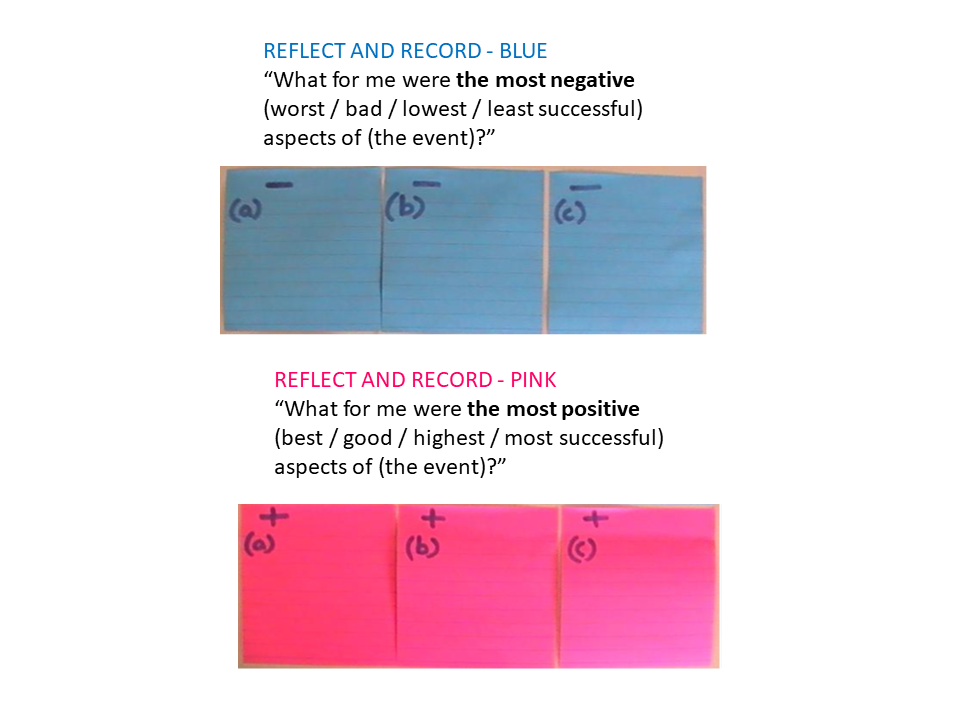
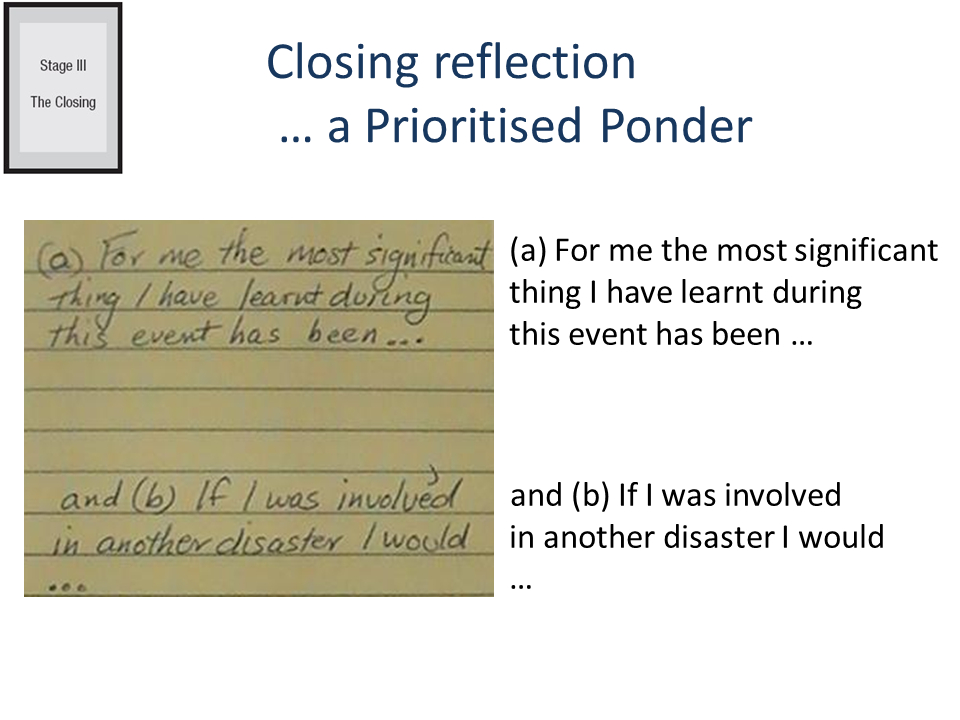
We will take you and your organisation through three key steps:
1. We provide documents, guidelines, and advice to support the recording and collection of “individual reflections”. For the set price engagement, this can be for up to twenty-five (25) participants of your choice.
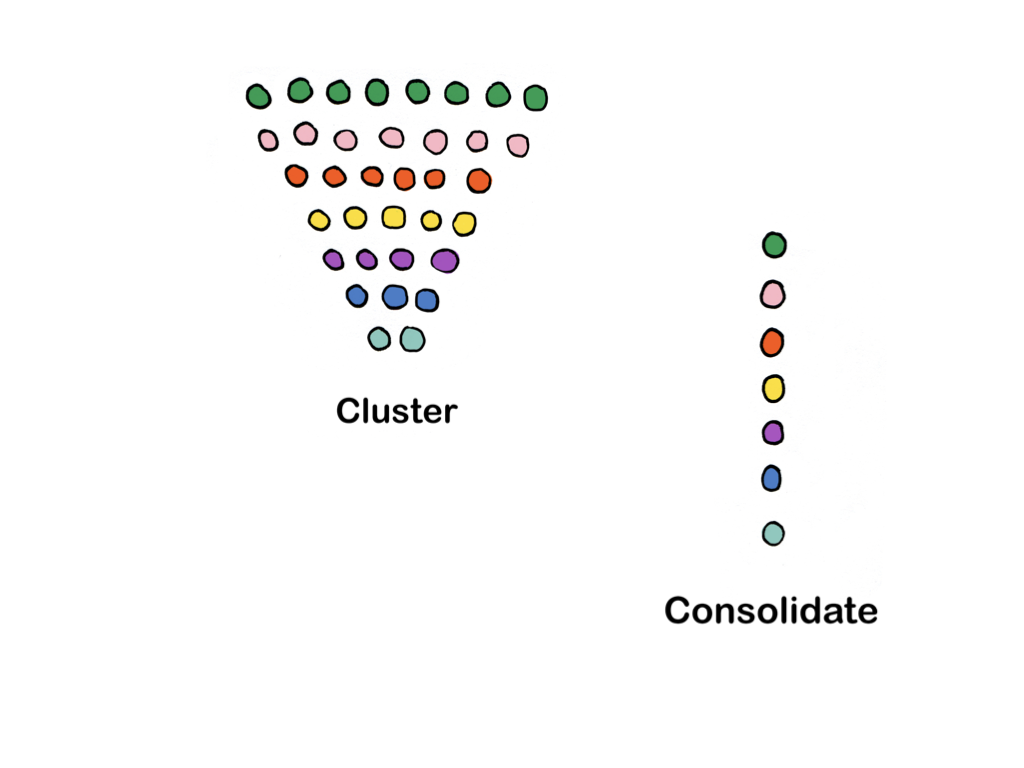
2. We will then group the reflections received (usually within a seven-day time limit), into “like with like – issues of significance” (example below).
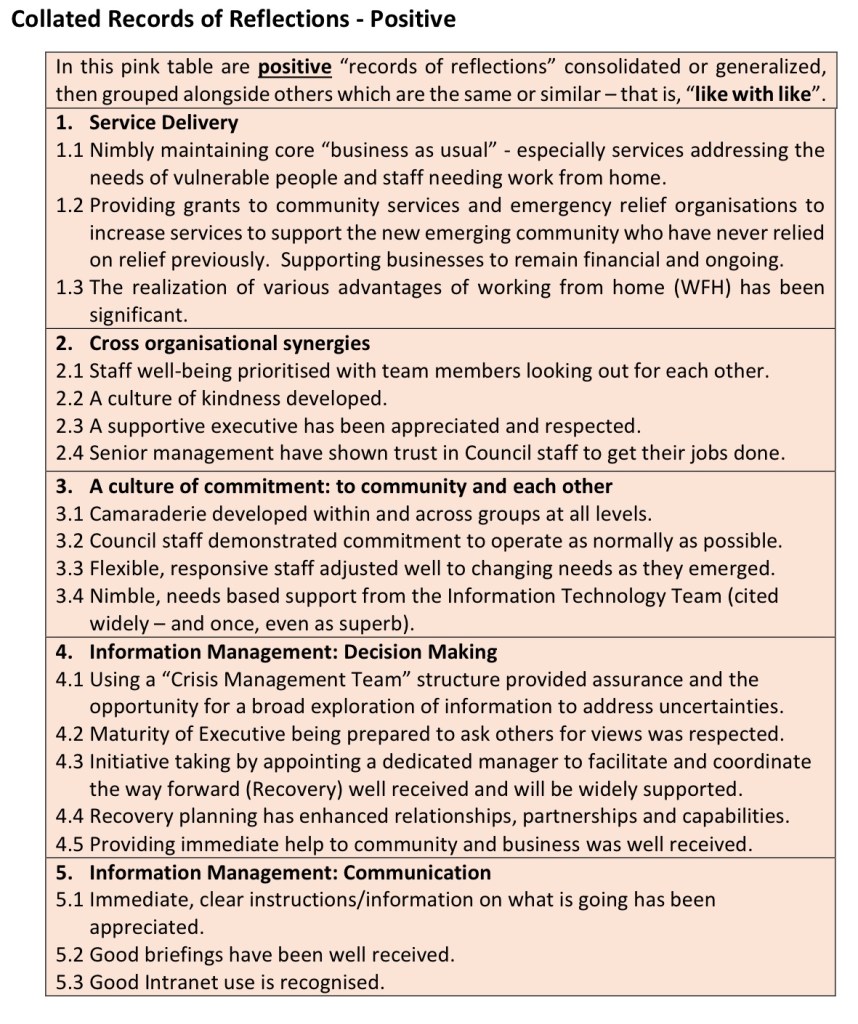
3. Our analysis and review of the collated reflections will then be presented as a report to you, recommending how to move from the DISCOVER phase to the DEFINE phase.
Phase 2 DEFINE
The last piece of the “DEFINE” step is done “in house”, and at your own pace, by you.
Why? Because it often involves issues of confidentiality which are also often sensitive.
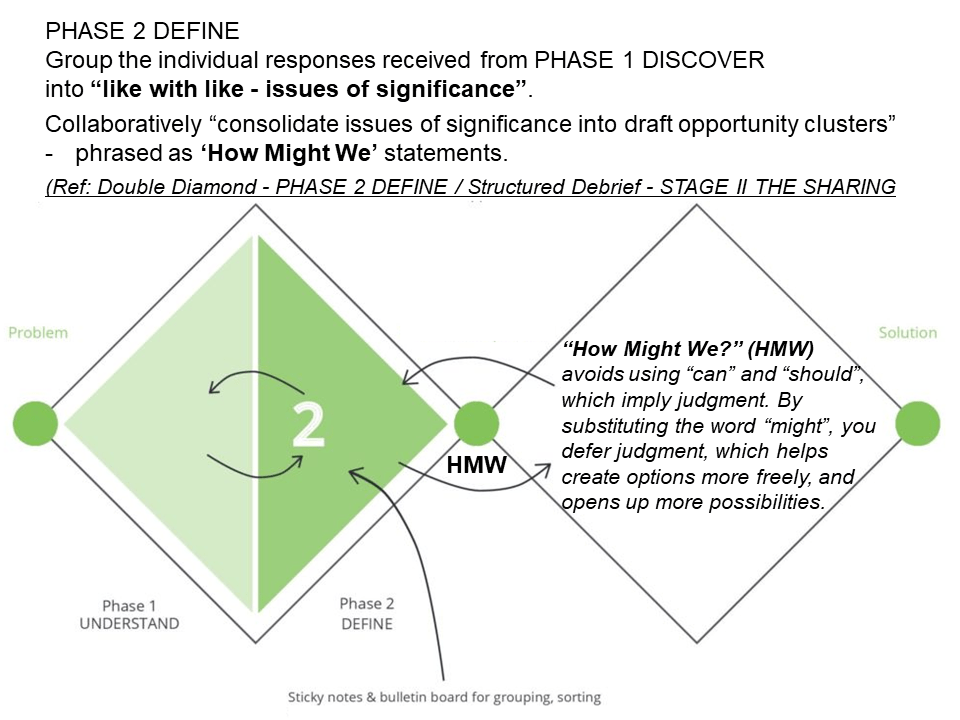
Using a framework as a heuristic device, we will attribute the reflections to the most appropriate part of the framework being used. This will strategically highlight where potential improvements ought to be considered.
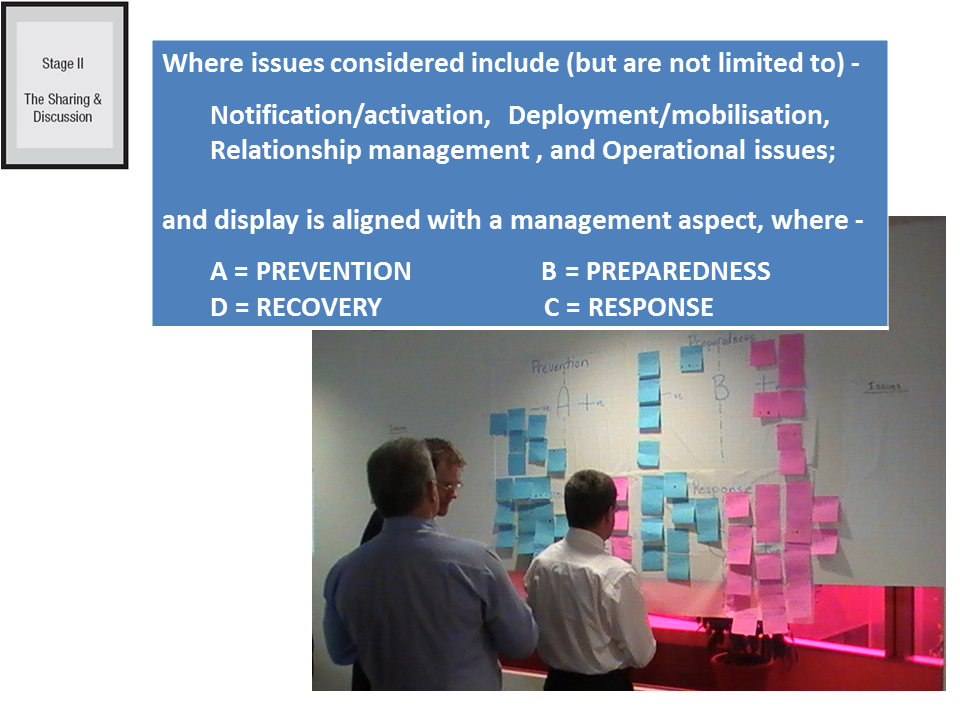
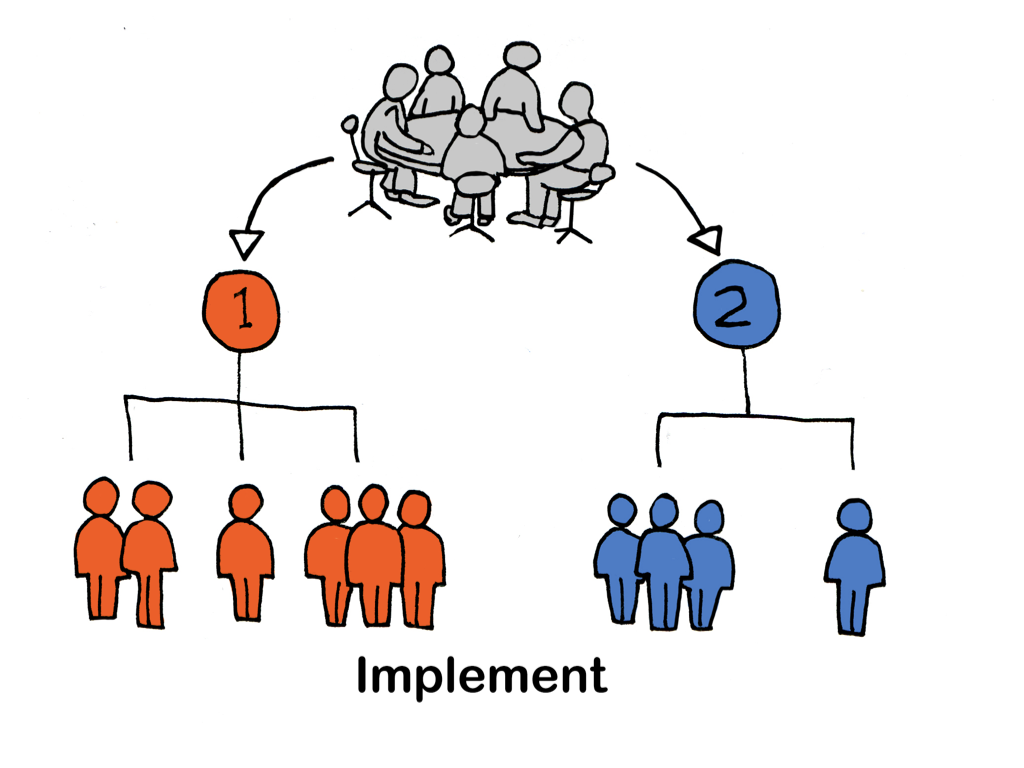
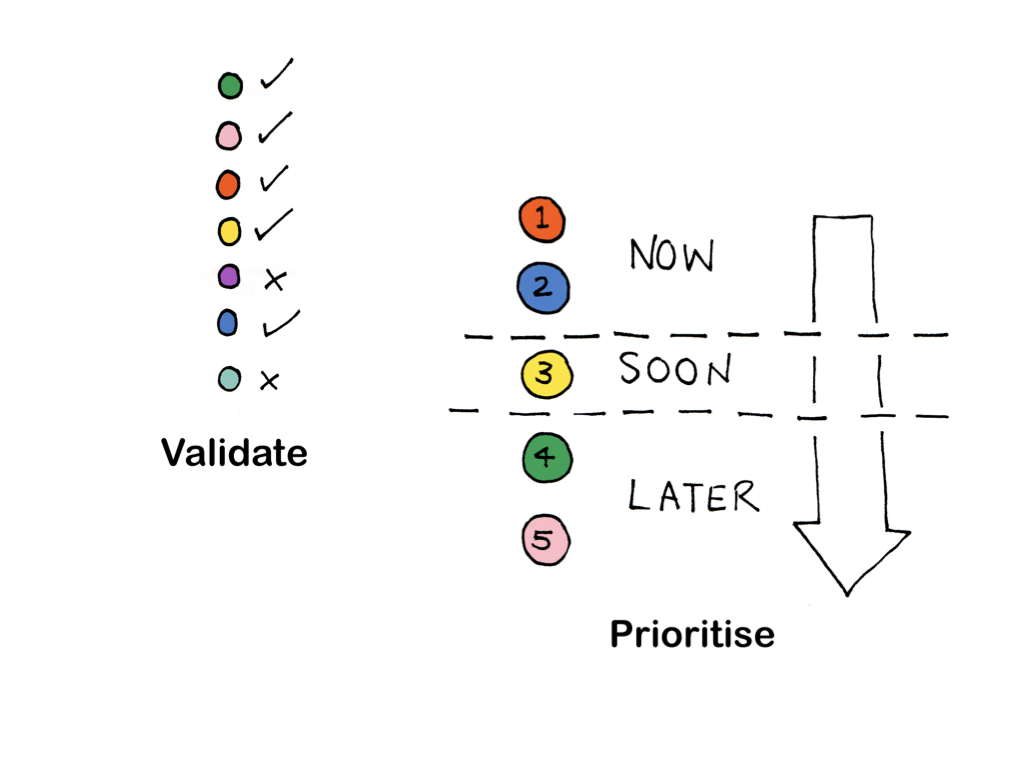
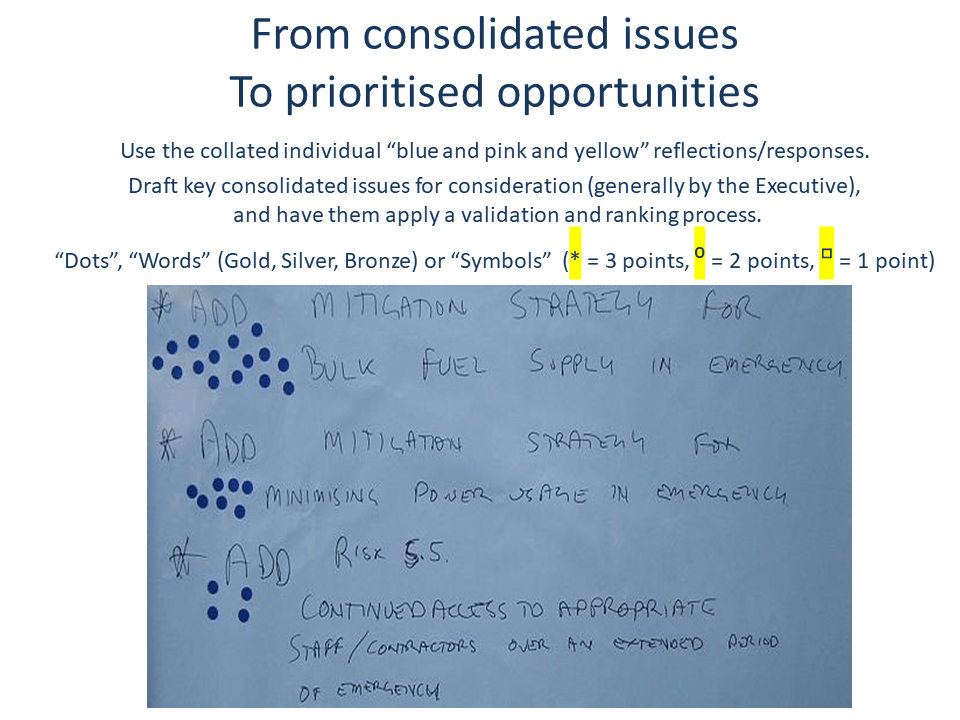
It is suggested you do this implementation work collaboratively – using a “nominal group” technique of up to two feedback cycles and edits – where stakeholders validate and prioritize the opportunities of significance (initially provided as grouped issues in the report). This step can be a straightforward and transparent process using a modified nominal group technique (such as “dots” / or affinity diagrams).
Ultimately, which directions you take and how far you go in those directions will reflect your values.