

A straightforward cycle supporting better learning
Most teams already review work in some way, but the process is too often inconsistent. Conversations vary, findings are difficult to compare, and follow-through depends on individual effort.
Candid Cycle gives teams a clear structure so reviews are easier to run, insights are easier to capture, and improvement is easier to carry forward into the next cycle.
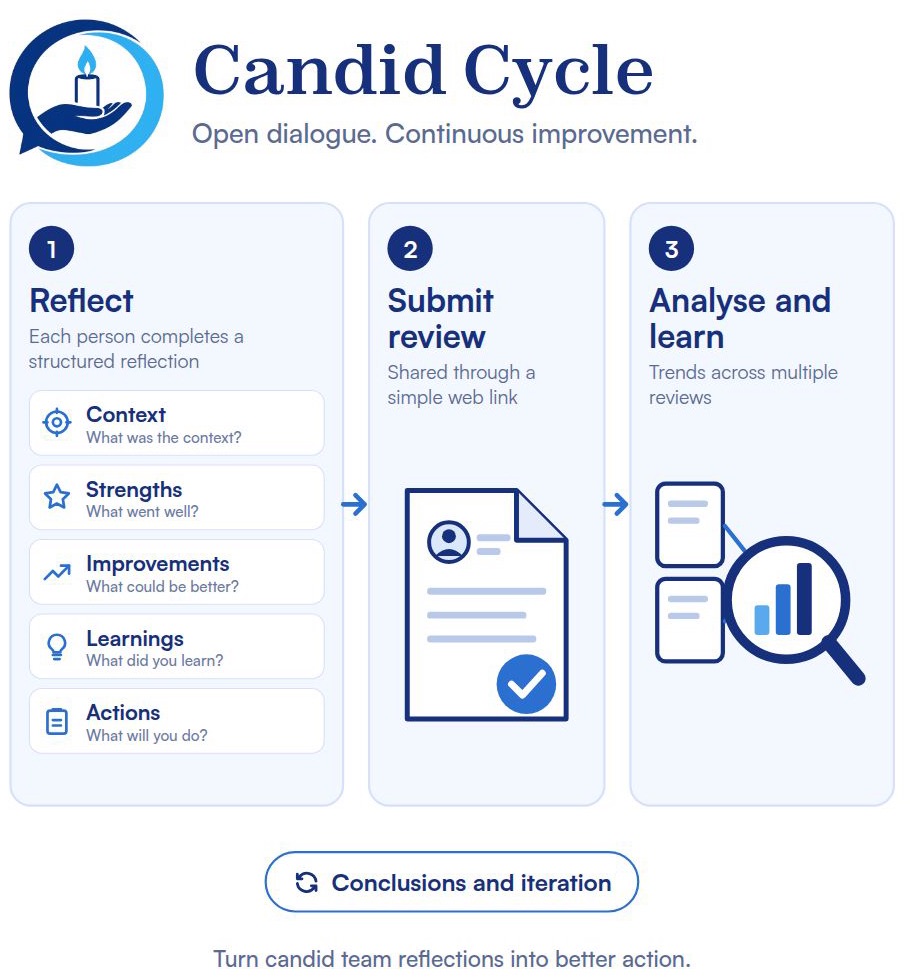
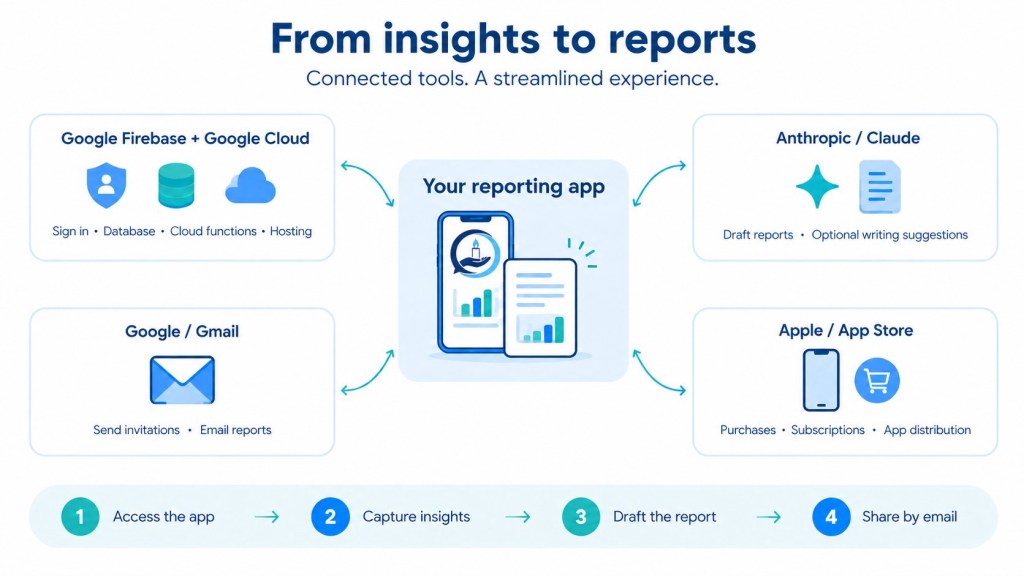
Move to a secure, connected, AI-enabled platform operating globally.


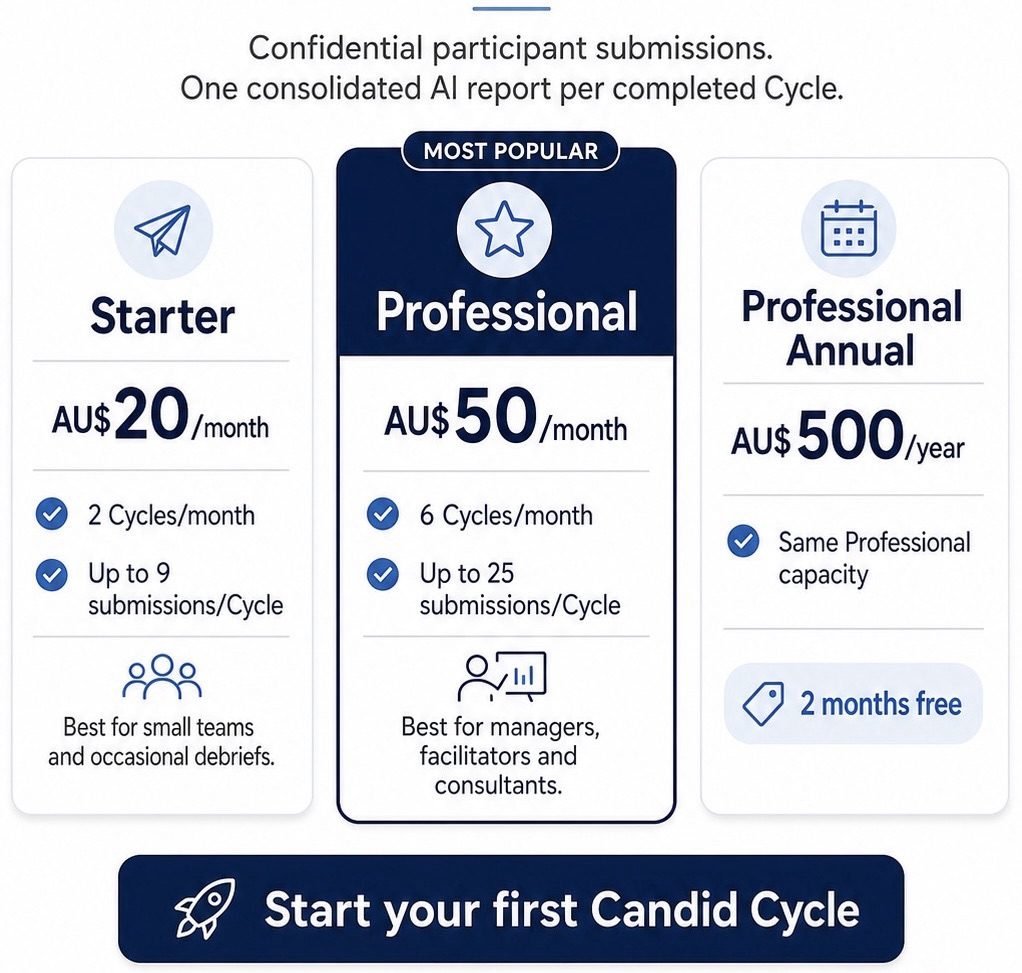
One Candid Cycle is one structured assessment or debrief for a defined group, comprising up to the participant limit for the plan. Each participant completes one confidential submission. Candid Cycle
analyses the combined responses and produces a consolidated report.
Why many reviews do not lead to better practice
Teams often hold reviews, retrospectives, debriefs, or lessons-learned sessions, but the outcome is often vague. Useful insight gets lost, priorities stay unclear, and improvement depends too much on memory and goodwill.
- Reviews vary too much from team to team.
- Useful patterns are not captured clearly.
- Improvement opportunities are not prioritised.
- Actions are not followed through consistently.
Wherever teams need to review, learn, and improve
Candid Cycle can be used across a wide range of settings where teams need a clear way to reflect on performance, identify what matters, and improve how they work.
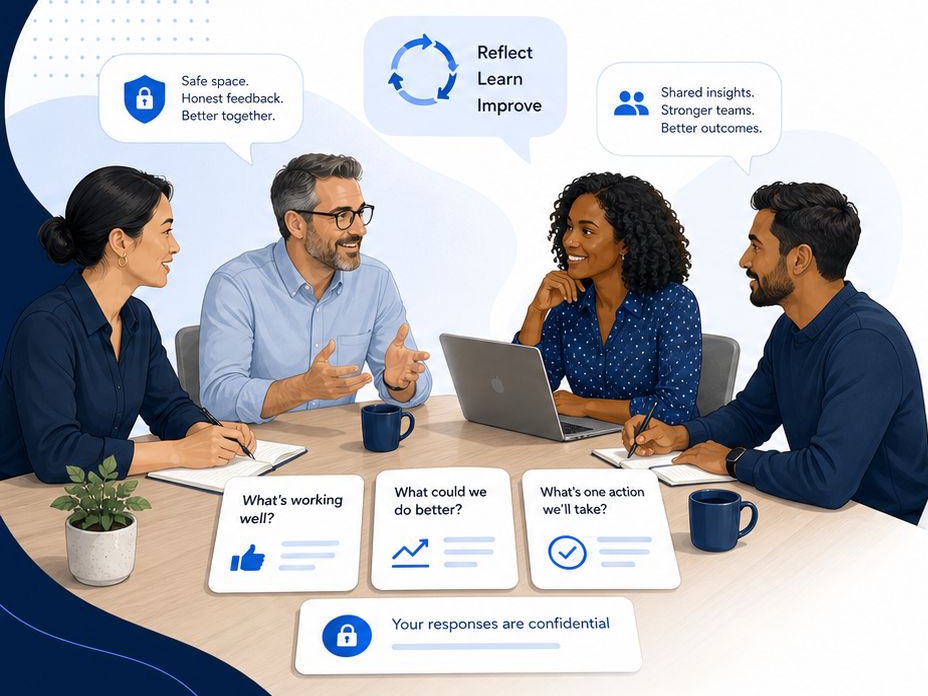
Team performance reviews
Use a clear review structure to reflect on how work is done, what is working well, and where practice can improve.
Project close-out reviews
Capture what the team learned during delivery and turn that insight into practical improvements for the next piece of work.
Service improvement reviews
Review how services are operating, identify recurring friction points, and agree realistic next steps.
What improves over time
Better clarity
Teams build a clearer view of what is working, what is not, and what needs attention first.
Stronger priorities
Improvement areas are translated into practical actions rather than left as broad observations.
Better habits
Repeating the same review cycle helps teams build a more consistent learning and improvement practice.
Built for practical organisational learning
Candid Cycle is designed for leaders and teams who want a structured, usable way to review work and improve how they operate over time. It supports clearer reflection, stronger follow-through, and a more consistent approach to learning across teams.
Start building a better review habit
Use Candid Cycle to bring more structure, clarity, and follow-through to the way your team reviews work and improves over time.
How Candid Cycle works
Candid Cycle is a practical review method for teams that want to learn systematically and improve over time. It provides a simple structure for reflection, insight, and action.
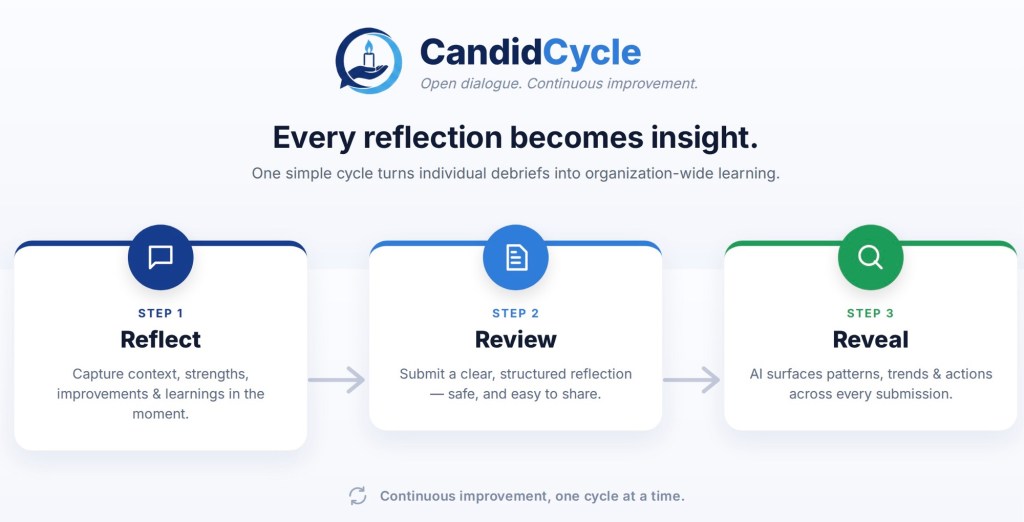
What it changes – Continuous Improvement
The review cycle is designed to move from context to insight, then from insight to agreed priorities. Used consistently, it helps teams build a stronger learning rhythm over time.
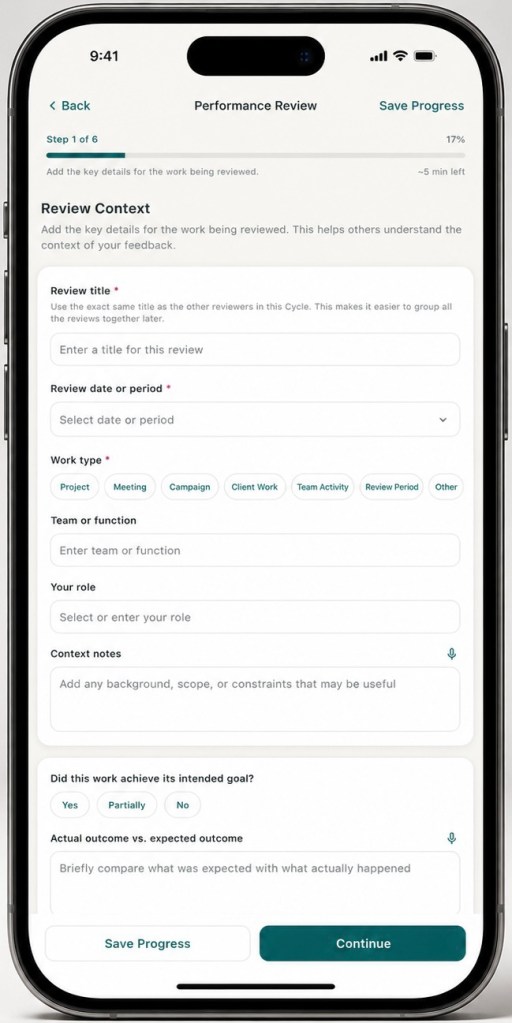
1 Context
Set the scope of the review and clarify what work, project, service, or period is being examined.
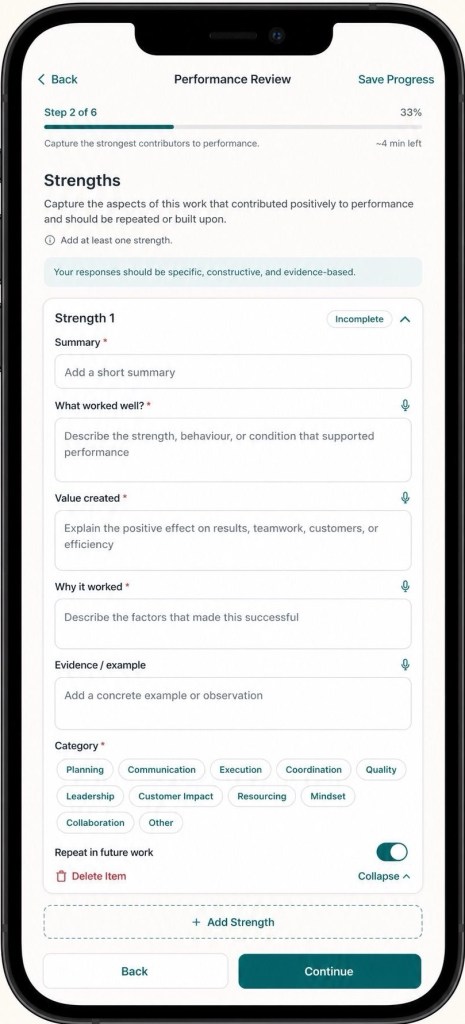
2 Strengths
Capture what worked well – to preserve effective practice, not only focus on needs to change.
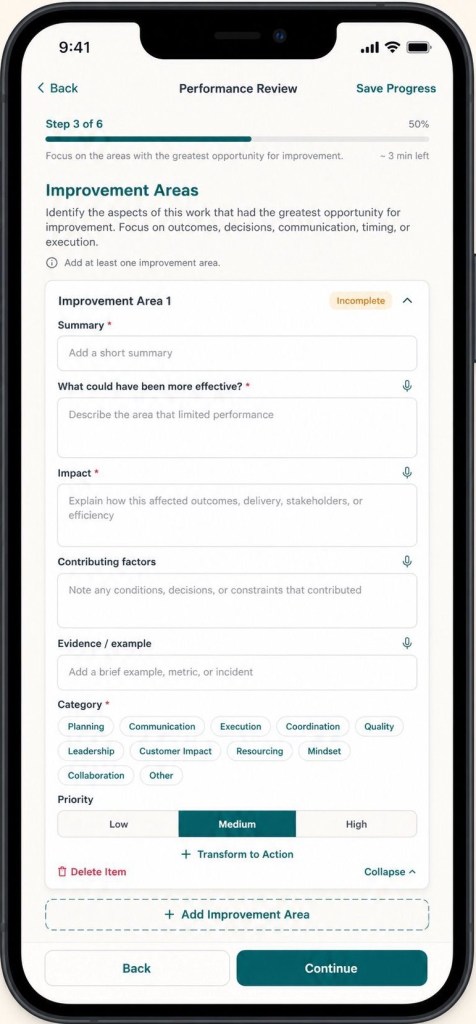
3 Improvement
Identify the issues, gaps, or recurring friction points that are limiting performance or consistency.
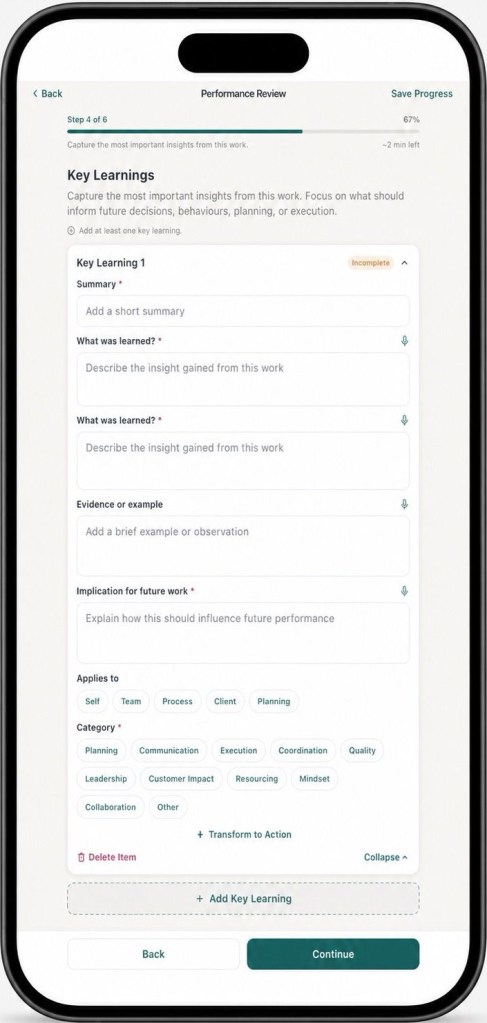
4 Learning
Distill the main insights that should shape future practice, decisions, or capability-building.
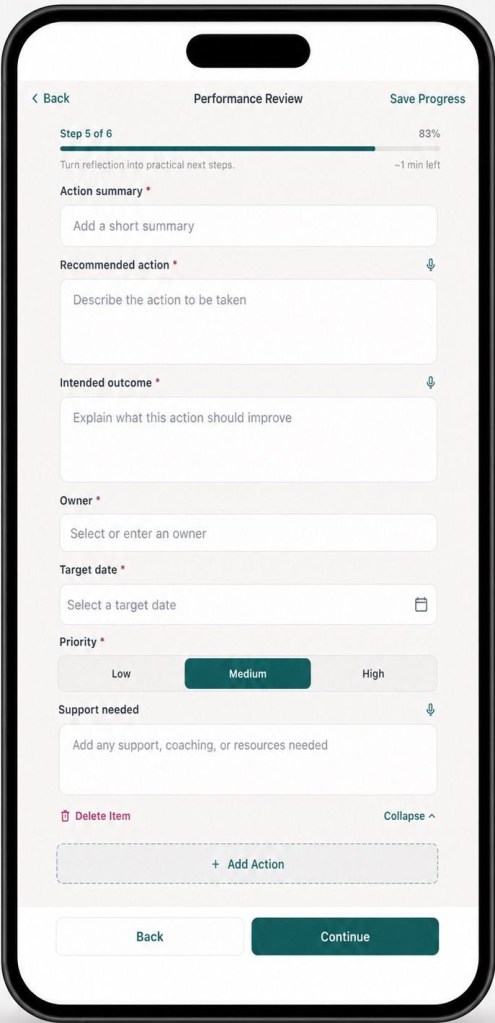
5 Actions
Suggest what matters most, what should be done next, and who needs to take ownership.
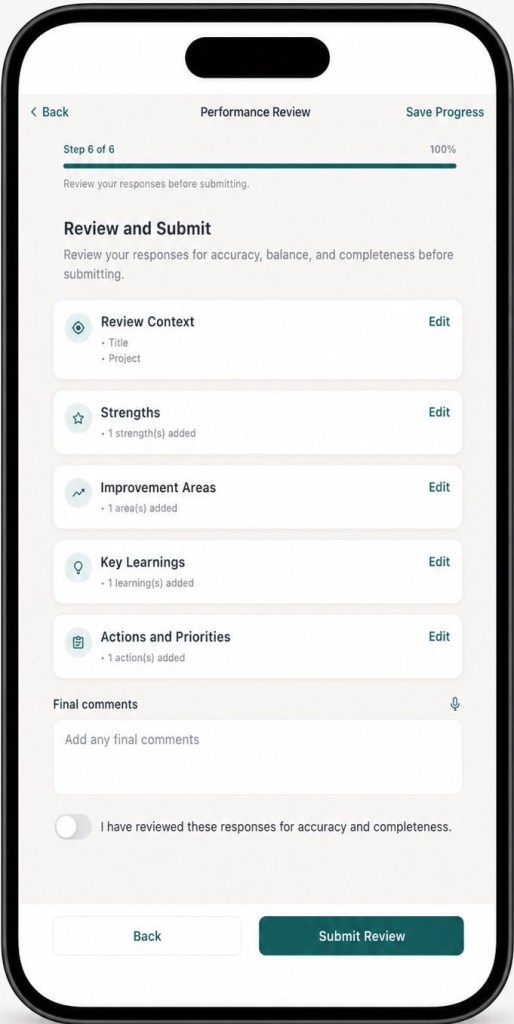
6 Submission
Confirm the final review output so it can be used as a practical record and a starting point for the next cycle.
Designed to support iteration
The value of the method is not limited to a single review. By using the same structure repeatedly, teams can compare insight, track recurring themes, and improve with greater consistency over time.
Where teams use it
Candid Cycle works well anywhere teams need a practical way to review work, learn from experience, and improve performance.
Team retrospectives
Support regular reflection and improvement within a team.
Programme and project reviews
Capture delivery insight and turn it into better practice for future work.
The Team / Full Report
Service and process improvement
Review how work flows in practice and identify the most useful changes.
What the process produces
Each review is designed to produce a usable output that supports reflection, clarity, and follow-through.
- A consistent review record.
- Clear strengths and improvement areas.
- Agreed key learnings.
- Prioritised actions.
- A repeatable format for future review cycles.
Subscribers receive two editions from every cycle, generated from the same underlying data so nothing gets lost in translation between them.
The complete picture, built section by section from every Context, Strength, Improvement, Learning, and Action submitted that cycle:
- Executive Summary — the headline story of the cycle in one page
- Review Context & Participation — what was reviewed, who took part, and a completion rate so the team can see engagement at a glance
- Strengths — what went well, grouped by theme with supporting anonymised evidence
- Improvement Areas — the same treatment for what needs to change
- Key Learnings — the insights worth carrying into the next cycle
- Actions & Priorities — a deduplicated action register (owner, target date, priority) so overlapping suggestions from different contributors become one clear task, not five
- Cross-Cutting Trends — pattern and frequency analysis across all themes, surfaced automatically
- Recommendations & Next Steps — concrete, forward-looking guidance
- Appendix — the anonymised evidence base, for anyone who wants to trace a theme back to its source submissions
The Executive Leadership Briefing
A tightened version of the same analysis — same themes, same actions, same trends — scoped down to what a leadership group needs to make decisions quickly, without wading through the full evidence appendix.
What makes it trustworthy, not just tidy:
- Anonymous by design — no names or identifying roles anywhere in the report; every quote is labeled “Anonymised submission excerpt,” never attributed
- Evidence grouped by theme, never by person — so patterns are visible without anyone’s individual submission being singled out
- A front-of-report confidentiality statement on every cycle, so participants always know the rules were followed
- Honest metrics — no inflated single “percentage achieved” headline unless the data genuinely supports one; a Yes/Partially/No breakdown is used instead where that’s more accurate
Common questions
1. Is Candid Cycle only for incidents or disruptions?
Answer – No. It can be used for any structured review where a team wants to reflect on performance, identify improvement areas, and agree next steps.
2. Can teams use it as a regular review method?
Answer – Yes. It is designed to work well as a repeatable cycle that supports continuous improvement over time.
3. Can it be used across different functions?
Answer – Yes. The method is flexible enough to support operational teams, project teams, leadership groups, and cross-functional reviews.
4. Is it suitable for self-guided and facilitated use?
Answer – Yes. Some teams use it independently, while others use a facilitated option for additional support and challenge.
One Candid Cycle is one structured assessment or debrief for a defined group, comprising up to the participant limit for the plan. Each participant completes one confidential submission. Candid Cycle
analyses the combined responses and produces a consolidated report.


