Hear it. Prove it. Improve it. Repeat.
Most organisations already know improvement matters. Keeping it going is the hard part. A review gets done, a report gets written – and too often that’s where it stops.
Turn everyday team insights into proven organizational readiness.
- Combine Candid Cycle for fast, asynchronous team debriefs with Calibrate Capability for evidence-backed maturity assessments – closing the gap between what your team experiences on the ground and what your organization can prove on paper.
Problem – a Continuous Improvement Disconnect
Debriefs without verification stall. Audits without candor miss the truth.
- Most organizations treat post-project debriefs and capability reviews as separate, disconnected chores. Debrief notes get buried in folders without systemic follow-through, while annual capability reviews rely on opinion-based checklists that miss what is actually happening on the front line.
The Two-Part Suite (How They Work Together)
The Continuous Improvement Loop (3-Step Flow)
- Reflect (Candid Cycle): Gather unfiltered, anonymous feedback asynchronously after any project or event – no logins or meeting bottlenecks.
- Verify (Calibrate Capability): Carry recurring debrief themes into structured capability domains to test claims against real documents and daily practice.
- Improve & Reassess (Both): Assign clear actions, embed fixes into daily operations, and run scheduled reassessments to prove readiness is measurably growing.
Suite-Wide Value Pillars
Pillar 1: End-to-End Solutions – From frontline friction to verified capability
- Solve both immediate team blind spots and long-term systemic gaps. Turn scattered reflections into prioritized actions with Candid Cycle, then separate isolated incidents from structural weaknesses with Calibrate Capability.
Pillar 2: Effortless Convenience – Built for busy teams, not spreadsheet admins
- Contributors join Candid Cycle via a single link with no account required, while Calibrate streamlines evidence gathering across companion web and mobile forms – with theme handoff between tools.
Pillar 3: Constructive Experiences – Psychological safety meets objective clarity
- Anonymity and balanced prompts make it safe and rewarding for teams to speak up in Candid Cycle, while evidence-based scoring in Calibrate replaces audit anxiety with fair recognition and visible progress.
Choose Your Starting Point (Dual Entry Paths)
1. Start Fast with Candid Cycle
- Best for: Team leads, project managers, and facilitators who want immediate, low-friction debriefs.
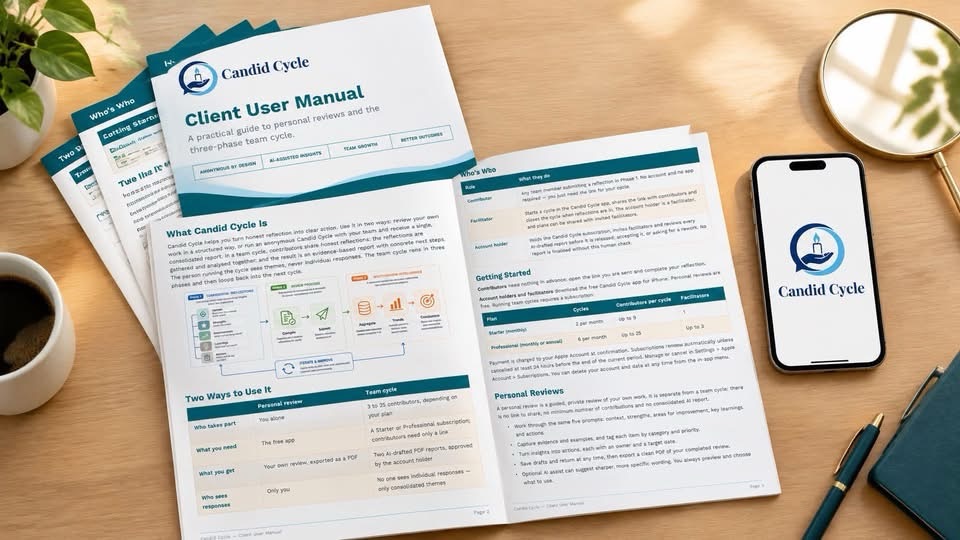
- Suggested consideration: Download the free Candid Cycle app. Run a cycle for an individual free.
2. Go Deep with Calibrate Capability
- Best for: Executives, operational leaders, and capability managers verifying organizational readiness.
- Suggested consideration: Book a 30-minute walkthrough of the multi-domain framework.

Build a culture that learns quickly – and proves it’s ready.
Start with a team debrief today, or talk to us about deploying the full continuous improvement suite across your organization.
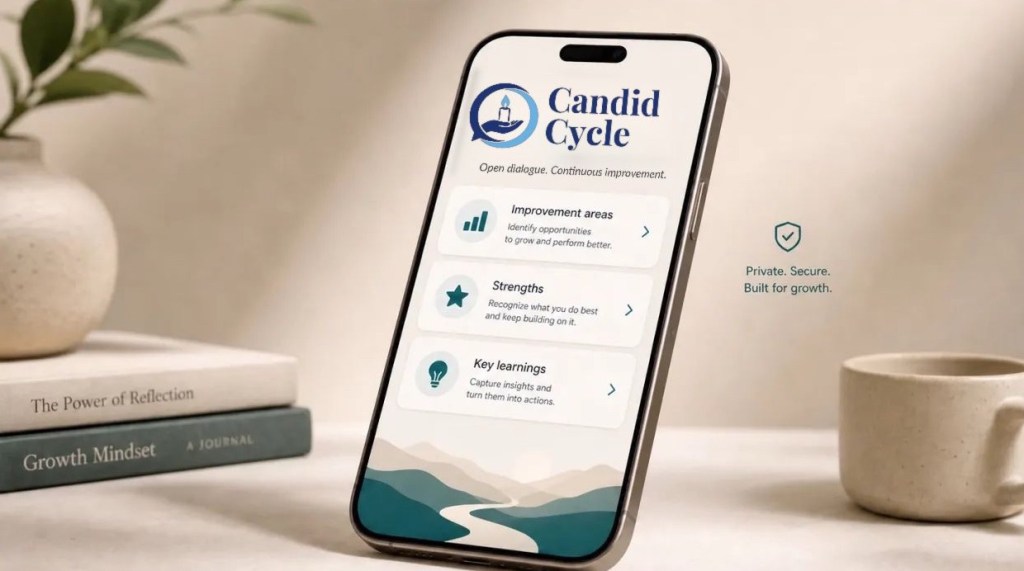
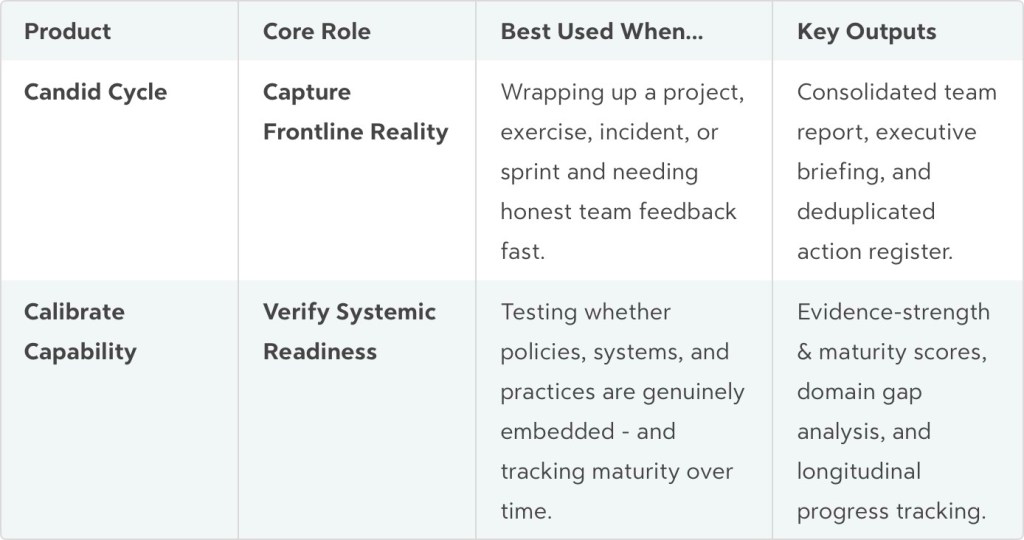
Candid Cycle is the voice. It runs structured, anonymous debriefs. Contributors don’t need an account or the app. It turns their reflections into recurring themes: what happened, what worked, and what you learned.
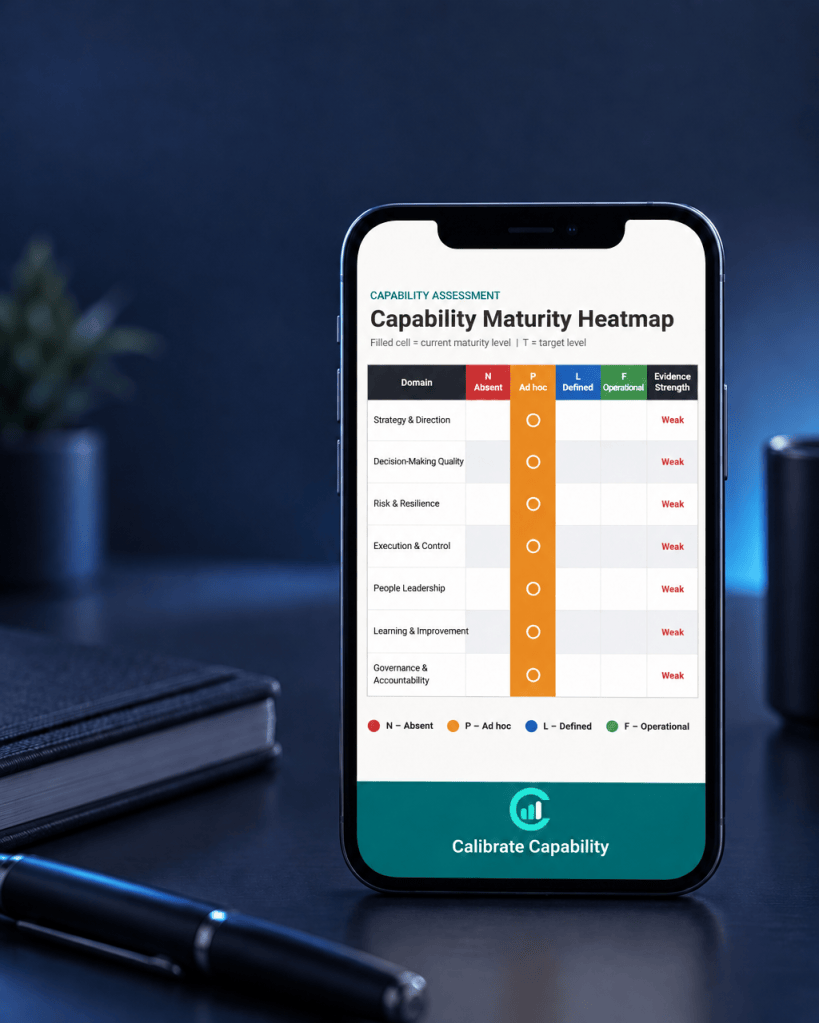
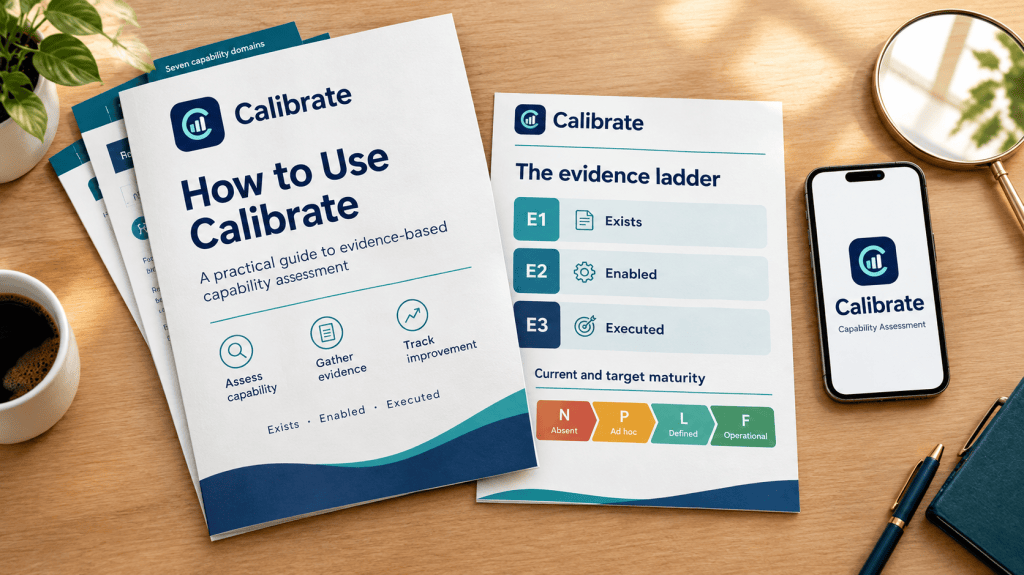
Calibrate is the evidence. It tests those themes against documents, practice and outcomes. That lets you tell a genuine capability gap from a one-off frustration. It also shows whether a capability exists, is enabled and is executed.
Each capability domain is placed on a four-level maturity scale:
N – Absent: the capability isn’t in place.
P – Ad hoc: it happens, but it depends on individuals and isn’t consistent.
L – Defined: it’s documented and agreed, but not yet fully embedded.
F – Operational: it’s applied in practice and embedded in how the organisation works.
Calibrate records a current and a target level for each domain, so you can see how far it sits from where it needs to be.
Together they form one loop:
- Reflect. Your team gives its views in an anonymous debrief.
- Surface themes. Recurring patterns come out of what people actually said, not what leadership assumes.
- Assess evidence. Each capability domain that matters is rated strong, mixed or weak against real performance evidence.
- Set targets and act. You compare current and target maturity on the N/P/L/F scale and set clear improvement priorities.
Then you debrief again. The next cycle tests whether the change was real, and the loop starts over.
Both tools use the same governance model. Reports are drafted by AI and reviewed by you before release, so boards and executives get one consistent, accountable process.
Warning Missives
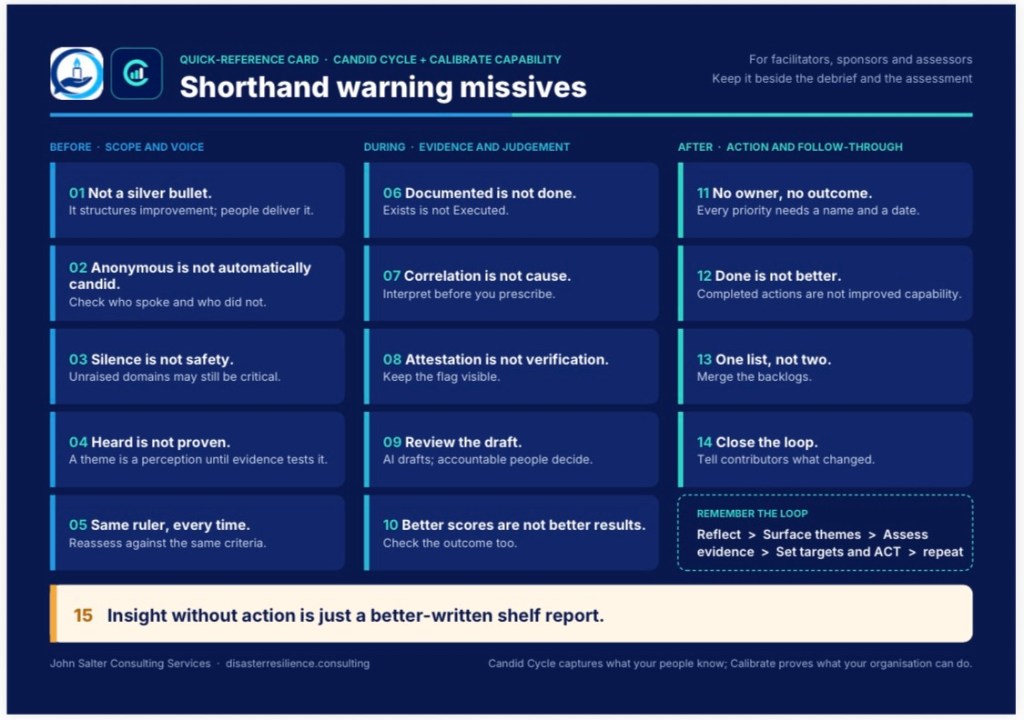
The pairing can also be weakened by:
• Shared blind spots, when the same people frame the questions, supply the evidence and judge the results.
• Missing voices. Anonymity supports candour; it does not guarantee it.
• Hasty interpretation. “Decisions took too long” has more than one possible cause.
• Narrow coverage. A critical capability may never come up in a debrief simply because it hasn’t been tested recently.
• No capacity to act. The tools don’t supply budget, authority, time or skills.
• Mistaking scores for results. A completed action is not improved capability, and improved capability is not yet a better outcome.
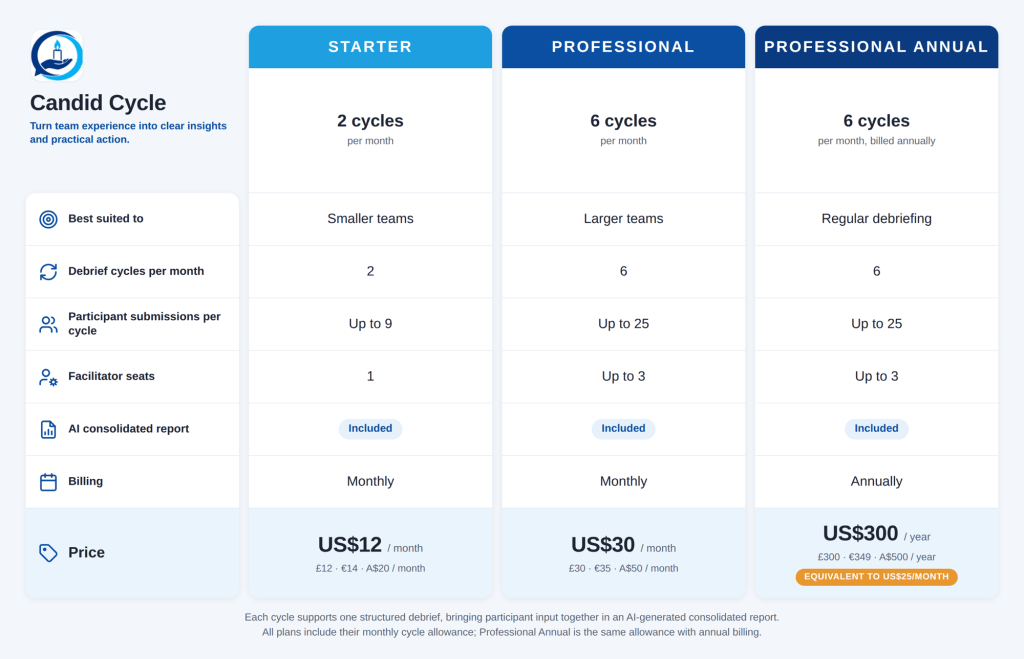
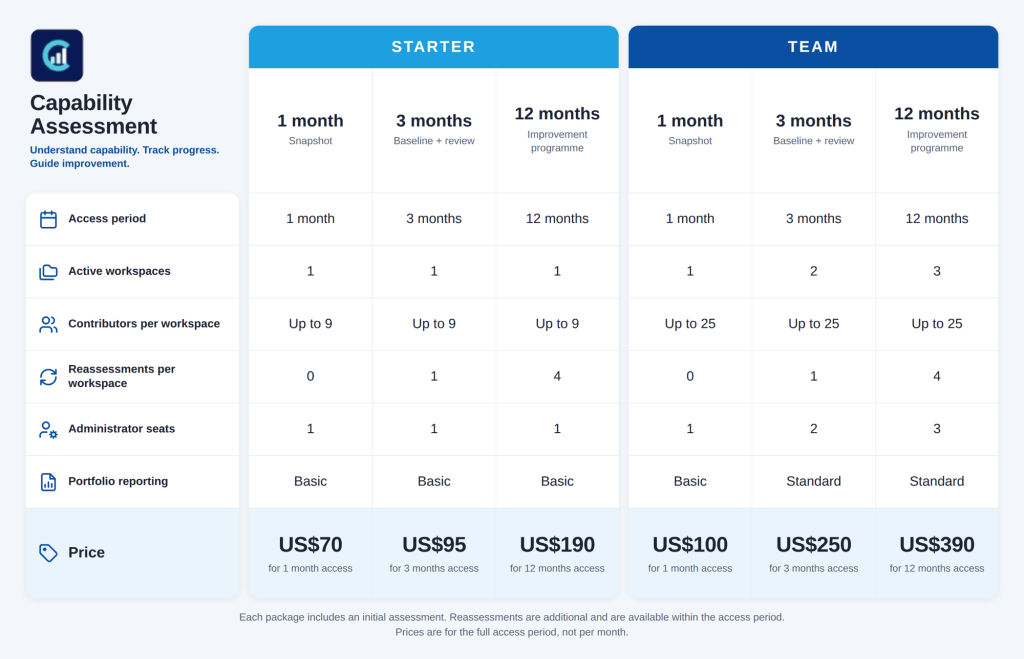
Pricing
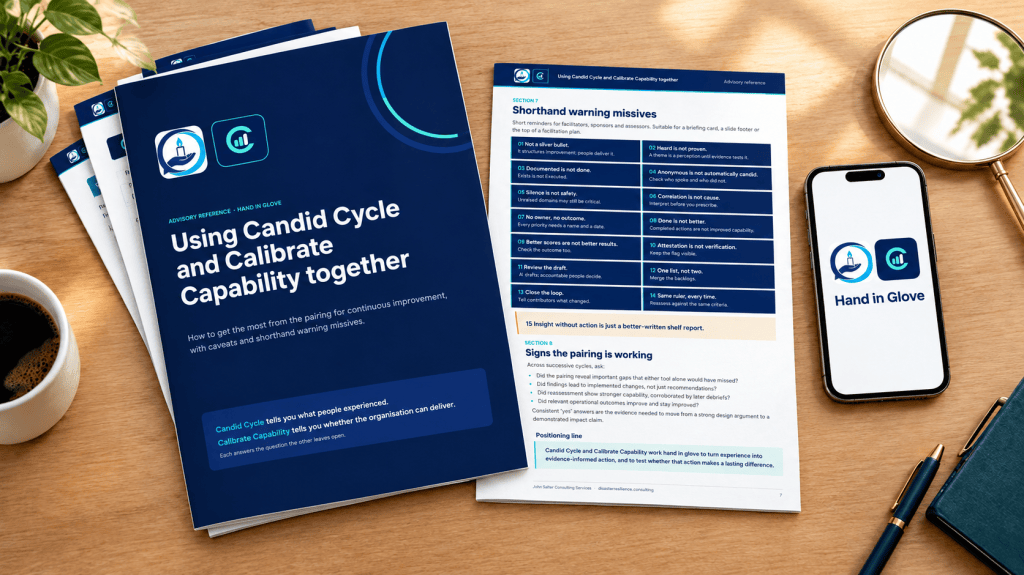
Hand-in-Glove Parables
Parables of synergy – how Candid Cycle and Calibrate Capability work hand in glove for Continuous Improvement.