
In a valley often swallowed by fog, the village of Bellmere chose a new warden each year to keep its people safe from flood, fire, and storm.
One autumn, a clever merchant arrived with a polished brass lantern.
“This lantern,” he announced, “measures the village’s readiness. Hold it near your granaries, bridges, wells, and watchtowers. If it shines green, you are prepared. If it shines amber, you need improvement. If it shines red, you are in danger.”
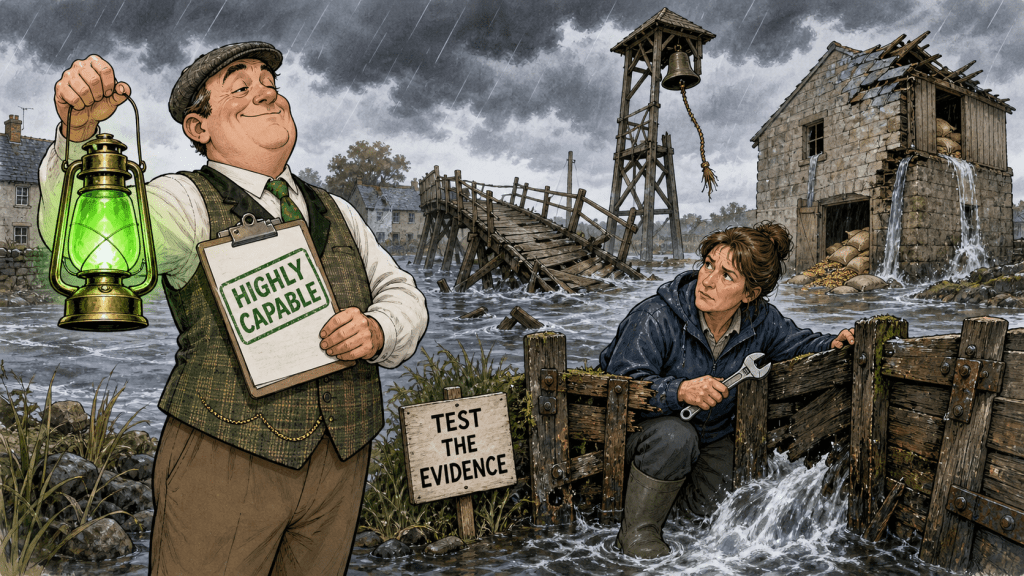
The council was delighted. The lantern was quick, tidy, and far less troublesome than inspecting muddy riverbanks, climbing old towers, testing the fire pumps, or asking weary villagers whether they knew what to do.
For three days, the council walked through Bellmere holding up the lantern.
At the granary, it glowed green.
At the bridge, green.
At the watchtower, green.
At the well, green.
The council prepared a handsome report. It declared Bellmere “Highly Capable in Emergency Readiness.” They hung it in the town hall beside a painting of the founder.
Only Mara, the old keeper of the river gate, frowned.
“Did anyone test whether the gate still closes?” she asked.
“The lantern shone green,” replied the mayor.
“Did anyone open the granary stores and see whether the grain is dry?”
“Green.”
“Did anyone climb the watchtower at night and see whether the bell rope reaches the bell?”
“Green, green, green,” said the council, growing impatient. “Must we doubt every good result?”
That winter, rain fell in the hills for six straight days.
When the river rose, Mara ran to the gate. The wooden mechanism had rotted behind its iron fittings. The gate would not move.
The watchman pulled the bell rope. It came loose in his hands.
Villagers rushed to the granary, only to find that a crack in the roof had spoiled much of the grain months before.
The bridge, certified green by the lantern, had a weakened foundation. It collapsed beneath the first wagon sent to carry children to higher ground.
Bellmere survived, but only because neighbours from the next valley saw the flood coming and arrived with ropes, boats, and food.
When the water receded, the council found the merchant’s lantern floating in the mud. Its brass was still bright. Its green light still shone.
The mayor took it to Mara.
“Why did it tell us we were ready?” he asked.
Mara turned the lantern over and opened its base. Inside was a small painted wheel with only one colour.
“It did not tell you that you were ready,” she said. “It told you what it had been made to show.”
From then on, Bellmere still used lanterns, lists, and reports. But before declaring anything green, the council demanded to see the river gate close, the bell ring, the grain inspected, the bridge tested, and the villagers practise their roles.
And each report began with a new question:
“What evidence would prove us wrong?”


