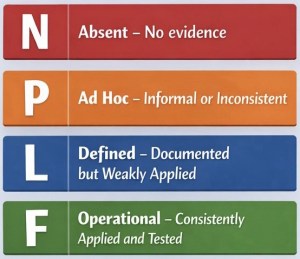
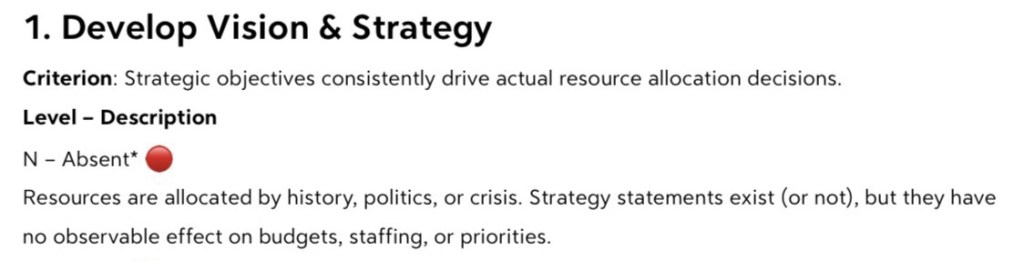
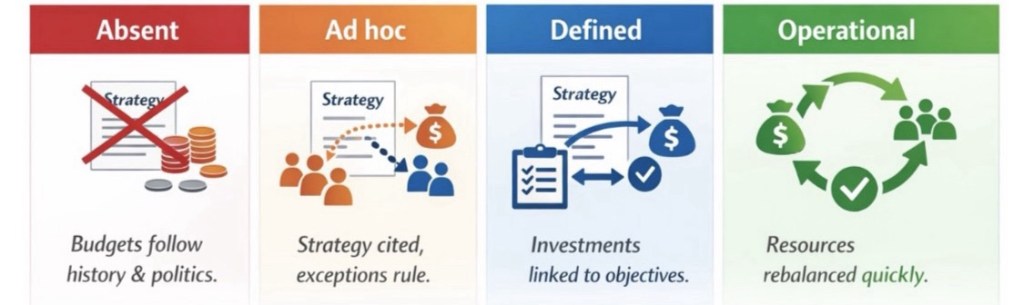
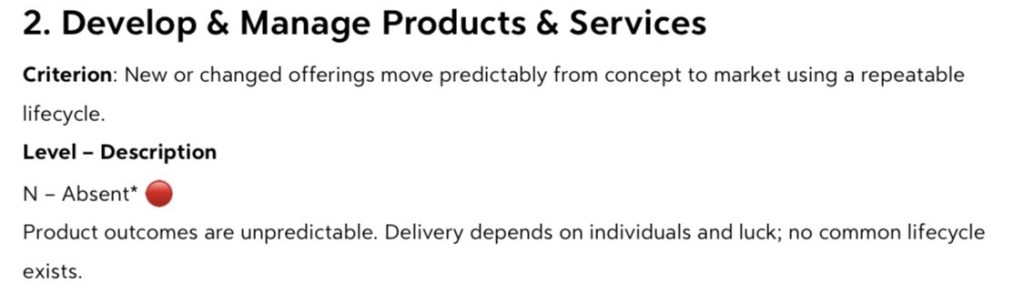
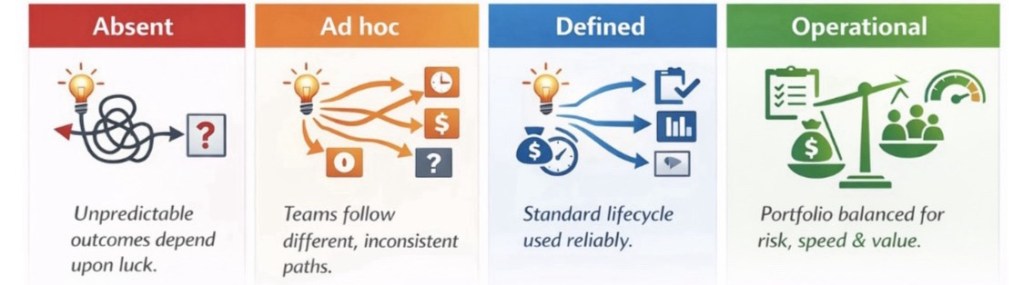
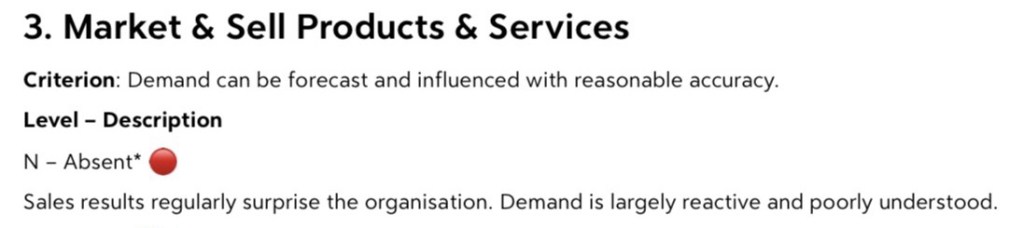
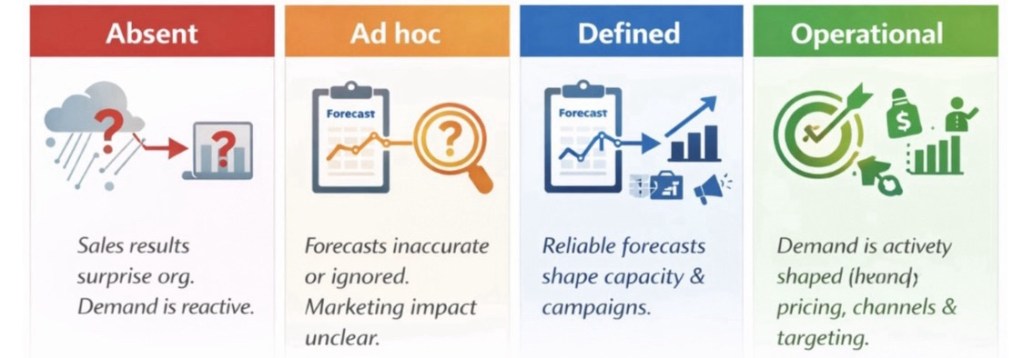
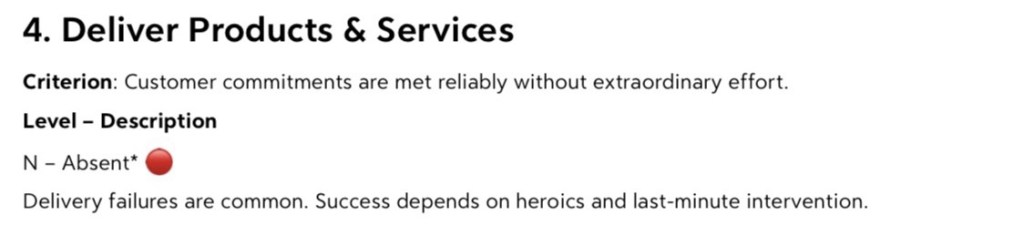
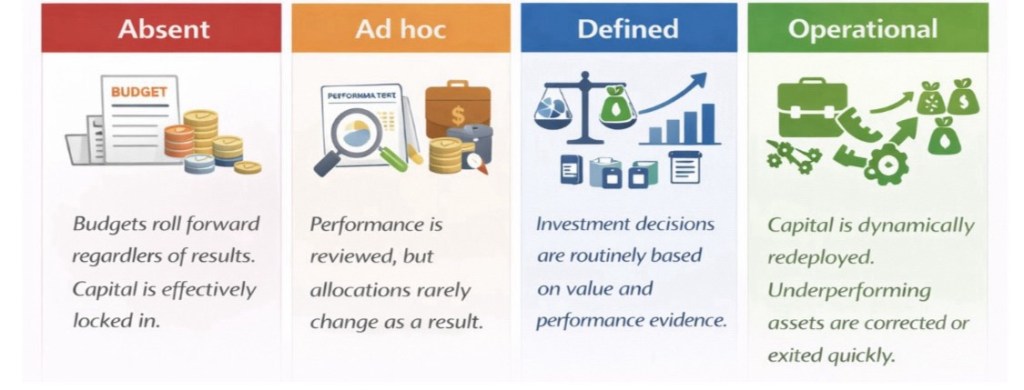
Given ISO 9001:2026 will incorporate extra depth for leadership, culture, risk–opportunity, digital and climate themes, how popular is the domain model (below) likely to be with the current USA leadership? Below is a domain model one could turn into a capability assessment framework (maturity grid, heat map, etc.).[1][2][3][4] 1. Context, Stakeholders and Strategic Alignment Assess… Read More
Category: decision making

No cherry on top …
Don’t be preoccupied by the “cherry on top” marketing – check the fundamentals for soundness. Read More
Universal Framework – Capability Assessment Evidence
Capability Assessment evidence. Read More
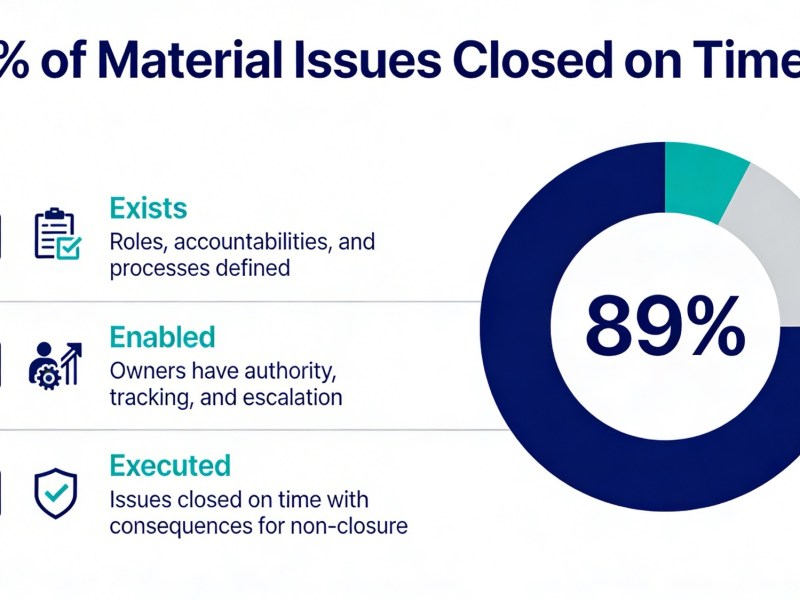
UNIVERSAL FRAMEWORK – Domain 7. Governance & Accountability – evidence notes
Metric: % of material issues closed on time (audit, reviews, incidents) E1 – Exists (Gateway Evidence) Do defined governance roles, accountabilities, and issue management processes exist? E2 – Enabled Are issue owners supported with authority, tracking, and escalation mechanisms? E3 – Executed Are material issues reliably closed on time, with consequences for non-closure? Evidence and… Read More
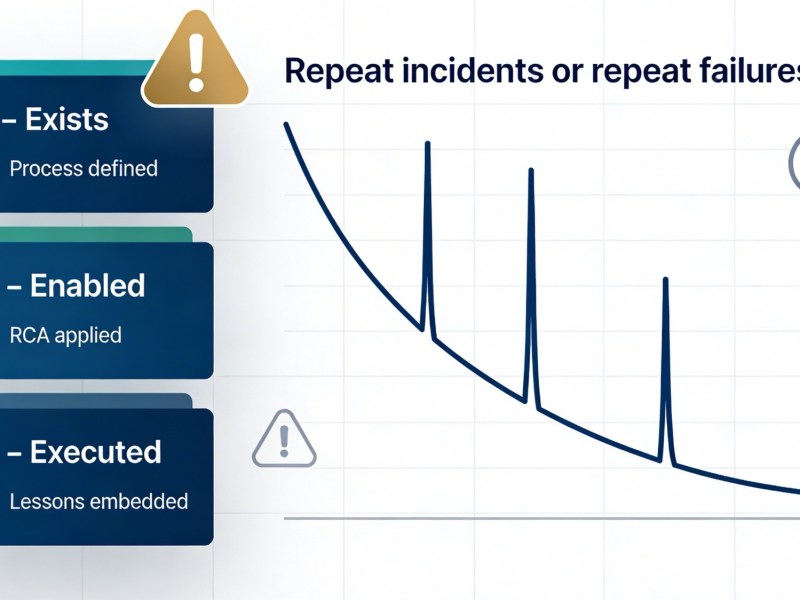
UNIVERSAL FRAMEWORK – Domain 6. Learning & Continuous Improvement – evidence notes
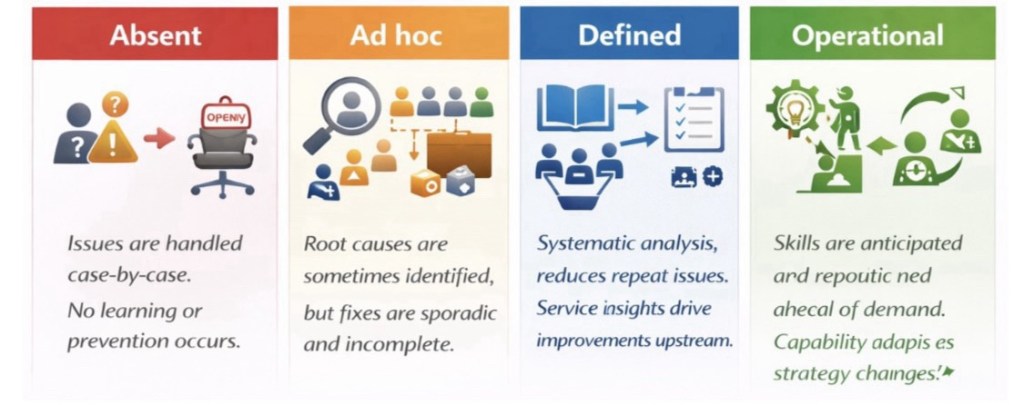
Metric: Repeat incidents or repeat failures Evidence E1 – Exists (Gateway Evidence)Does a defined organisational process exist for learning from incidents, failures, and reviews? E2 – EnabledAre root cause analysis and improvement mechanisms consistently applied? E3 – ExecutedIs there evidence that lessons learned have reduced repeat incidents or failures? You can support each level (E1–E3)… Read More
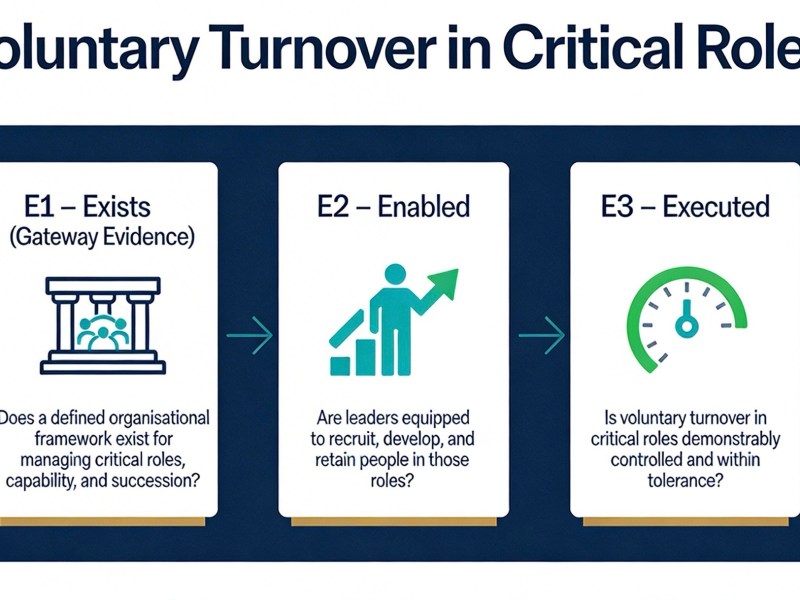
UNIVERSAL FRAMEWORK – Domain 5. People Leadership & Culture – evidence notes
Metric: Voluntary turnover in critical roles E1 – Exists (Gateway Evidence)Does a defined organisational framework exist for managing critical roles, capability, and succession? E2 – EnabledAre leaders equipped to recruit, develop, and retain people in those roles? E3 – ExecutedIs voluntary turnover in critical roles demonstrably controlled and within tolerance? You can think of the… Read More
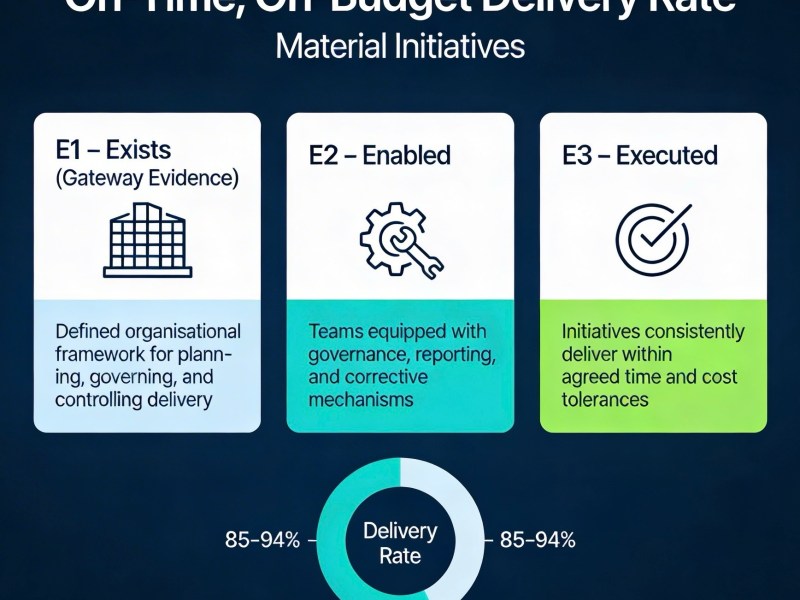
UNIVERSAL FRAMEWORK – Domain 4. Execution & Operational Control – evidence notes
Metric: On-time, on-budget delivery rate for material initiatives Evidence E1 – Exists (Gateway Evidence)Does a defined organisational framework exist for planning, governing, and controlling delivery of material initiatives? E2 – EnabledAre teams equipped with governance, reporting, and corrective mechanisms? E3 – ExecutedDo initiatives consistently deliver outcomes within agreed time and cost tolerances? An assessment of… Read More
Reflections on uncertainty
On reading the piece below (uncertain wisdom) I remembered a friend reflecting (late one evening, decades ago) on his first experiences in a “command, control and coordination centre” during a disaster. He quoted “while all about are losing theirs” with the wry observation that they were probably the sanest in the room – and that… Read More
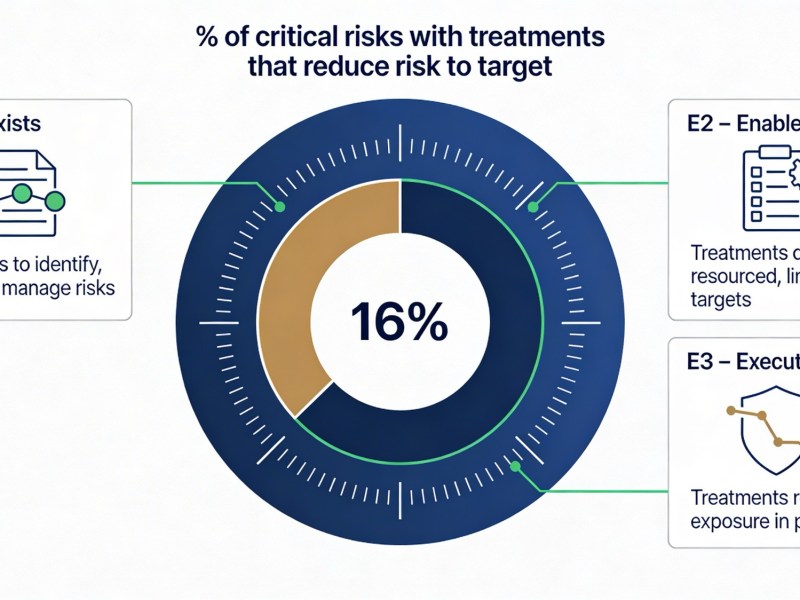
UNIVERSAL FRAMEWORK – Domain 3. Risk & Resilience – evidence notes
Metric: % of critical risks with treatments that reduce risk to target E1 – Exists (Gateway Evidence)Does a defined organisational process exist for identifying, assessing, and managing risks? E2 – EnabledAre treatments defined, resourced, and linked to risk targets or tolerances? E3 – ExecutedHave treatments demonstrably reduced risk exposure in practice (not just on paper)?… Read More
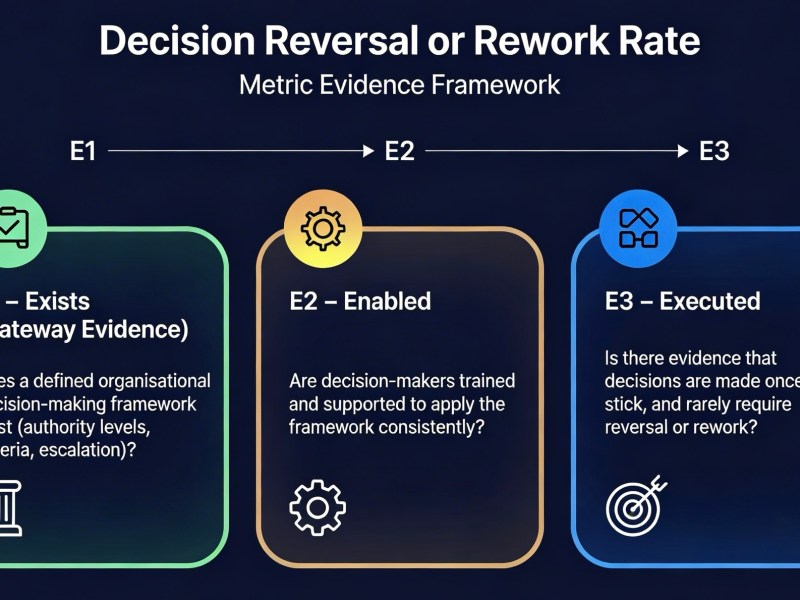
UNIVERSAL FRAMEWORK – Domain 2. Decision-Making Quality – evidence notes
Metric: Decision reversal or rework rate E1 – Exists (Gateway Evidence)Does a defined organisational decision-making framework exist (authority levels, criteria, escalation)? E2 – EnabledAre decision-makers trained and supported to apply the framework consistently? E3 – ExecutedIs there evidence that decisions are made once, stick, and rarely require reversal or rework? Support assessment with three types… Read More

UNIVERSAL FRAMEWORK – Domain 1. Strategy & Direction – evidence notes
You can support each level (E1–E3) with very specific documentary evidence and interview notes tied directly to how objectives are set, owned, measured, and used in decision‑making.[1][2][3] E1 – Exists (defined process) Assessment question: Does a defined organisational process exist for establishing, prioritising, and assigning strategic objectives? Evidence you would look for: Approved strategic plan… Read More
Capability Assessment Tool- evidence example
[example illustrating types of evidence sought assessing e1, e2, and e3 for **domain 1 “context & scope management”** of environmental management systems (EMS)] 1.E1 “Is there documented analysis of internal and external issues, including environmental conditions (e.g. climate, biodiversity, pollution)?”Evidence would focus on showing that you have systematically identified and analysed internal and external issues,… Read More
Environmental Management Systems – Gateway Evidence
ISO Alignment Assessment 1 – Context & Scope Management Capability Criterion The organisation defines and maintains EMS scope based on a structured understanding of environmental context and interested parties. E1 – Gateway Evidence Does a defined organisational process exist for analysing environmental context, interested parties, and defining EMS scope? 2 – EMS Design & Integration… Read More
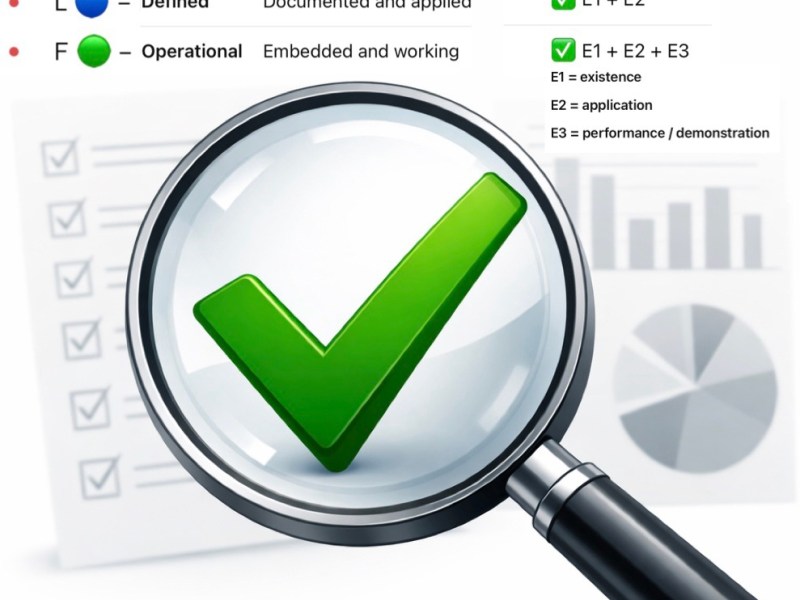
Risk Management Capability Framework
Based on ISO 31000 – ten key elements (domains) are built into the soon to be released Capability Assessment app (USD $0.99cents) 1. Leadership & Commitment Capability Criterion Leadership actively sets direction for risk management and uses risk information to govern decisions. 2. Integration into Governance & Decision-Making Capability Criterion Risk management is embedded in… Read More
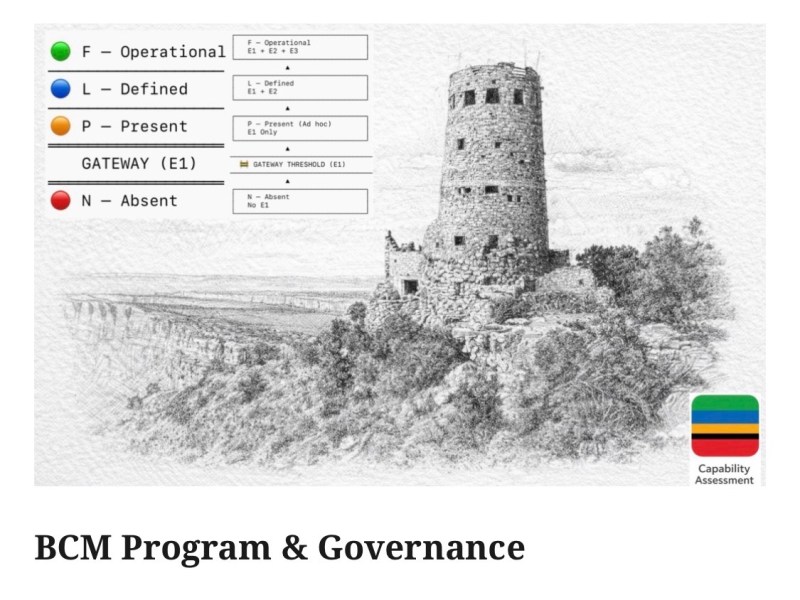
Business Continuity Management – Gateway Evidence
Do you have the necessary foundation – the Gateway Evidence? BCM Program & Governance Intent: Direction, authority, and oversight exist and are exercised.E1 – Established (Gateway Evidence)Does a formally approved BCM policy, scope, roles, responsibilities, and governance structure exist? Business Impact Analysis (BIA) & Risk Assessment Intent: Decisions are based on a credible understanding of… Read More
Universal Framework – Gateway Capability
How well does your business stack up against the “Universal” gateway tests of capability? Strategy & DirectionMetric: % of strategic objectives with a named owner and tracked outcomes – EvidenceE1 – Exists (Gateway Evidence)Does a defined organisational process exist for establishing, prioritising, and assigning strategic objectives? Decision-Making QualityMetric: Decision reversal or rework rate – EvidenceE1… Read More
In a capability assessment, gateway evidence is foundational
Capability is proven not in comfort, but in vigilance. The minimum, non-negotiable evidence that must exist before a capability can be considered present at any level above “Absent.” It is the threshold test — the “entry ticket” to scoring. 1. Why it’s called “gateway” It acts like a gate: ❌ If the gateway evidence is… Read More
Governing Beneath the Sword
A metaphor story. All leadership sits beneath suspended consequences . Revenue may be strong; strategy clear; and the board, confident. But exposures remain: Environmental. Cyber. Regulatory. Reputational. Strategic. The question isn’t whether risk exists. It’s whether the thread holding it is strong. Most organisations can describe their risks. Far fewer can demonstrate — with evidence… Read More
Environmental Management System Capability Assessment
The capability assessment tool outlined below will be an embedded example in our upcoming Capability Assessment app (which will be available for USD0.99)
Have you ever walked into an organization like this?