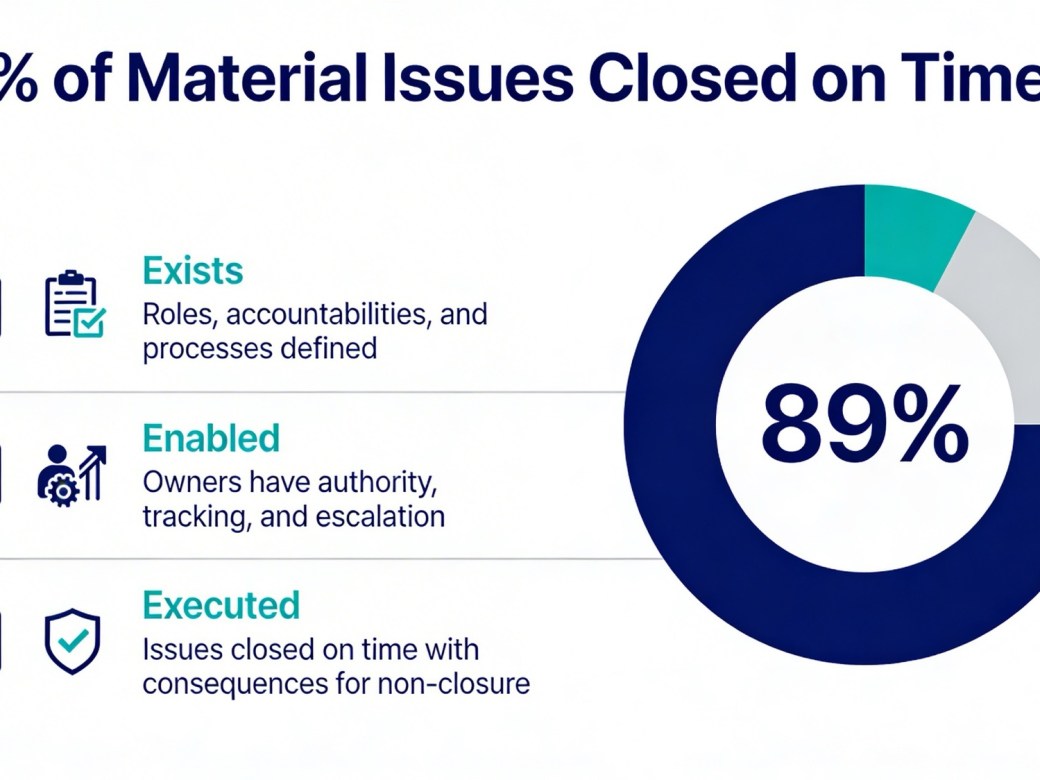
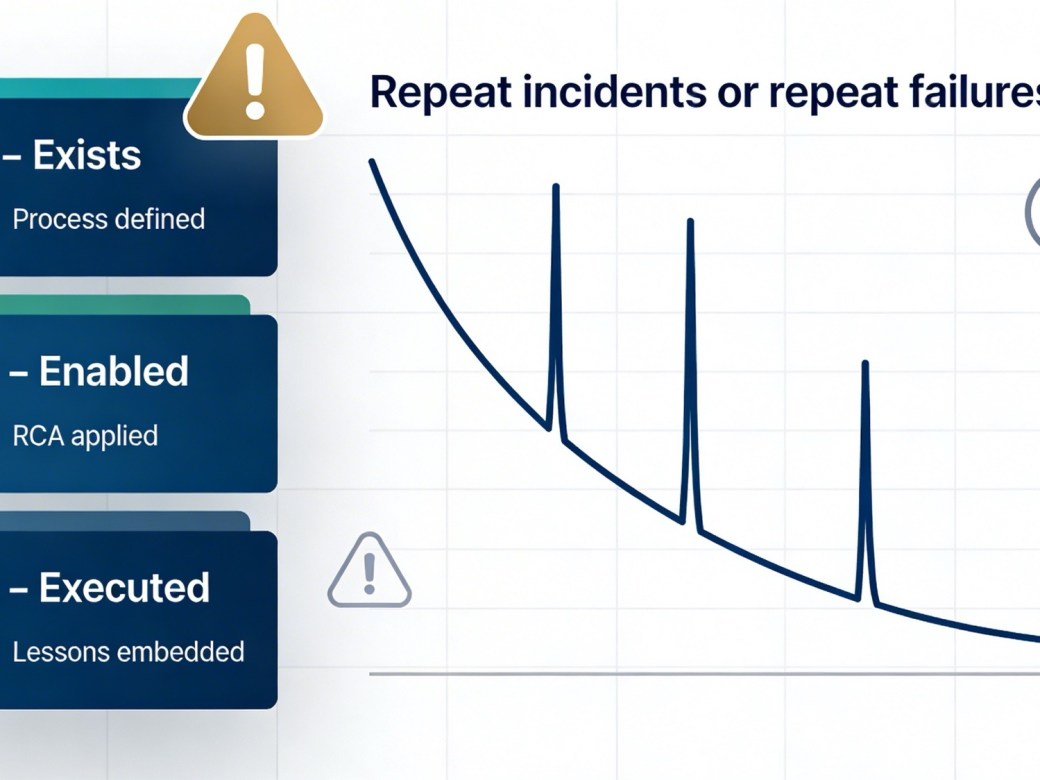
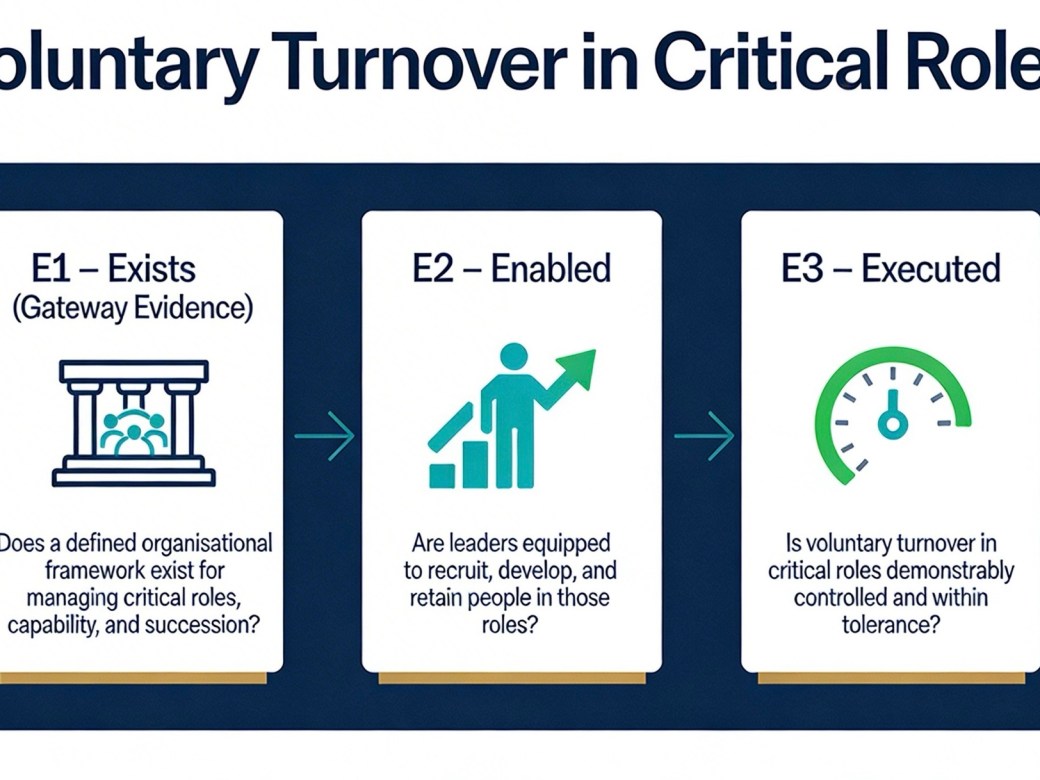
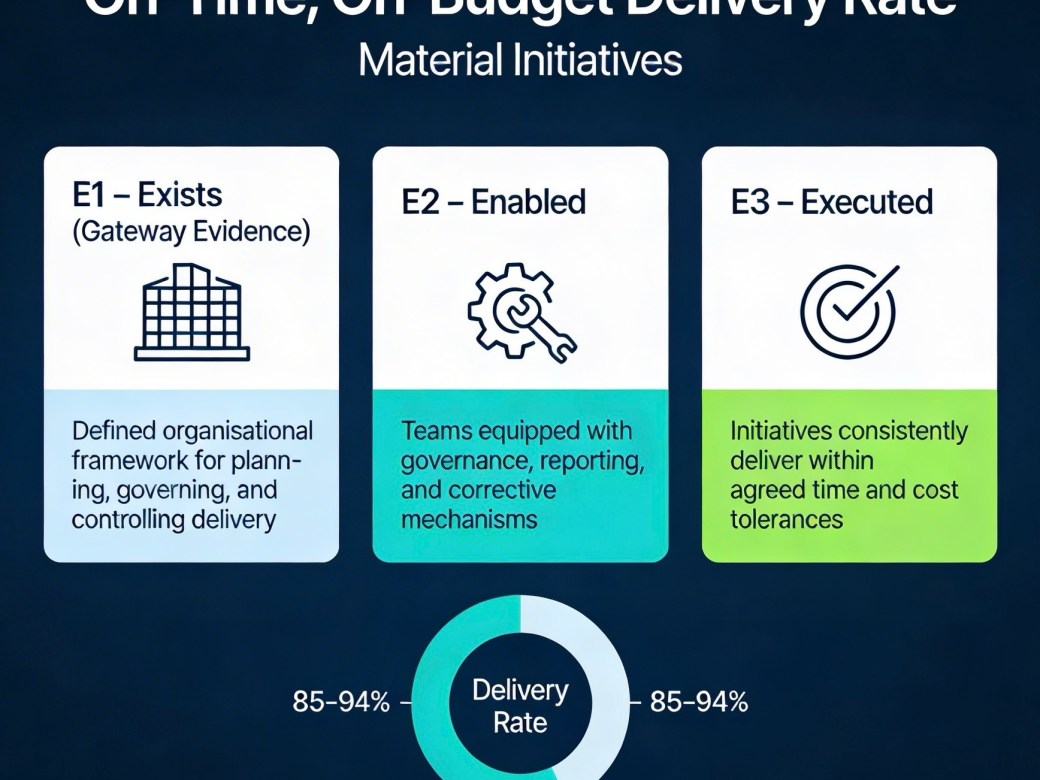
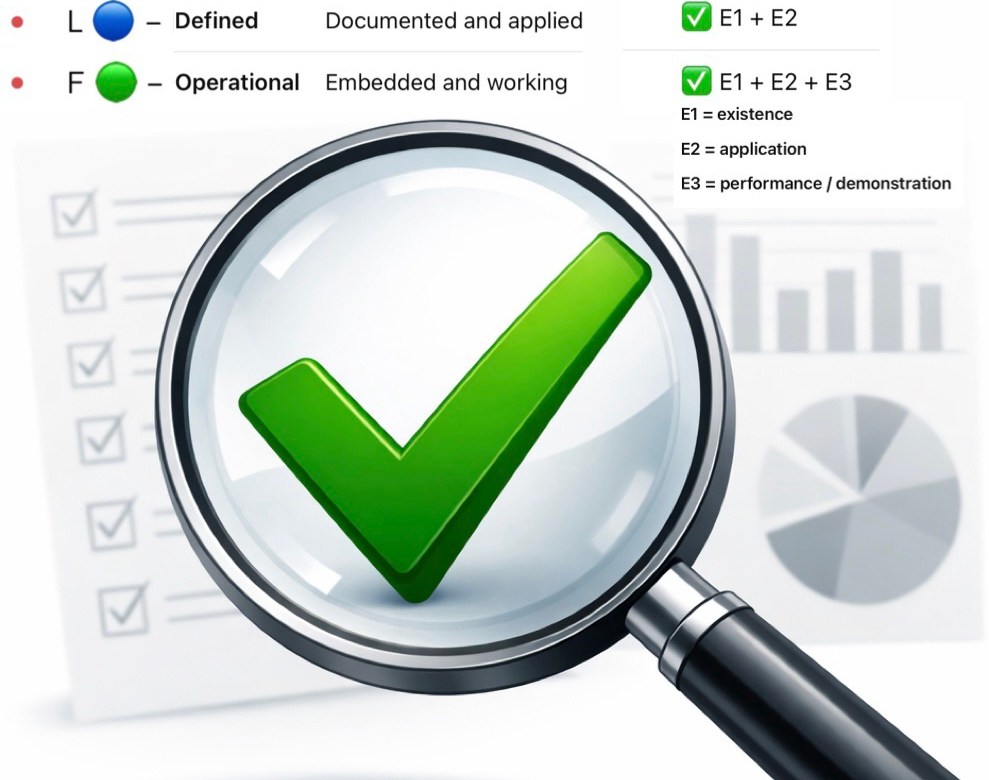
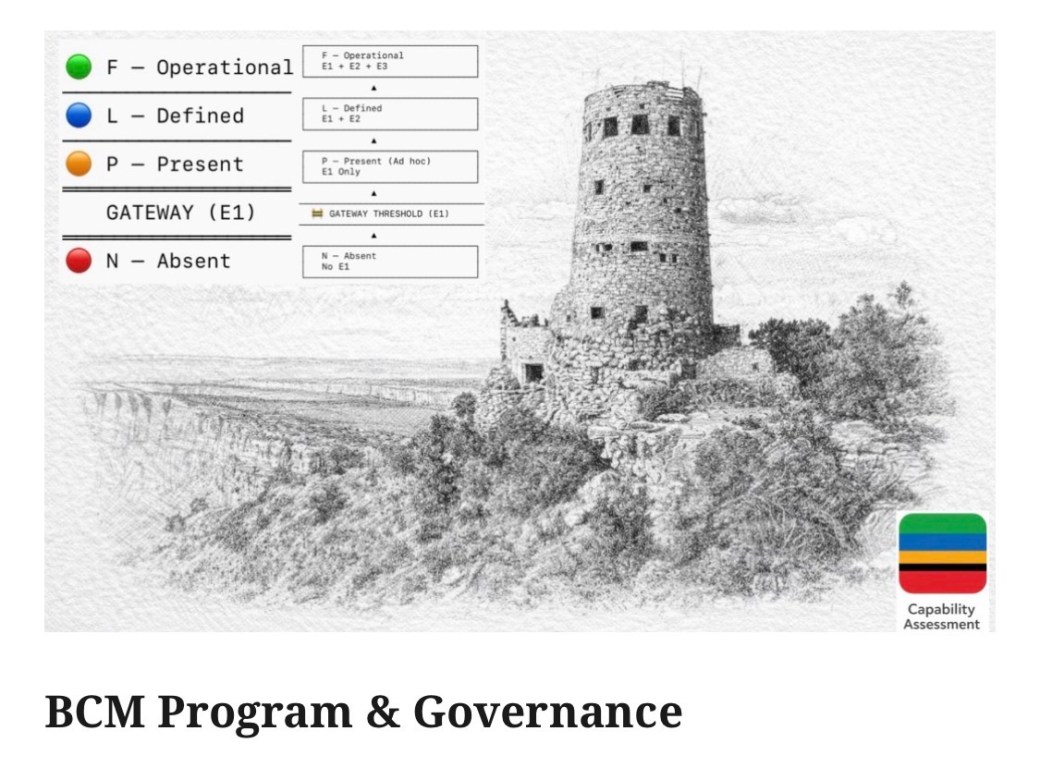
In a capability assessment, gateway evidence is foundational

Capability is proven not in comfort, but in vigilance. The minimum, non-negotiable evidence that must exist before a capability can be considered present at any level above “Absent.” It is the threshold test — the “entry ticket” to scoring. 1. Why it’s called “gateway” It acts like a gate: It prevents inflation of ratings based… Read More
Governing Beneath the Sword

A metaphor story. All leadership sits beneath suspended consequences . Revenue may be strong; strategy clear; and the board, confident. But exposures remain: The question isn’t whether risk exists. It’s whether the thread holding it is strong. Most organisations can describe their risks. Far fewer can demonstrate — with evidence — the maturity of the… Read More
Prompts – questions to explore capability (Universal Process Framework)

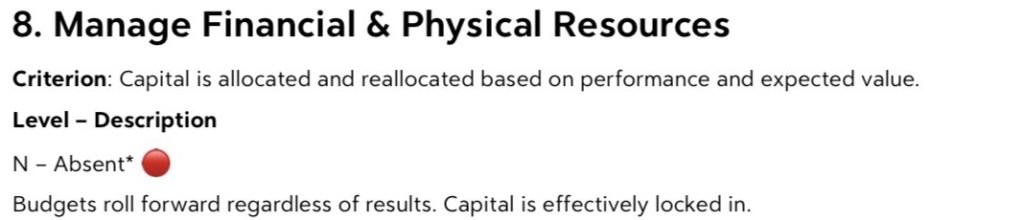
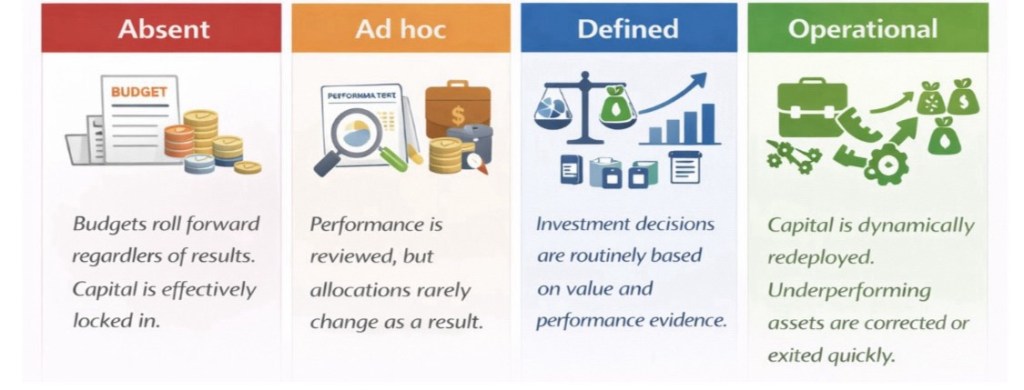
The K.I.S.S. Principle (Keep It Short and Simple) reminds us to focus on the “necessary and sufficient”. An important “fit for purpose” principle which encourages focus, which we bring to the capability framework, the associated assessment criteria – and prompts. 1. Develop Vision & Strategy ⚖️ Criterion: Strategic objectives drive actual resource allocation decisions.  📎… Read More
Brutally Simple

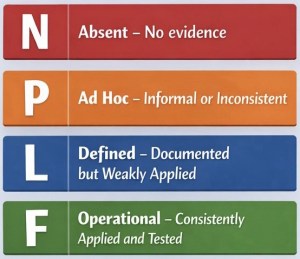
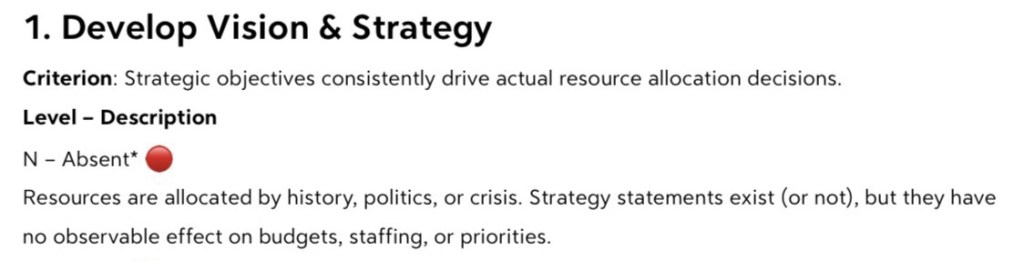
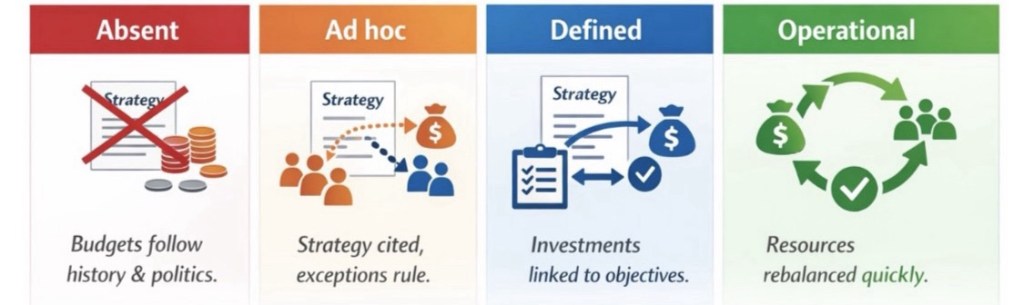
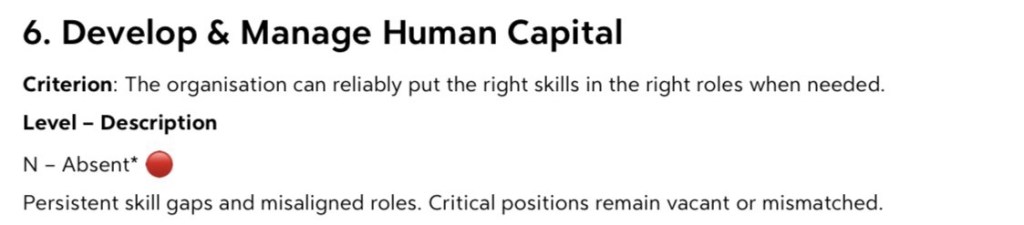
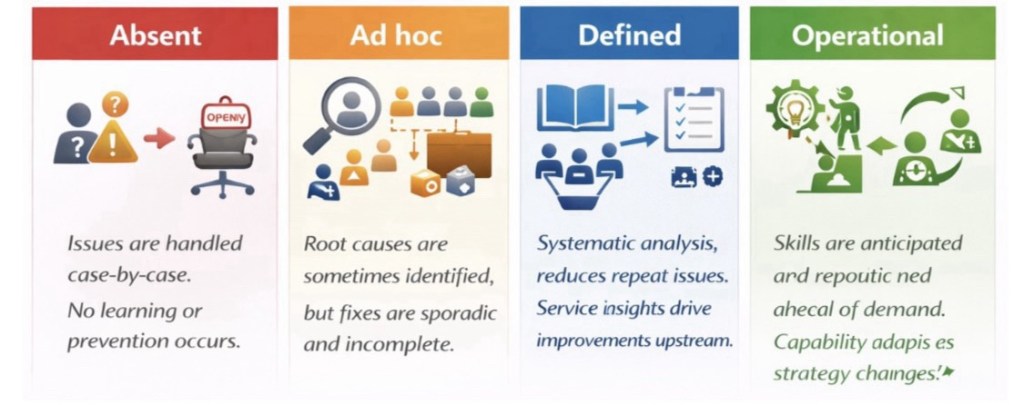
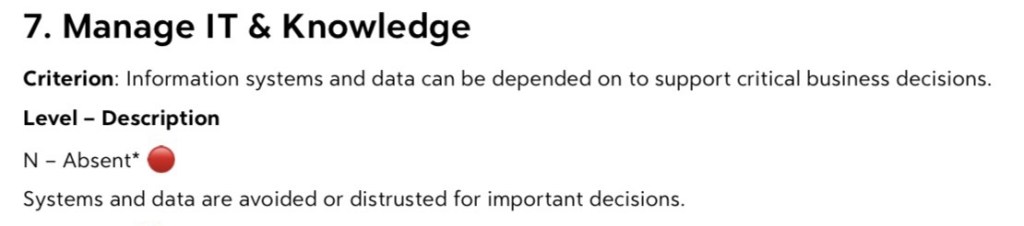
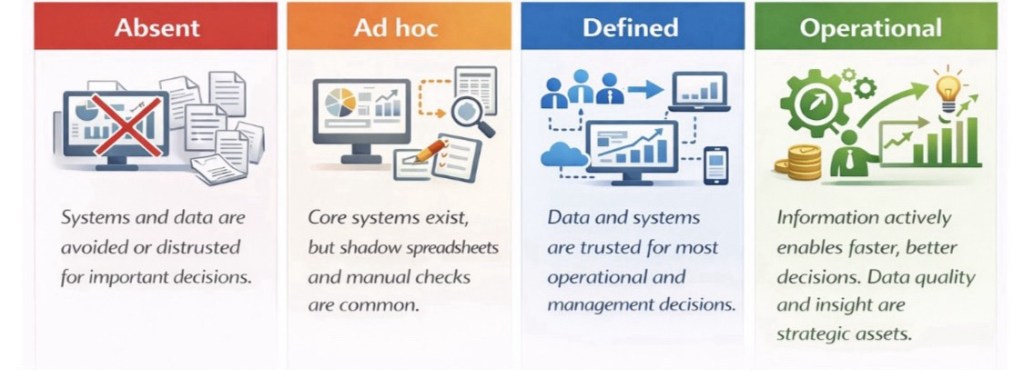
… but hopefully NOT simplistic. The K.I.S.S. Principle (Keep It Short and Simple) reminds us to focus on the “necessary and sufficient”. An important “fit for purpose” principle which encourages focus. 1. Develop Vision & Strategy Criterion: Strategic objectives consistently drive actual resource allocation decisions. Level – Description N 🔴 Absent Resources are allocated by… Read More

Framework for Evidence Assessment

📈 Assessment Criteria and Evidence by Process Category 1.1 Strategic Alignment· Evidence to Seek: Documented strategic plans, cascaded department/team objectives, communication materials.· Sufficient Evidence: A high-quality strategy map or objective tree showing a clear, logical cascade from vision to actionable team goals (Moderate). Validation through employee surveys showing >80% understanding of how their work contributes… Read More

Universal Process Classification Framework

These categories represent the highest-level view of an end-to-end enterprise. The assessment criteria are key performance indicators (KPIs) that organizations typically use to measure the effectiveness, efficiency, and output quality of each process category. Key Application: This framework allows organizations to map their processes, identify gaps, and benchmark performance against industry standards using these common… Read More

Miller’s 7 + or – 2 and Simon’s Bounded Rationality

We structure our approach to Gap Analysis mindful of two of the most foundational ideas in cognitive psychology and behavioral economics. Here’s a breakdown of how Miller’s “Magical Number Seven, Plus or Minus Two” relates to and helped shape the theory of Bounded Rationality. 1. Miller’s Law (1956) · What it is: George A. Miller’s… Read More

Paved with good intentions

This is not the first time we have seen poorly thought through policy end badly. Witness the venture of insulation in roofing being subsidized. Good intent. Poor premising. Worse implementation. Resulting in unqualified installations and fatalities. More recently, one has to question the scenario analysis underpinning the battery subsidization scheme. Was there any? Is so,… Read More

How is AI useful?

“History offers a clear warning that authoritarianism often advances gradually through the subversion of democratic institutions, but it also provides a well-documented playbook for successful opposition, centered on unified pro-democracy coalitions, strategic nonviolent action, and the vigilant defense of institutional norms . Below summarizes the common tactics identified by researchers as part of the modern… Read More

The heat is on …

No, not the 1980s soundtrack … though that was fun. As we move into summer, we are reminded of a chilling fact. Heat kills more people than other extreme events. The second point worth reflection here is that “natural disasters” are not natural. The extreme event might (or might not) be caused by “nature”, for… Read More