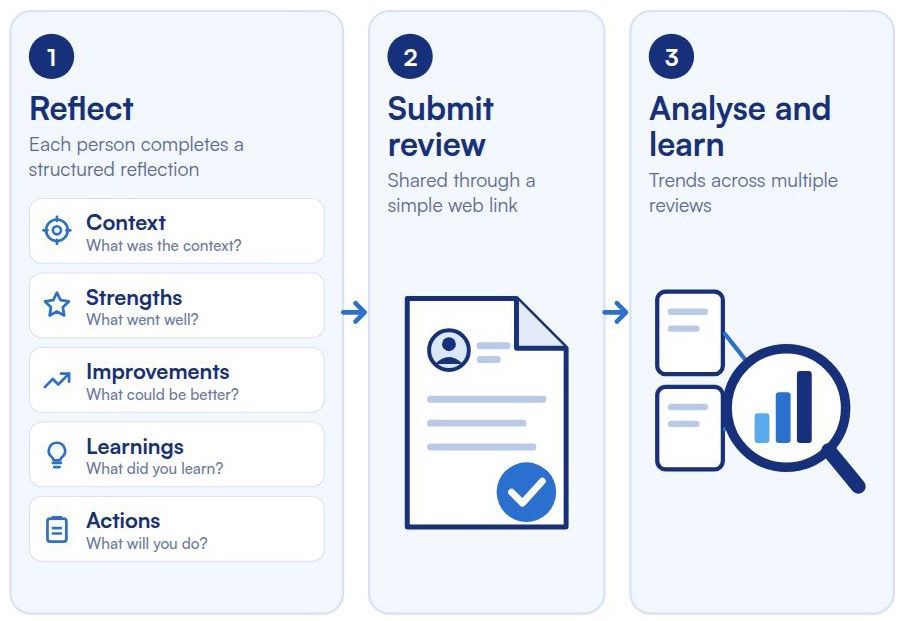
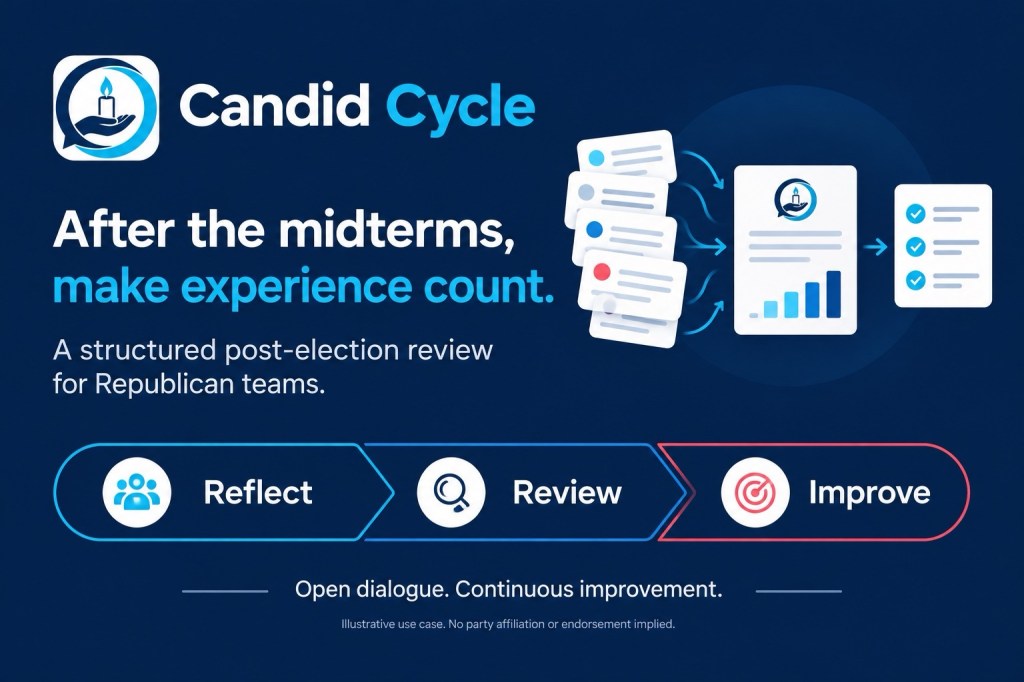
The Republicans could use Candid Cycle as a structured post-election review: a way to gather candid accounts from across the organisation, distinguish recurring problems from isolated experiences, and turn the findings into accountable improvements. Its strongest proposition would be learning, rather than another political post-mortem dominated by whoever speaks loudest.
That distinction matters when explanations are already emerging. Senator John Curtis, for example, has attributed Republican losses to a departure from conservative values. Candid Cycle would not establish whether that interpretation is correct; it could help an organisation examine competing explanations systematically rather than accepting the first persuasive account.^1
How the three-stage process could apply
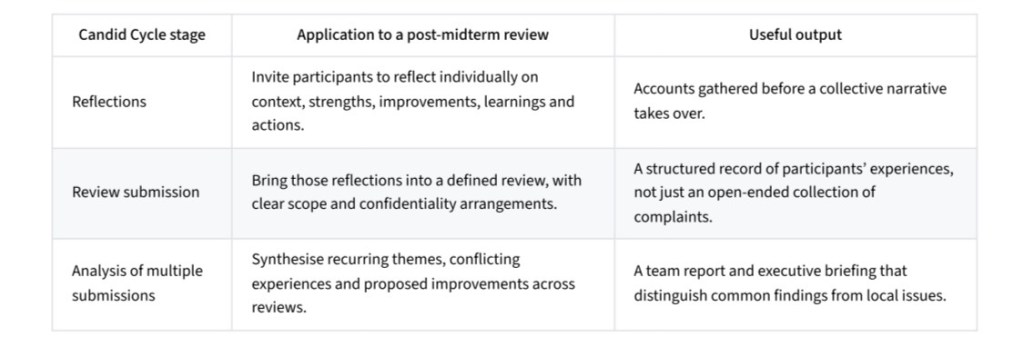
The useful questions would concern organisational performance: Were responsibilities clear? Did information reach the people who needed it? Were decisions timely? Did systems and handovers work? Could people raise concerns? What should be retained?
Where it could add the most value
1. Separate outcomes from the quality of the work
A favourable election result does not necessarily mean every organisational process worked well; an unfavourable result does not establish that every team performed poorly.
A review could examine both:
- Whether a team achieved its stated operational objectives.
- What helped or hindered delivery.
- Which conclusions are supported by records, and which remain participants’ interpretations.
- What deserves recognition or further investigation.
The Yes / Partially / No goal-attainment approach would provide a useful discipline here, without implying a precision the evidence cannot support.
2. Surface experiences that leadership might otherwise miss
Anonymous-by-design reflections could provide a channel for staff and volunteers to describe unclear instructions, duplicated work, inadequate support or problems with internal coordination.
The important safeguard is not to promise that anonymity automatically produces truth. Submissions are evidence of participants’ experiences; factual allegations and causal explanations may still require corroboration. In small teams, identifying details would also need careful editing.
3. Compare experiences without flattening the differences
Separate reviews could cover defined organisational units or functions, followed by a higher-level synthesis.
That synthesis should distinguish:
- Recurring organisational issues.
- Problems confined to a particular setting.
- Contradictory experiences requiring further inquiry.
- Practices worth preserving.
- Evidence gaps that prevent a firm conclusion.
The value would be in finding patterns without assuming every team faced the same circumstances.
4. Close the loop with accountable action
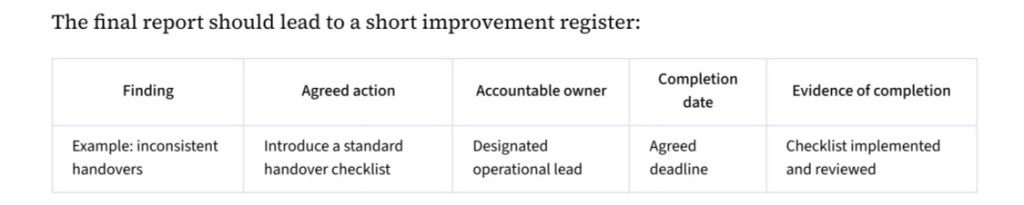
Contributors could then receive an anonymised account of what was heard, what leadership accepted, and what will change.
How I would position Candid Cycle
A suitable proposition would be:
“A confidential, structured post-election review that turns individual experience into shared learning and accountable organisational improvement.”
I would keep it explicitly separate from voter targeting, electoral messaging or choosing a political platform. Its credible role is to help an organisation understand its own performance – not to claim that AI can explain an election result.
The strongest initial engagement would be a bounded organisational review with clear sponsorship, confidentiality rules and a commitment to act on the findings. That would demonstrate Candid Cycle’s value more convincingly than attempting a whole-party diagnosis immediately.