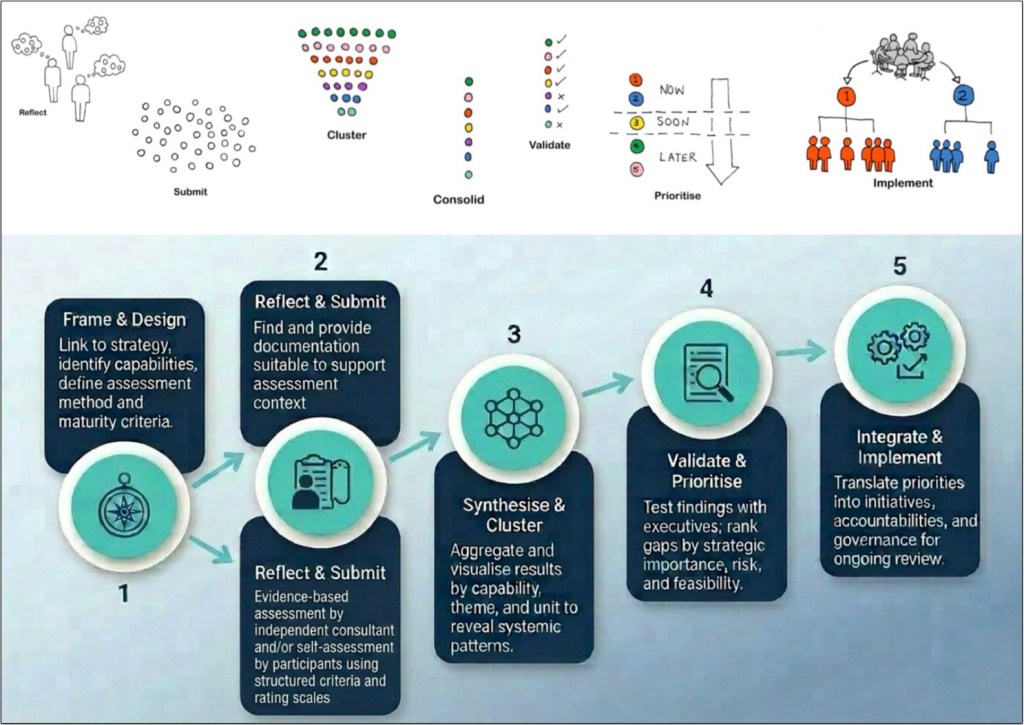
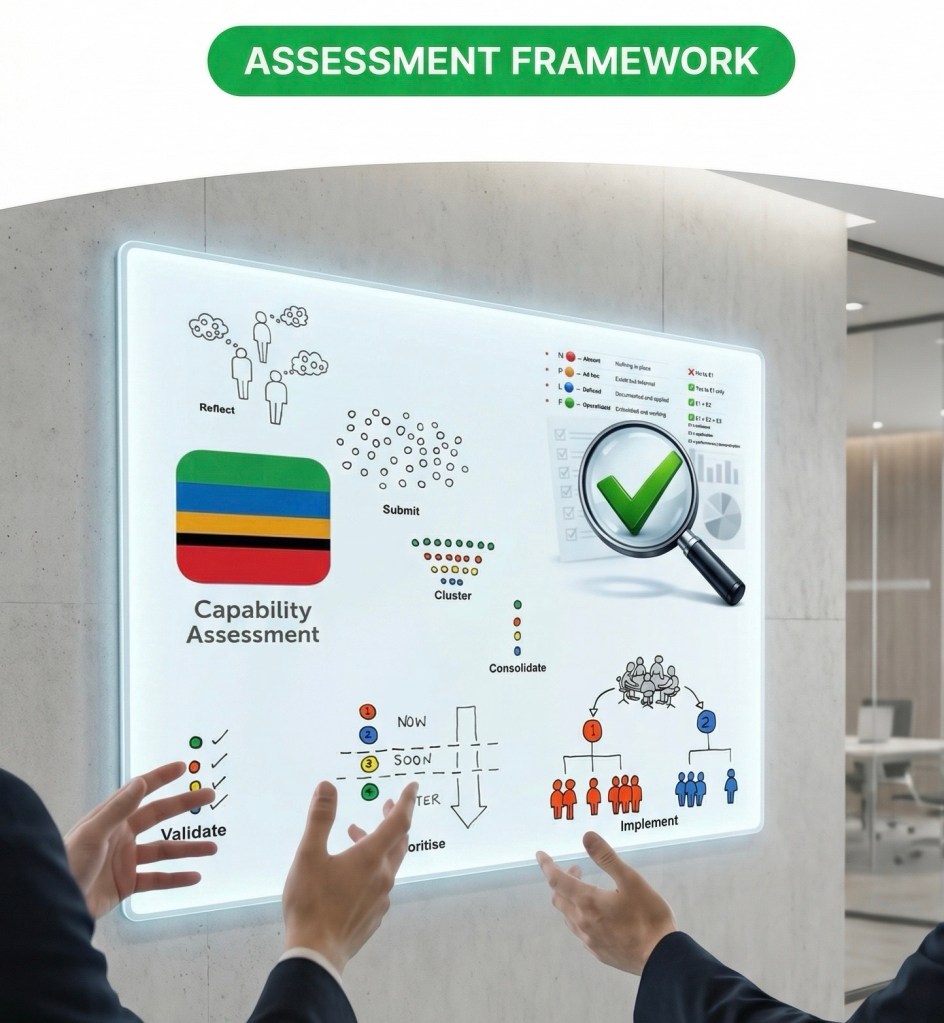
1. Frame & Design
Link to strategy, identify capabilities, and define assessment method and maturity criteria. Clarify why you are assessing capability, what “strategic” means in your context, and where you will and will not look. This step explicitly links the assessment to mission, strategy, risk profile, and key value streams, and identifies the core capabilities to be examined.
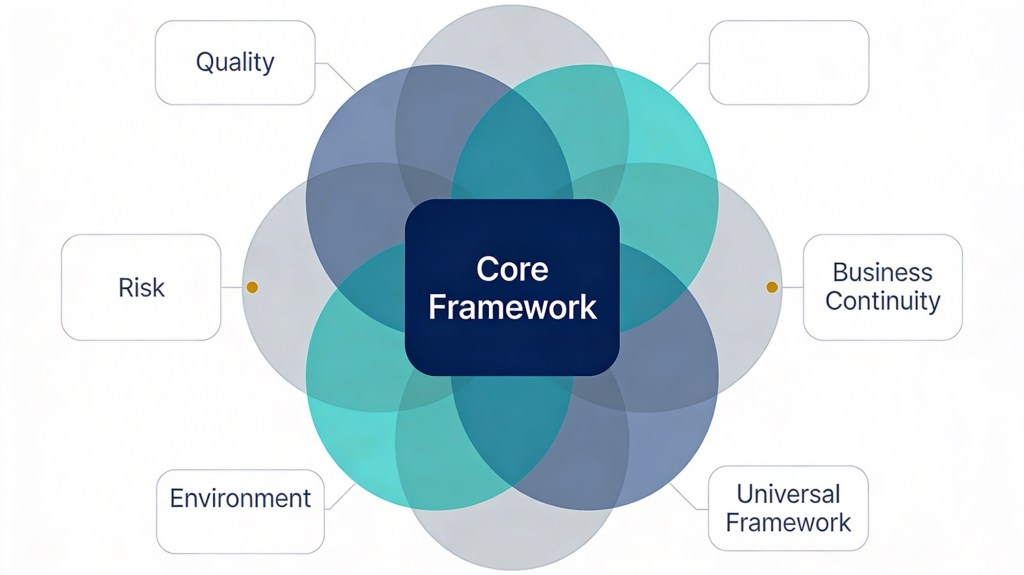
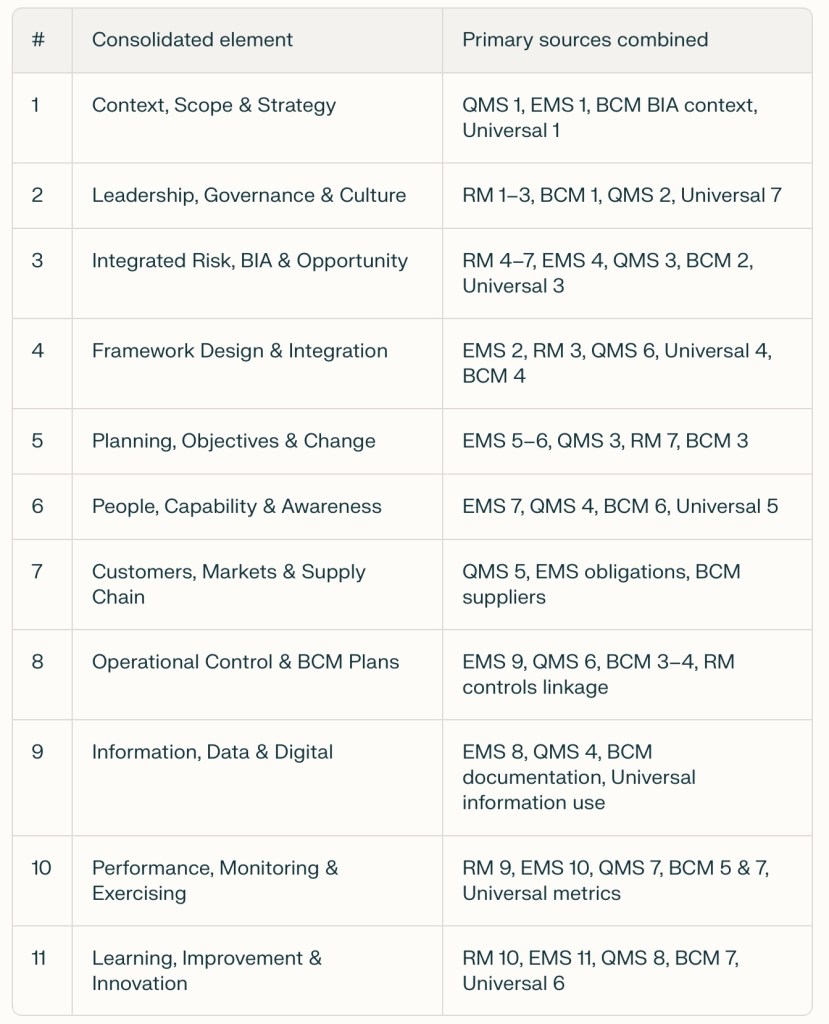
Describe each target capability and decide how it will be assessed. This includes defining maturity levels or performance standards, specifying indicators and evidence, choosing rating scales, and deciding who participates and how (surveys, workshops, interviews, document review).

2. Reflect & Submit
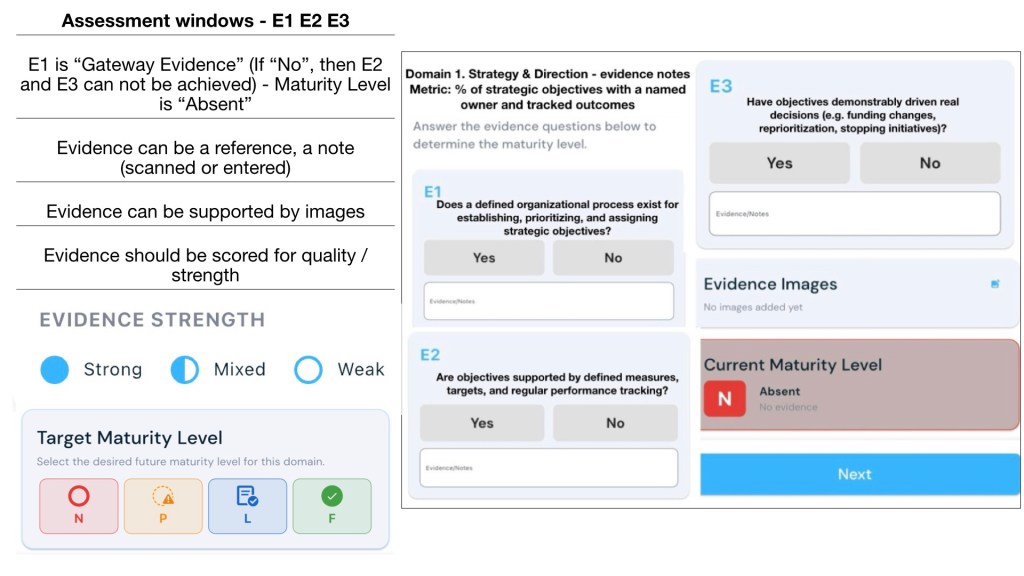
Evidence-based self-assessment by participants using structured criteria and rating scales (Capability Assessment app). Participants reflect on current capability using the agreed criteria and submit ratings plus supporting evidence into a common template or system. The emphasis is on disciplined, evidence‑based self‑assessment rather than subjective, opinionistic scoring.
3. Synthesise & Cluster
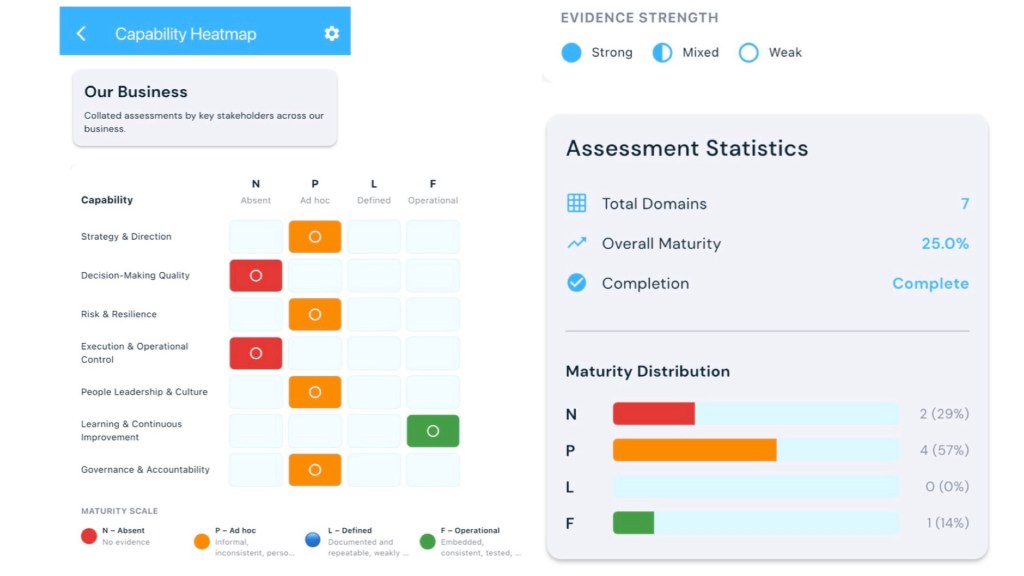
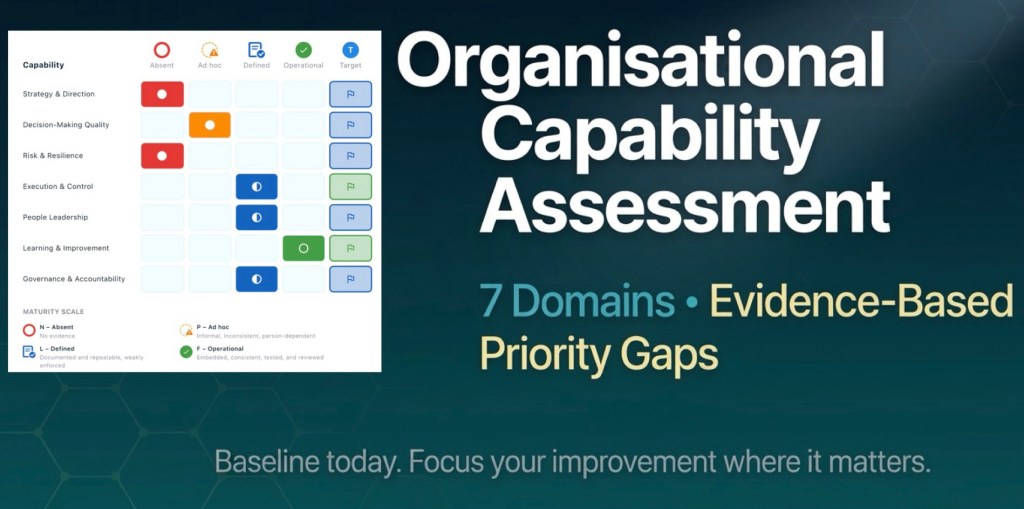
Aggregate and visualise results by capability, theme, and unit to reveal systemic patterns. “Clustering and Consolidation” becomes more analytical. Individual inputs are aggregated and clustered by capability, business unit, and strategic theme to surface patterns, asymmetries, and systemic strengths or vulnerabilities. Visuals such as capability maps or heat‑maps are often produced here.
4. Validate & Prioritise
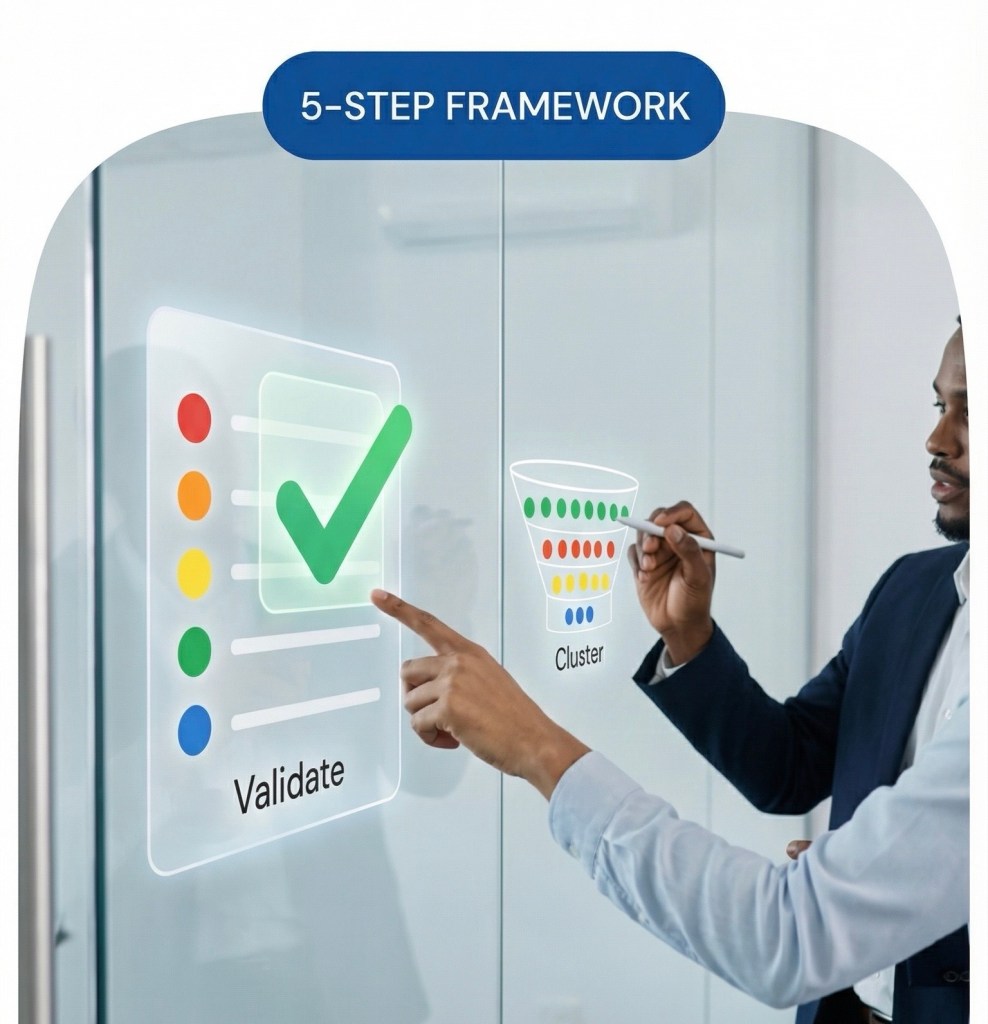
“Validation and Prioritisation” is explicitly framed as a strategic decision step. Findings are tested with executives and key stakeholders; priorities are set based on strategic importance, risk exposure, interdependencies between capabilities, and feasibility of improvement – not just perceived weakness.
5. Integrate & Implement
Translate priorities into initiatives, accountabilities, and governance for ongoing review. “Implementation” expands to cover integration into strategy and governance. Prioritised capability gaps are translated into funded initiatives, clear accountabilities, KPIs/OKRs, and a review cycle, so capability development becomes a recurring part of strategic planning and performance management. (A final report to the client for their consideration)

“Rapid Resilience & Continuity Scan”
 John Salter Consulting Services