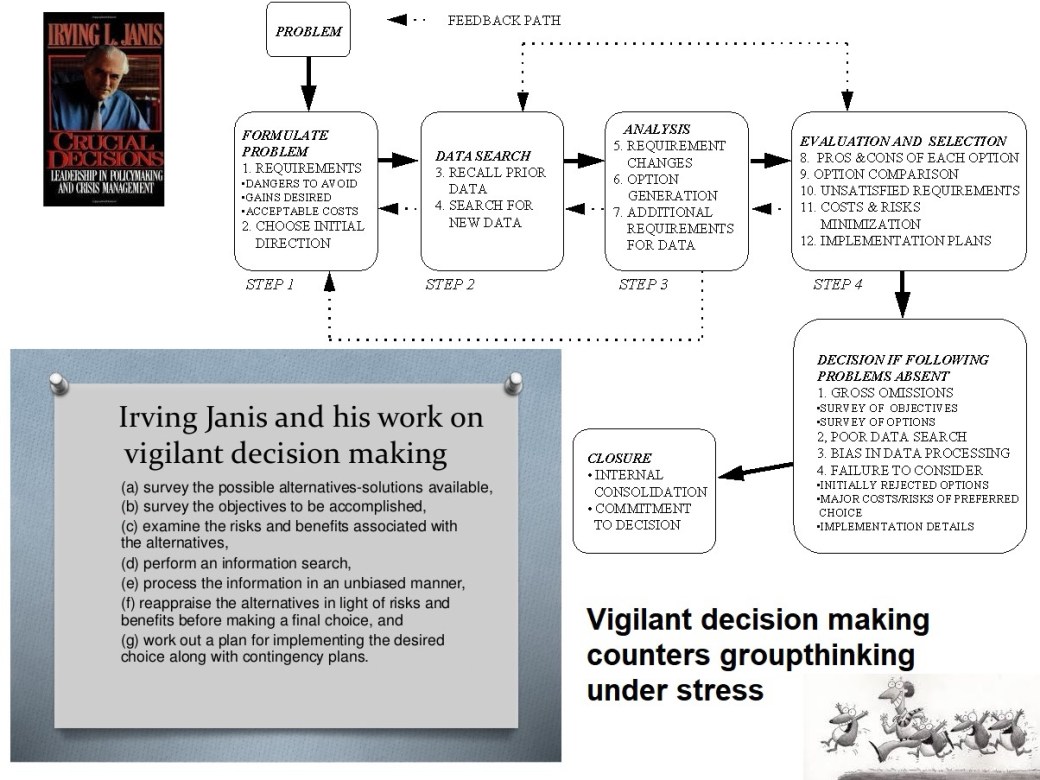
In contexts characterized by uncertainty, I am not convinced that AI provides sound solutions. Equally, I’m pretty sure that those dusty plans on your shelf (or in your cupboard) won’t measure up either.
A reflection in the International Crisis Management Standard notes that “crises through a combination of their novelty, inherent uncertainty and potential scale and duration of impact, are rarely resolvable through the application of predefined procedures and plans. They demand a flexible, creative, strategic and sustained response“.
There is always a tension. This is nicely expressed by Louise Comfort whereby “… structure, introduced into operations by design, is both a means of limiting error and of clarifying choices for action by multiple participants over time in complex environments. The challenge lies in designing this structure in ways that achieve the stability desired for effective performance of the management system, without restricting the flexibility required for adaptation to changing conditions.” (Comfort, L.K. (ed.) (1988) Managing Disaster: Strategies and Policy Perspectives. p. 18. London: Duke Press.])
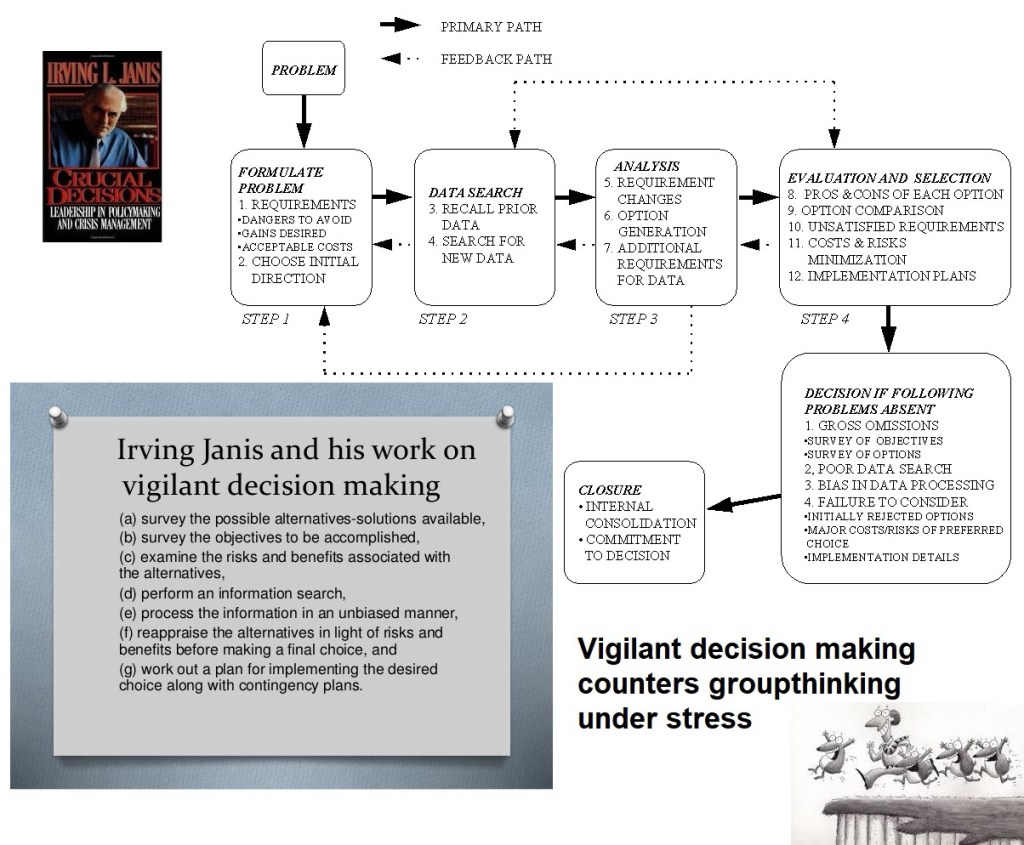
Make the assumption that ‘agility’, ‘flexibility’ and ‘adaptability’ will be key concepts that should be part of all decision making. In addressing this assumption, we emphasise that both BEFORE and AFTER IMPACT, Top Management should focus on five primary decision points:
(1) What is the current condition? (context)
(2) What are the vulnerabilities? (detection)
(3) What do the vulnerabilities mean? (recognition and interpretation)
(4) Who needs to know what? (communication to multiple stakeholders)
(5) Who needs to do what? (organization of a collaborative system)

 John Salter Consulting Services