War has a way of exposing vulnerabilities that arise from interconnection. Inside organisations, conflict acts like an extreme stress test: it doesn’t create fragility from nowhere, it reveals weaknesses already baked into operating models, supply chains, and decision‑making rhythms. The question for leaders is not whether those vulnerabilities exist, but how consciously they have been recognised, designed for, and governed.

Why distant wars show up in your performance indicators
War often arrives in the organisation as a data point, not a drama. A distant conflict appears first as a headline, then as stretched lead times, rising logistics costs, “pending allocation” notices, and a flood of cyber risk bulletins. What begins as “something happening over there” quickly shows up as noise in KPIs and discomfort in planning assumptions. These are not just external shocks; they are feedback on how capability has been built.
Decades of optimisation have pushed organisations toward lean inventories, concentrated suppliers, centralised data, and tightly coupled processes. In stable conditions, this looks like good management. Under war‑related disruption — physical, economic, cyber, or informational — the same characteristics show up as brittleness. Capabilities that looked robust turn out to be over‑specialised, over‑connected, and under‑resilient.
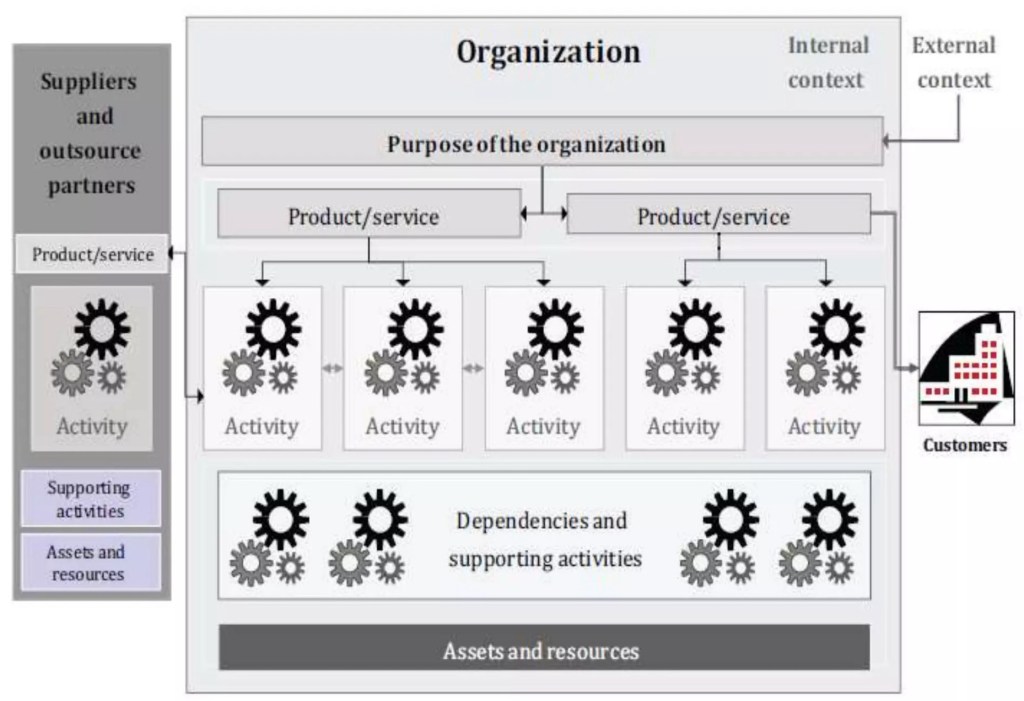
Interconnection: strength and shock channel
The systems we build to give us reach, efficiency, and speed also become the channels through which shocks propagate. A highly integrated global sourcing strategy is both a source of advantage and a liability when regions become contested. Centralised cloud platforms increase agility and standardisation, but concentrate cyber and dependency risk. Interconnection creates both capability and fragility; conflict strips away the illusion that we can have one without the other.
Language can make us feel more passive than we really are. We talk about “supply chain disruption” or “market volatility,” as if organisations simply receive forces from outside. But procurement choices, network architectures, partnership models, outsourcing decisions, and risk tolerances are all design moves. War reveals where those moves have created single points of failure, opaque dependencies, or untested assumptions about who carries which risks.
Three capability gaps war keeps exposing
From a capability perspective, three recurring gaps stand out:
- Structural resilience is underweighted. We define what we can do in terms of throughput, quality, and cost, but pay less attention to how performance degrades under stress, how quickly we can reconfigure, or how well we can operate in degraded modes.
- Interdependencies are not mapped. Many organisations cannot clearly answer: Which vendors, facilities, platforms, and people are on our critical path? Where are we single‑threaded? Which external infrastructures quietly underpin “normal” operations?
- Ecosystem risk is overlooked. Much of “our” capability lives across joint ventures, strategic suppliers, logistics partners, digital platforms, and regulators. An organisation may have strong internal continuity plans yet still be exposed through partners with much lower resilience maturity.
Designing for exposure, not illusory control
If interconnection is here to stay, the task for leaders is to design for exposure, not pretend it can be eliminated. That starts with defining capability in multi‑state terms: not just “Can we do X?”, but “How do we do X under normal, stressed, and degraded conditions — and how do we move between those states?” Resilience becomes a dynamic performance question, not a slogan.
It also means treating redundancy, diversity, and modularity as strategic investments rather than inefficiencies, and rehearsing disruption scenarios so people closer to the front line are empowered to act. Ultimately, war will continue to expose vulnerabilities that arise from interconnection, whether or not we are paying attention. We cannot choose when the next conflict erupts, but we can choose what kind of organisations we will be when it does.

Where in your operating model are you most single‑threaded today, and who in your organisation is actually accountable for changing that? I’d be interested to hear how you’re tackling this in practice.

 John Salter Consulting Services