How well does your business stack up against the “Universal” gateway tests of capability?
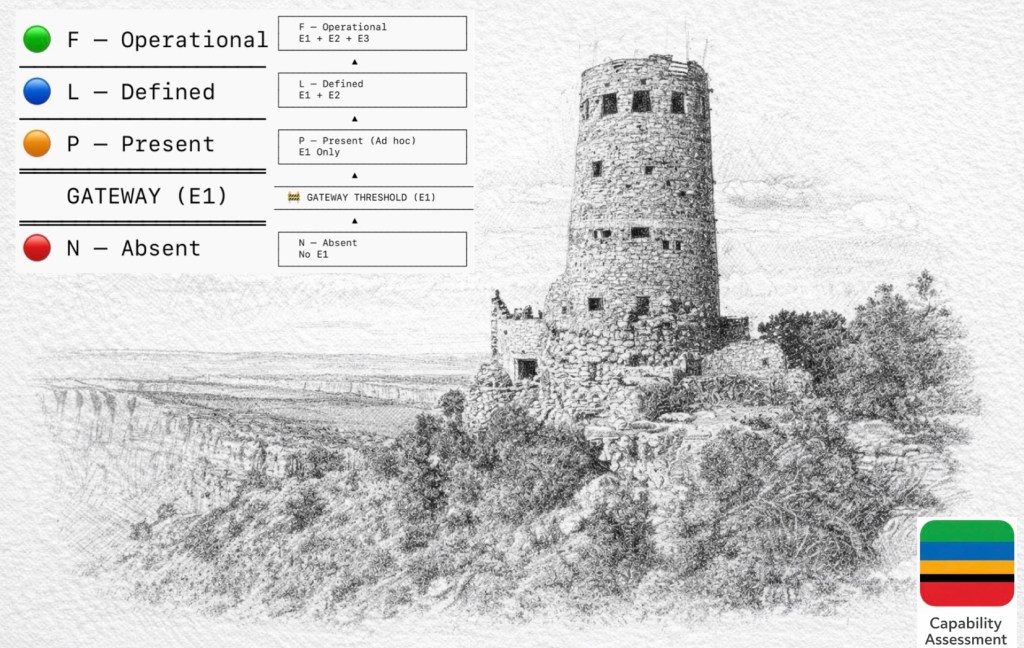
- Strategy & Direction
Metric: % of strategic objectives with a named owner and tracked outcomes – Evidence
E1 – Exists (Gateway Evidence)
Does a defined organisational process exist for establishing, prioritising, and assigning strategic objectives? - Decision-Making Quality
Metric: Decision reversal or rework rate – Evidence
E1 – Exists (Gateway Evidence)
Does a defined organisational decision-making framework exist (authority levels, criteria, escalation)? - Risk & Resilience
Metric: % of critical risks with treatments that reduce risk to target – Evidence
E1 – Exists (Gateway Evidence)
Does a defined organisational process exist for identifying, assessing, and managing risks? - Execution & Control
Metric: On-time, on-budget delivery rate for material initiatives – Evidence
E1 – Exists (Gateway Evidence)
Does a defined organisational framework exist for planning, governing, and controlling delivery of material initiatives? - People Leadership
Metric: Voluntary turnover in critical roles – Evidence
E1 – Exists (Gateway Evidence)
Does a defined organisational framework exist for managing critical roles, capability, and succession? - Learning & Improvement
Metric: Repeat incidents or repeat failures – Evidence
E1 – Exists (Gateway Evidence)
Does a defined organisational process exist for learning from incidents, failures, and reviews? - Governance & Accountability
Metric: % of material issues closed on time (audit, reviews, incidents) – Evidence
E1 – Exists (Gateway Evidence)
Do defined governance roles, accountabilities, and issue management processes exist?


 John Salter Consulting Services