
The phrase “If you can’t measure it, you can’t manage it” (or its variant, “What gets measured gets managed”) is one of the most famous and contentious axioms in modern business and management theory. Its story involves misattribution, oversimplification, and a deep philosophical divide about the nature of management.
Part 1: Origin and Misattribution
Common Misattribution: Peter Drucker
The quote is most often attributed to Peter Drucker, the legendary management thinker. However, there is no evidence he ever said it in this exact form. Drucker’s actual philosophy was more nuanced. He did emphasize the importance of measurements and objectives (famously in his concept of “Management by Objectives”), but he never endorsed the rigid, reductionist interpretation of the quote. He likely would have argued that some of the most important things (like morale, innovation, or ethics) are difficult to measure but essential to manage.
Probable True Origin: W. Edwards Deming
The sentiment finds its clearest antecedent in the work of W. Edwards Deming, the father of the Total Quality Management movement. Deming’s actual quote, from his book The New Economics (1993), is:
“It is wrong to suppose that if you can’t measure it, you can’t manage it – a costly myth.”
Crucially, Deming was arguing against the phrase. He saw it as a destructive myth that led managers to focus only on short-term, quantifiable metrics at the expense of long-term health, systemic thinking, and intangible factors.
Early Precedents:
The idea has older roots in the scientific management movement of the early 20th century.
· Lord Kelvin (1883): “When you can measure what you are speaking about, and express it in numbers, you know something about it; but when you cannot measure it, when you cannot express it in numbers, your knowledge is of a meagre and unsatisfactory kind.” This quote from a physicist set the tone for valuing quantification.
· A.C. Doyle (via Sherlock Holmes): “Data! Data! Data! I can’t make bricks without clay.” This reflects the empirical mindset.

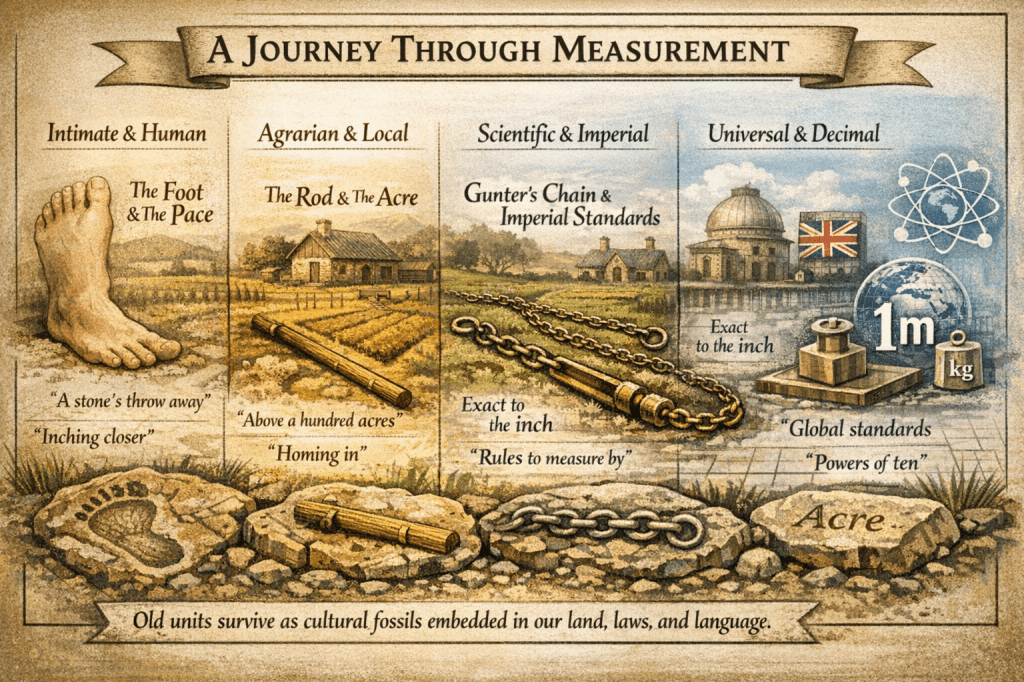
Public Standards of Length plaques, which were installed in London in the 19th century to provide an accessible and official reference for British imperial measurements.
Popularization:
The phrase took on a life of its own in the late 20th century, championed by consultants, business schools, and the burgeoning performance management industry (e.g., Balanced Scorecard, KPIs). It resonated with the desire to make management a “hard science.”
—
Part 2: The Controversy
The controversy stems from taking a useful heuristic (measurement is important) and turning it into an absolute dogma. Critics argue it has led to widespread dysfunction.
Arguments in Favor (Why People Use It):
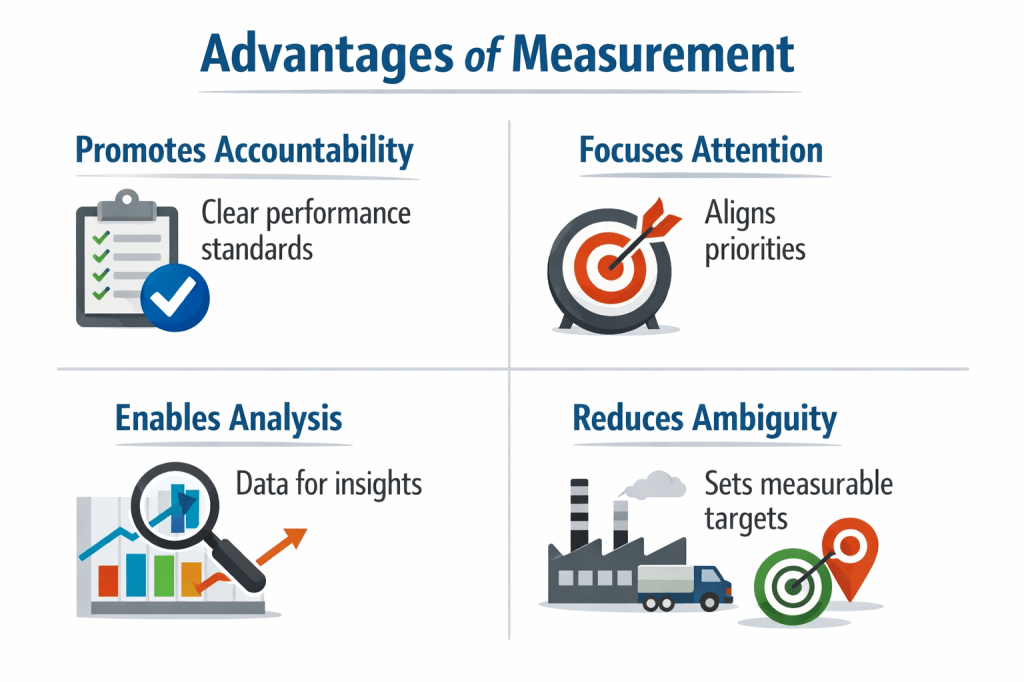
1. Promotes Accountability: Creates clear, objective standards for performance.
2. Focuses Attention: Directs effort toward organizational priorities.
3. Enables Analysis: Provides data for identifying trends, diagnosing problems, and testing solutions.
4. Reduces Ambiguity: In areas like manufacturing, logistics, or sales, measurable targets are essential for efficiency.
Major Criticisms and Controversies:
1. Goodhart’s Law: “When a measure becomes a target, it ceases to be a good measure.” This is the core of the controversy. Once a metric is tied to rewards or penalties, people will optimize for the metric itself, often undermining the original goal.
· Example: A call center measuring “average call time” may see agents rushing customers or hanging up to hit the target, destroying customer satisfaction.
2. The Tyranny of the Quantifiable: It devalues critical but hard-to-measure factors like:
· Employee morale, creativity, ethical culture, brand reputation, long-term innovation, and customer loyalty.
· This leads to “managing the numbers” instead of managing the business.
3. Short-Termism: Easily measured outcomes are often short-term (quarterly profits, weekly output). This incentivizes sacrificing long-term health (R&D investment, maintenance, employee development) for short-term gains.
4. Measurement Creates Distortion: The act of measuring complex systems often simplifies and distorts reality. Not everything meaningful can be captured in a KPI. As Einstein purportedly said, “Not everything that counts can be counted, and not everything that can be counted counts.”
5. Demotivation and Gaming: A strict measurement culture can foster fear, encourage unethical “gaming” of the system, and crush intrinsic motivation and professional judgment.
Modern Synthesis and Conclusion
Today, the consensus among thoughtful management theorists is a rejection of the phrase’s absolutism. The modern perspective is more balanced:
· “Measure what matters, but remember that not everything that matters can be measured.”
· Metrics are essential tools for insight, not the purpose of management itself.
· The role of a leader is to use quantitative data in conjunction with qualitative judgment, empathy, and strategic vision.
· The best performance management systems (like OKRs – Objectives and Key Results) are designed to separate aspirational goals (Objectives) from measurable benchmarks (Key Results), acknowledging that the map is not the territory.
In summary: The phrase originated from a misreading and simplification of broader management thought, most famously opposed by Deming himself. The controversy lies in its reduction of the rich, human, and strategic practice of management to a mere exercise in metric-tracking, with well-documented negative consequences. Its enduring legacy is a cautionary tale about the power and peril of measurement.





 John Salter Consulting Services