Before identifying options / solutions, first ensure a shared understanding of your objectives.


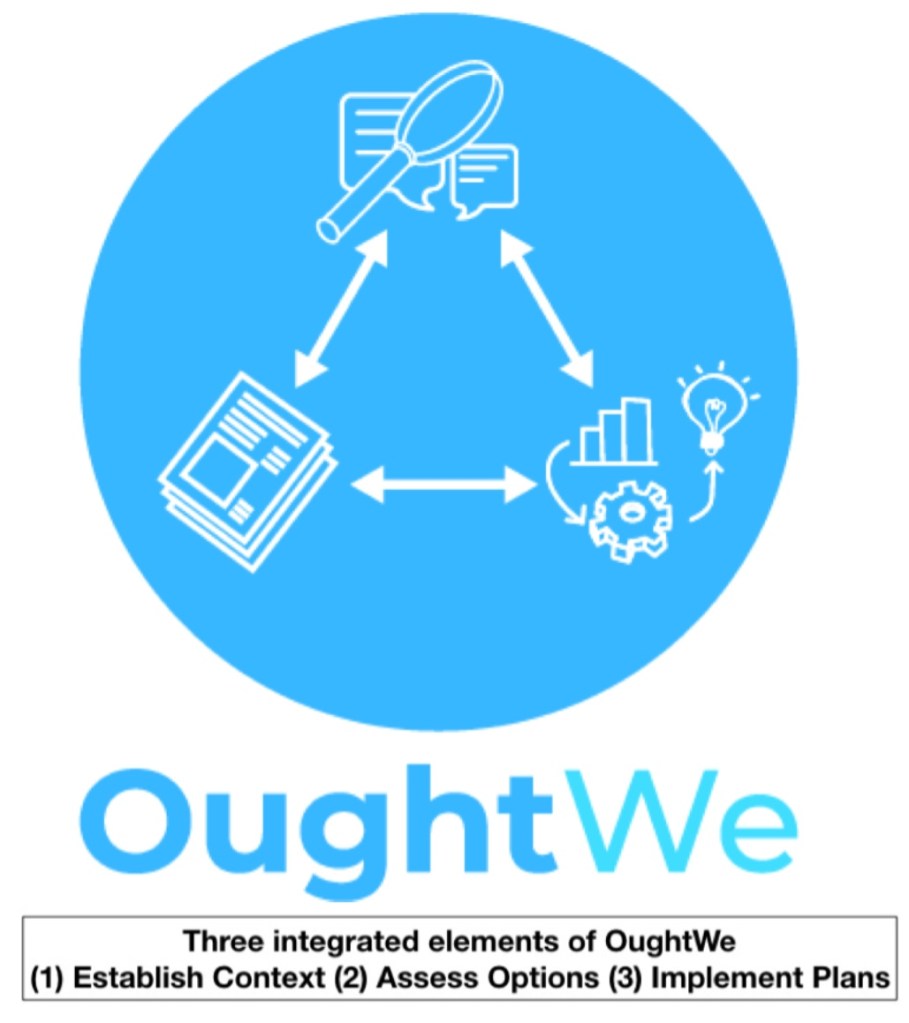
The scope of the decision should be determined within the context of your organisational objectives.

Identify your stakeholders (both internal and external) in relation to the scope of this decision and consider their concerns, issues and expectations.
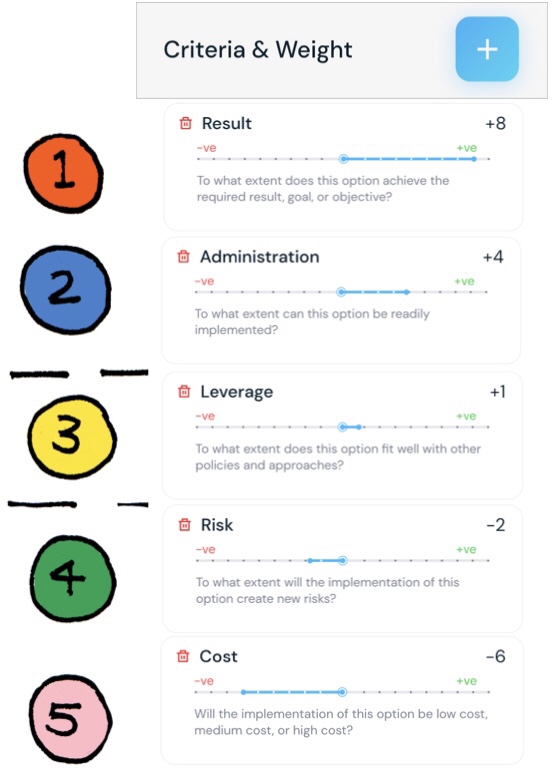
Core to the scope will be to set agreed criteria against which the options / potential solutions will be assessed.
It is important to establish agreement on which criteria are more important than others by attributing a weight to them using a scale of zero to +/- ten.
The attributed scores of each option against each of the criteria applies a scale of zero to ten.
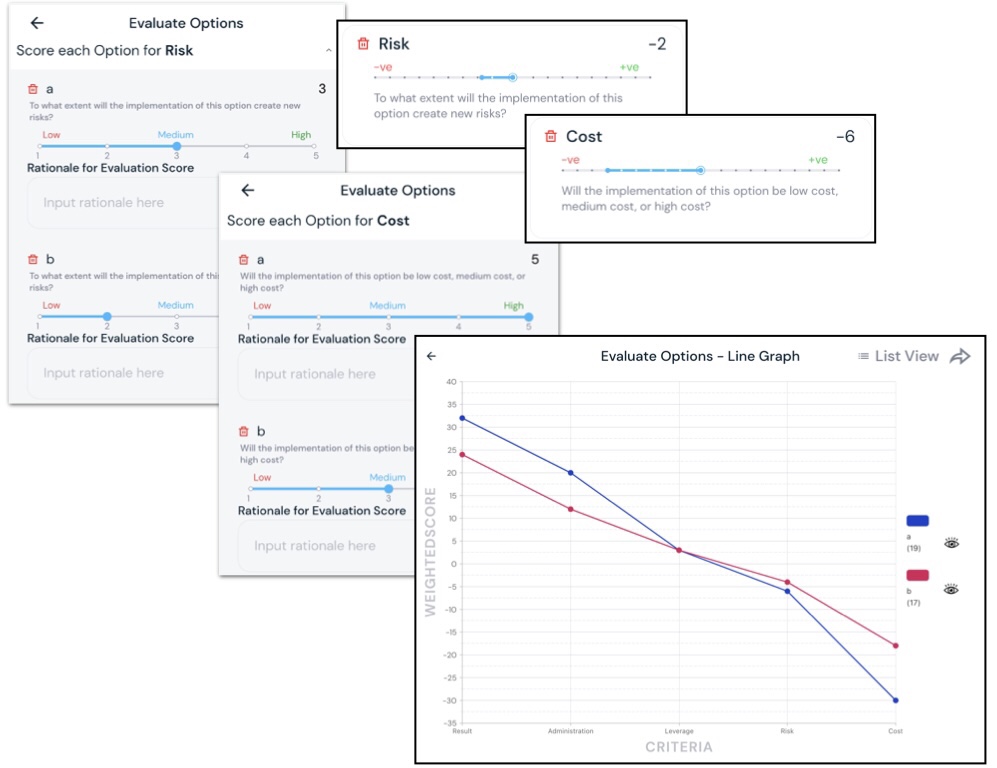
Quantitative vs Qualitative
It is too simplistic to dismiss an approach which uses numbers. They can stimulate quantitative considerations.
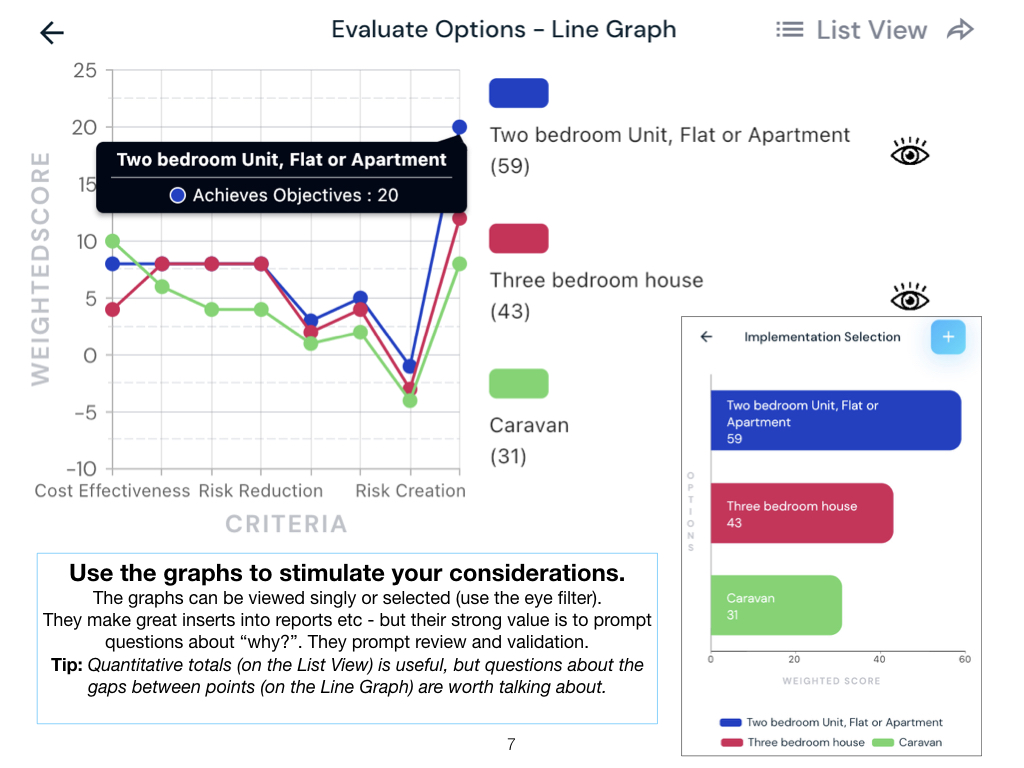
‘YourOughtWe’ is a service to put customized ‘OughtWe’ apps up, on Apple and Google Stores, which meet the needs of your organisation – as specified by you in the *Service Features* displayed at OughtWe.com and YourOughtWe.com
Guidance on the process of how to develop and shape the app to reflect your context and values is available at FacilitateYourOughtWe.com
I encourage you to reflect and consider how a tailored decision making app might benefit you – both as a tool – and as a training and development process.

 John Salter Consulting Services