What are Capability Assessments?
Capability assessments are structured evaluations used to measure how capable a person, team, or organisation is at doing specific things that matter for its goals, usually against clear criteria or maturity levels.
Core idea
• A capability assessment looks at “what you can do” today versus “what you need to be able to do” to deliver a strategy or meet requirements.
• It typically compares current capability to defined standards, benchmarks, or maturity levels, so you can see strengths, weaknesses, and gaps.
Why do we do them?
• To identify critical gaps that could stop the organisation meeting its strategy or obligations.
• To prioritise investment and development efforts where improvements will have the most impact.
• To track capability maturity over time and compare against industry expectations or best practice.
How do we do them?
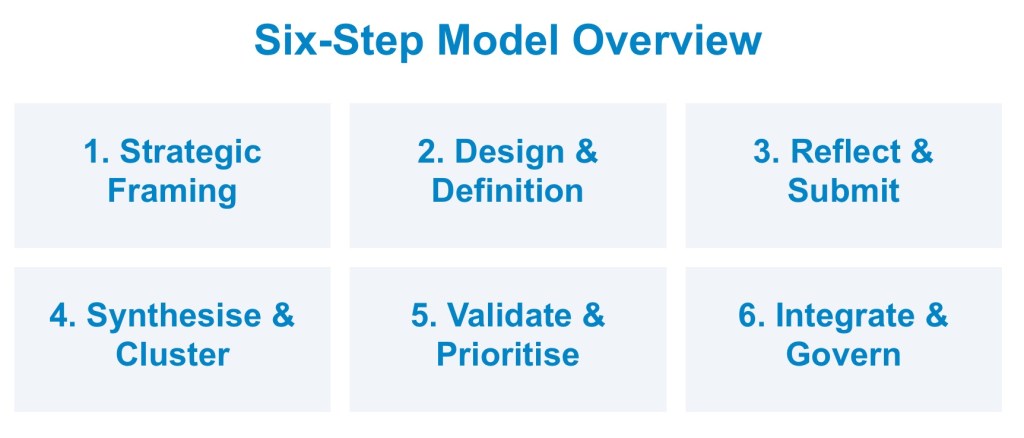
• Define which capabilities matter most for your strategy or objectives.
• Assess current state using agreed criteria or maturity scales.
• Analyse results to locate gaps and decide where to develop or invest.
Conduct a capability assessment using an agreed framework.
Define the Scope:
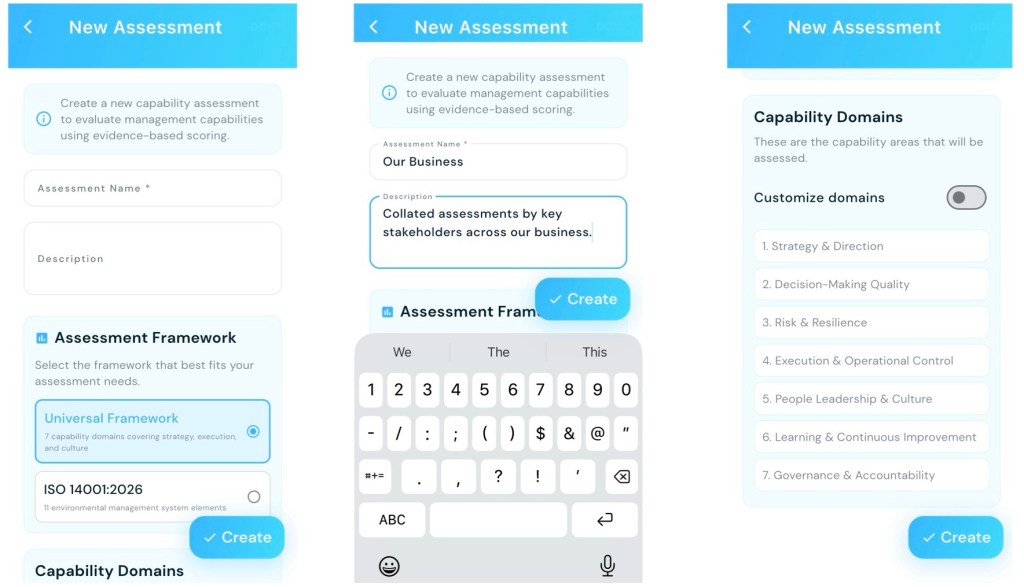
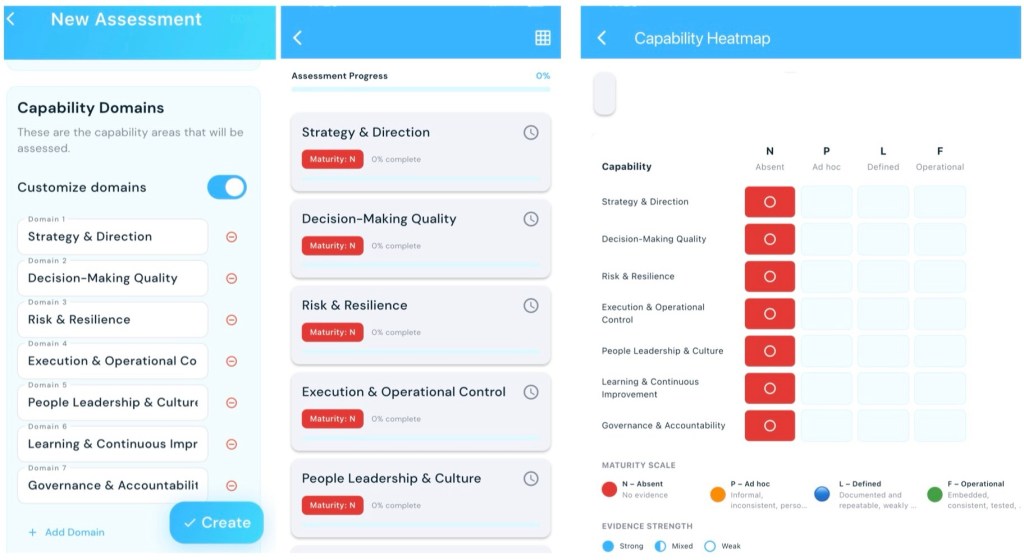
Clarify what you are assessing (e.g., the overall Management System/Framework or a specific site) and why (e.g., pre-certification, performance improvement). Our Capability Assessment App is already loaded with several “Standards-Based” Frameworks (APQC – American Productivity & Quality Center Universal Framework, Risk Management, Business Continuity Management, and Environmental Management Systems). These can be used as provided or customized to your context.
Gather Evidence:
Collect key documents such as policy, registers, legal compliance records, training logs, audit reports, and management review minutes.
Conduct the Assessment:
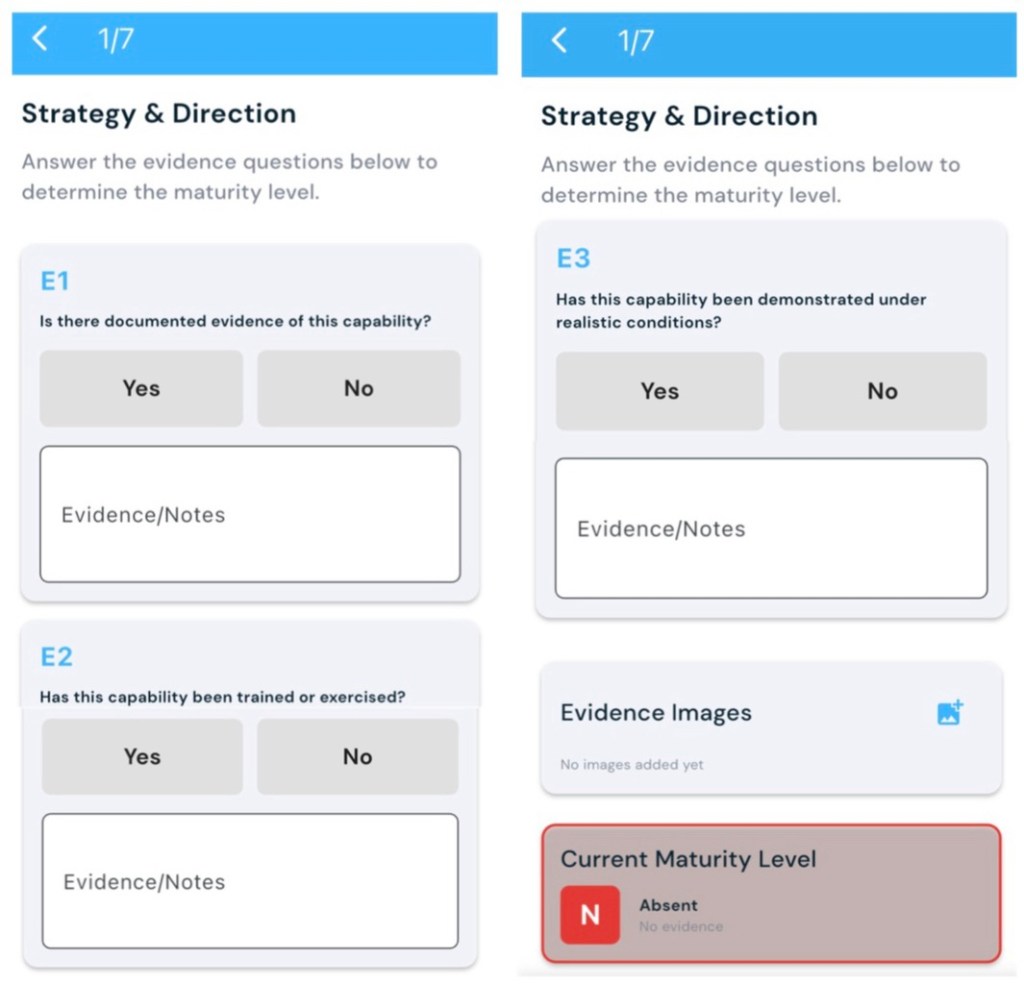
We use the “checklist” windows within the Capability Assessment App which are tailored – based on agreed domains.
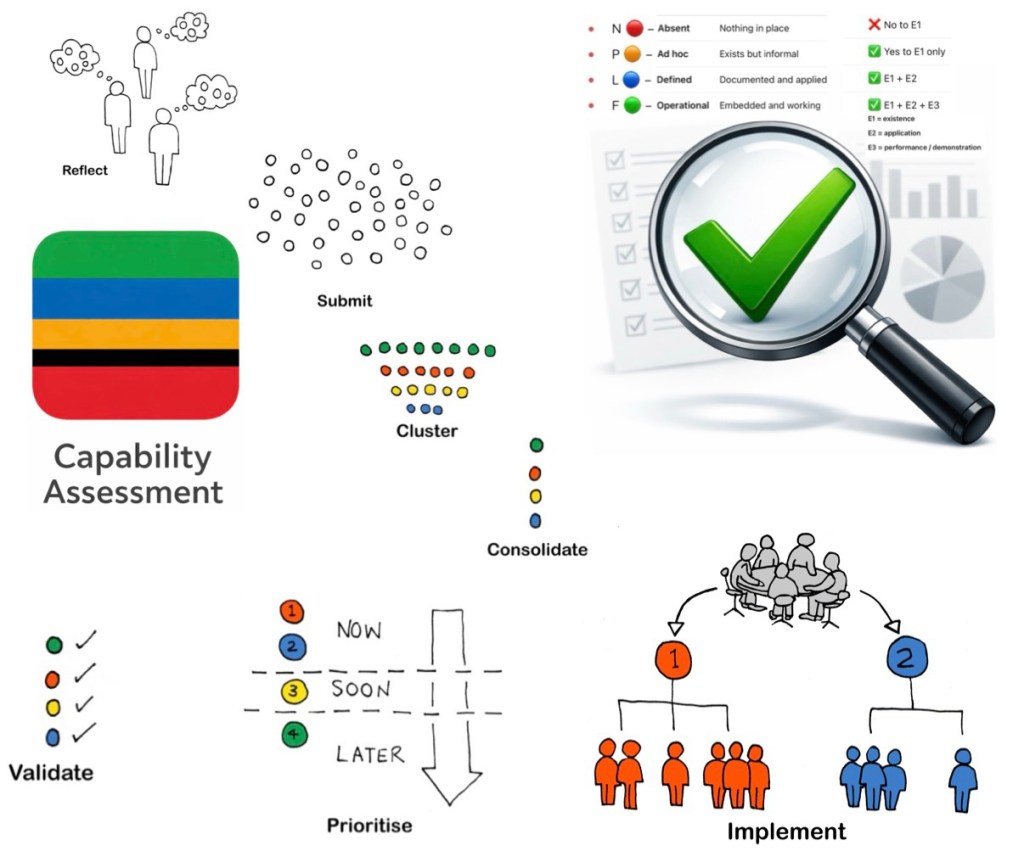
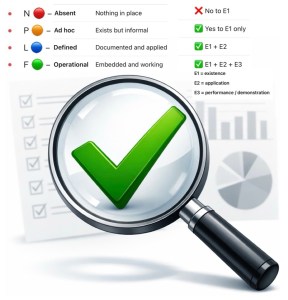
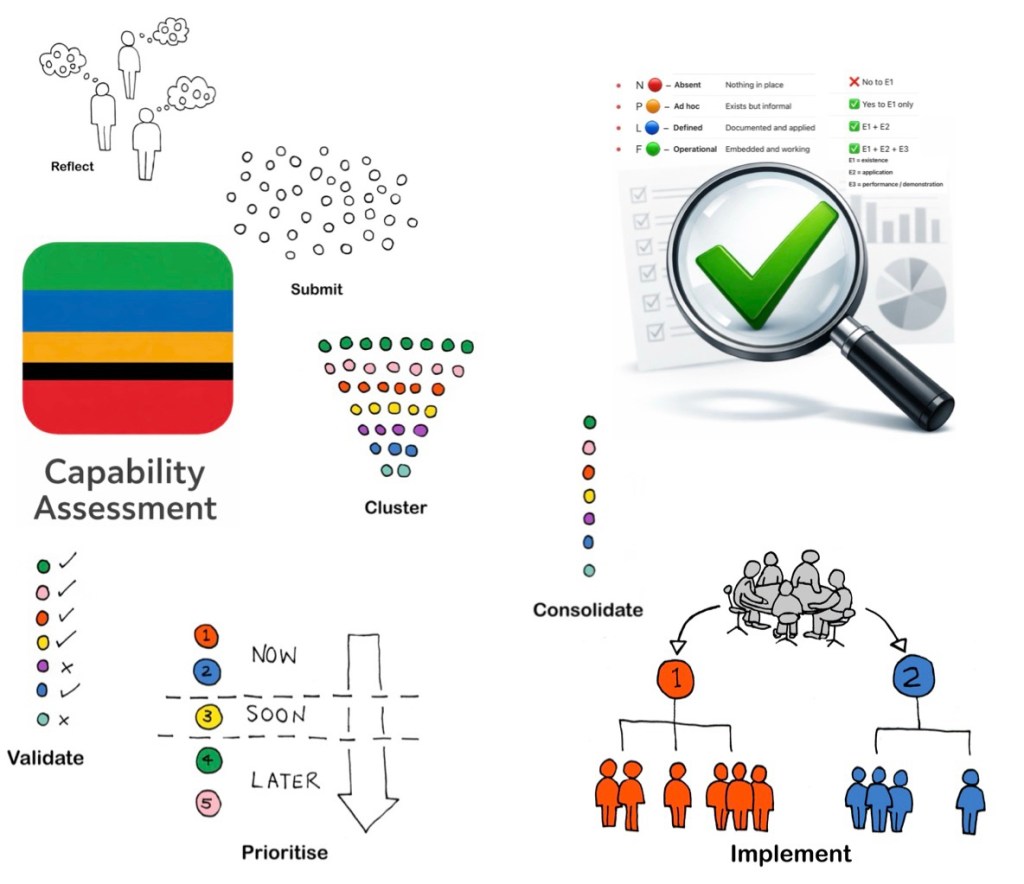
· For each criterion within a domain a Level (N, P, L, F) is assigned using the descriptions provided. (The score is based on evidence, not opinions).
· Record findings, noting specific strengths, weaknesses, and observations. Where appropriate, photos and timestamp evidence are used for traceability (where confidentiality and sensitivity are required photographs are not included in reports)
Analyze and Report:
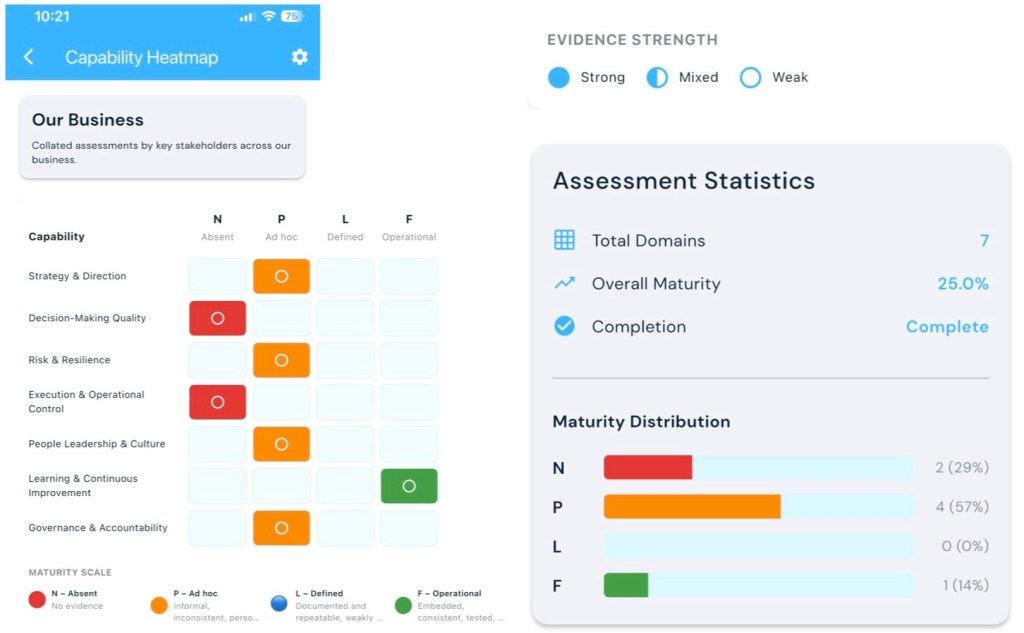
Scores are complied in the app to create a capability profile. This can be visualized in a chart to easily see which domains are strong (L,F) and which are weak (N, P).
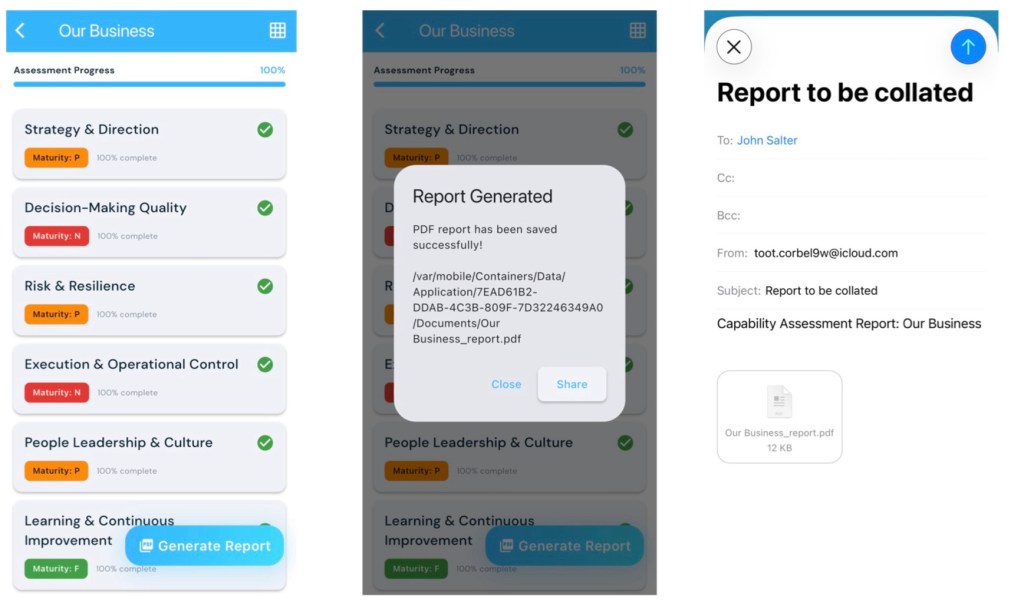
Support option (consulting service):
We are available to generate a confidential report summarizing findings per clause, across all responses – highlighting non-conformities, and providing an overview of scores.
Drive Action and Improvement:
· For areas scoring below the target level (e.g., below L), Senior Management should consider corrective action plans.
· Implementation should assign responsibilities, set priorities, and track progress to ensure gaps are closed and capabilities are enhanced.
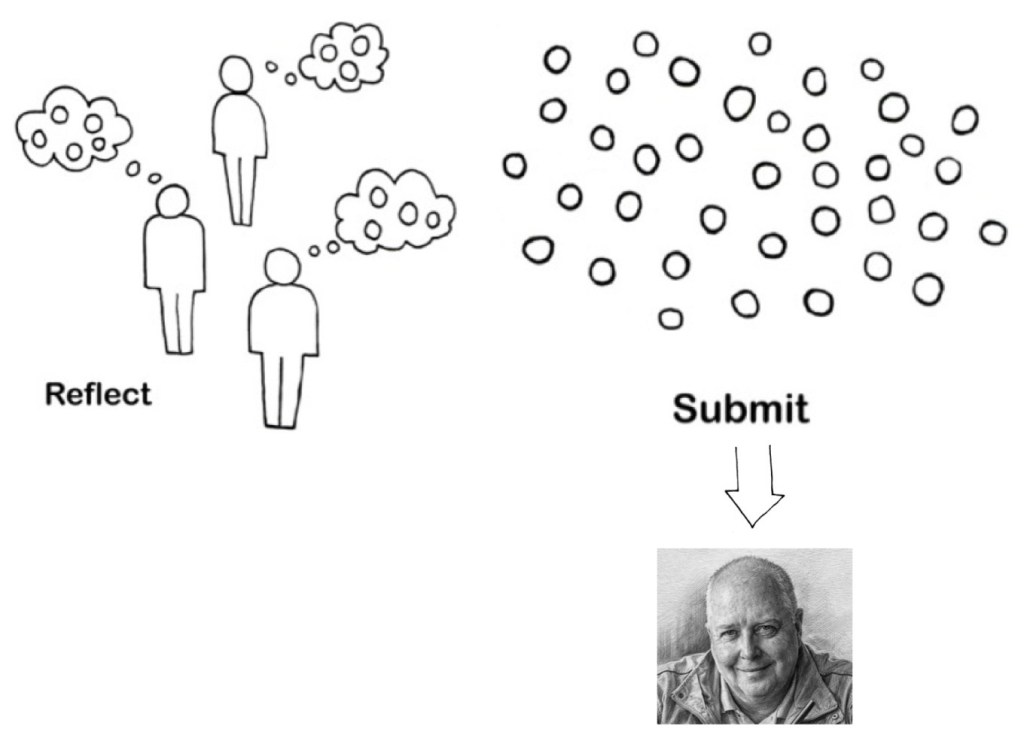
Reference – Typical sections for a report are:
- Executive summary (key gaps, impacts, and headline recommendations).
- Objectives, scope and methodology.
- Desired state (goals, targets, benchmarks).
- Current state (findings and evidence).
- Gap analysis (tables/heat maps showing gaps and their significance).
- Root cause insights.
- Recommended actions and implementation plan.
- Risks, assumptions, and how progress will be monitored.
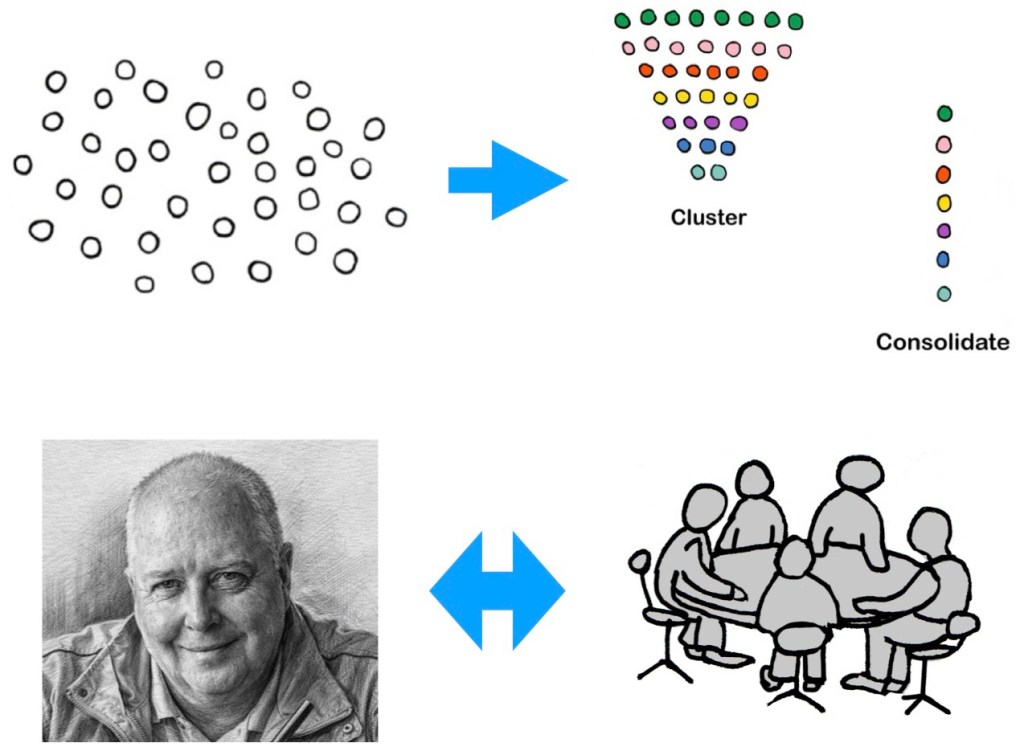
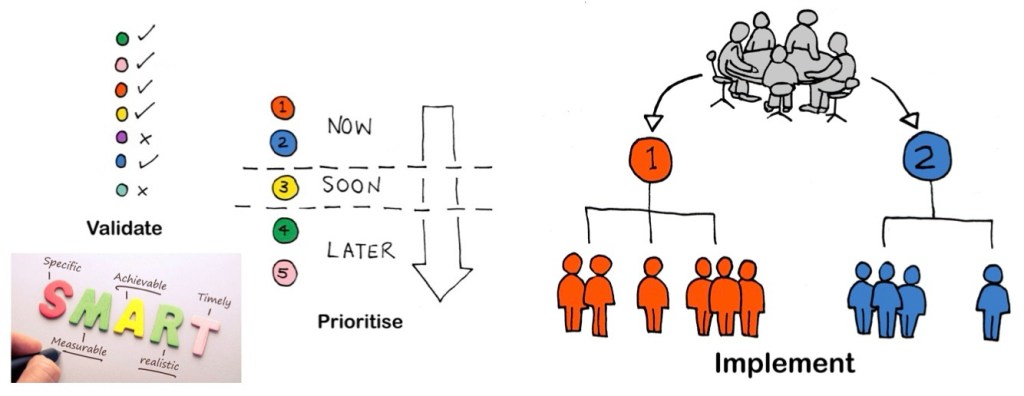
NB When we are engaged for both Stages (Foundation and Executive), the client reserves the right to follow through from the Foundation Stage without us (generally triggered by confidentiality and sensitivity).
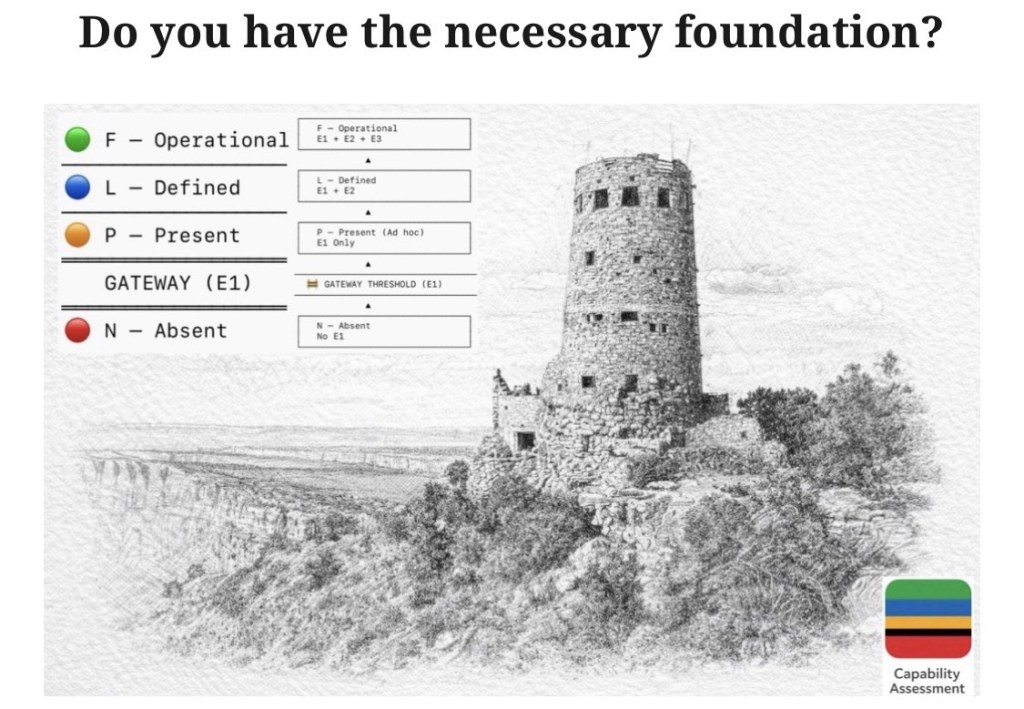
Gateway Evidence Frameworks (examples)

Foundation Stages?
Executive Stages?
Foundation and Executive Stages?
 John Salter Consulting Services